
Introduction: A Quiet Morning, a Reddit Post, and the Story I Almost Didn't Tell
A few months ago, someone new to an HSV support group posted a question I had seen in various forms for years: "How do you know if someone is actually worth dating after you tell them?"
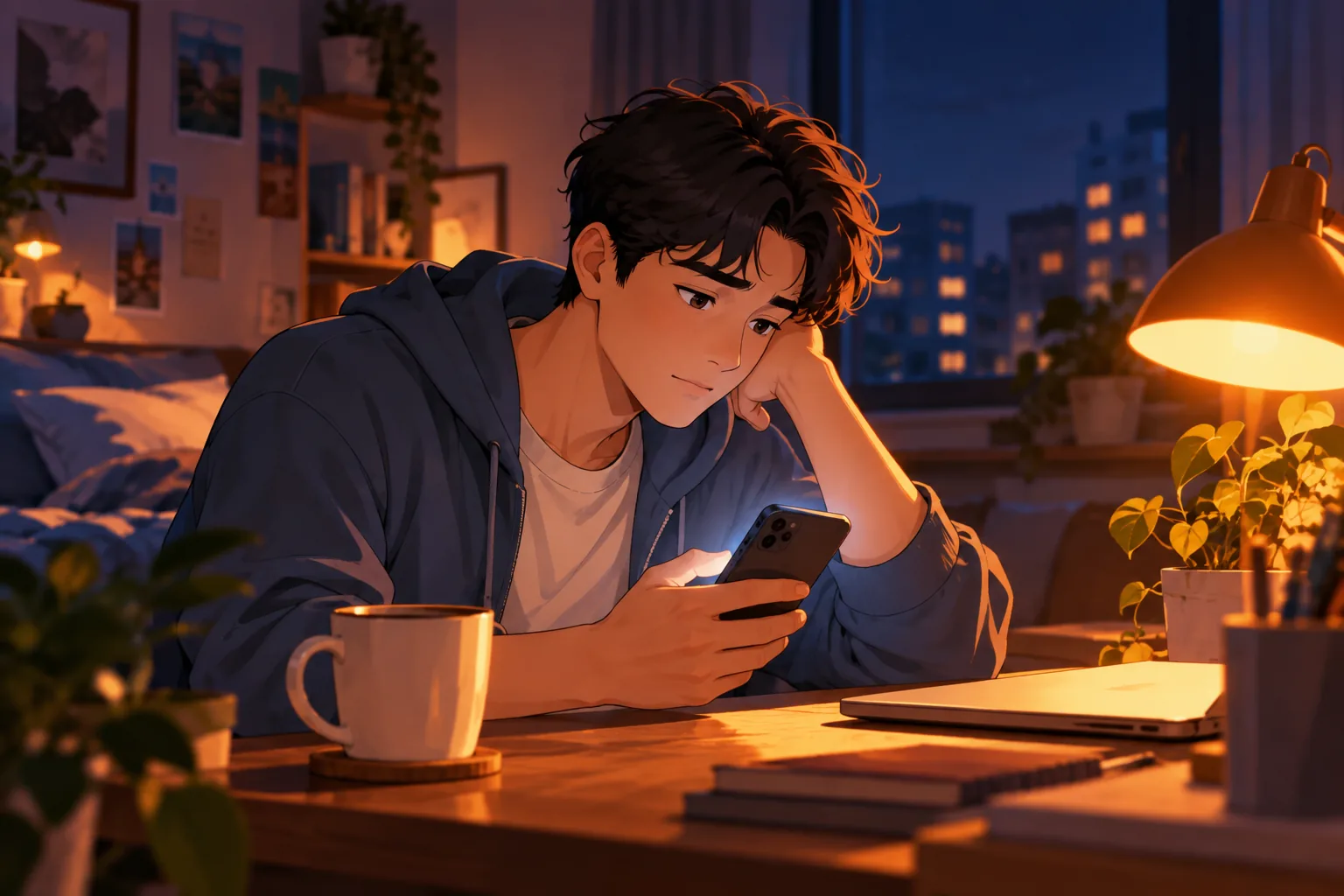
I read it on my phone while sitting at my kitchen table, waiting for my coffee to cool. Watching the cool blue light of the screen in the quiet morning, I felt an immediate, familiar tug in my chest. I had been dating with HSV for years by then—long enough to have made embarrassing mistakes, repeated a few I should have known better than to revisit, and collected enough strange, uncomfortable conversations to fill a long evening.
I tapped the text field and started typing: There are things people don't tell you about dating with HSV until you've actually lived through them.
Then I paused, my thumb hovering over the glass.
My initial instinct was to write a list. I like lists; I like neat, tidy categories that attempt to make sense of messy human experiences. In my head, I could already feel the draft taking shape—all the hard-won realizations about compatibility, the false comfort of someone saying "I don't care," and the subtle ways I had spent years rejecting myself before anyone else even had the chance.
I almost hit send, but I caught myself. I remembered that when I was newly diagnosed, bulleted lists of advice hadn't actually helped me navigate the quiet dread of a real date. What I had desperately needed back then was to see how those lessons actually played out in the flesh—clumsy, uncertain, and painfully real.
I deleted the outline. Instead, I replied to his post with the actual stories I wish someone had shared with me when I was sitting in the dark, convinced my romantic life was over.
Lesson 1: The Trap of "I Don't Care"
The first time a date accepted my diagnosis without hesitation, he didn't even blink. I had told him after we'd been seeing each other for a few weeks. Sitting in his parked car outside my apartment, I braced for the inevitable shift in the air—the awkward silence, the sudden stiffness in his shoulders, or a careful "Let me think about it." Instead, he listened, asked a couple of brief questions, and shrugged.
"I don't care," he said casually, reaching for my hand.
I remember the wave of absolute, dizzying relief that washed over me. I had spent so many sleepless nights rehearsing for rejection that I wasn't remotely prepared for someone who simply didn't seem bothered. I went home that night convinced I had finally gotten lucky.
That relief blinded me for far longer than it should have. He was charming and fun, but the red flags were there from the start: he was perpetually late, drank more than I was comfortable with, and laughed off any attempt to discuss serious topics. Normally, I would have questioned that pattern after a month. Instead, I silenced my own instincts. Every time I felt the urge to pull back, a desperate thought intervened: But he accepted you.
I had convinced myself that finding acceptance was so rare that asking for true compatibility on top of it felt greedy. I swallowed my discomfort, terrified that if I walked away, I would have to re-enter the dating world and face someone who might recoil at my status.
It took months for the illusion to shatter. When I finally called him out on his dismissiveness during an argument, he looked at me with a mild, almost bored curiosity.
"We're not going to make this a whole thing, right?" he sighed, smiling as if catching me in a minor overreaction. Whenever I tried to initiate a responsible conversation about health, transmission, or physical boundaries, he would smoothly change the subject.
That was when the cold clarity settled in: his "I don't care" wasn't a sign of emotional maturity or freedom from stigma. It was sheer indifference. He didn't judge me or shame me, but he also had zero desire to understand my reality or respect my emotional needs. I had put in all the labor to maintain a relationship with a man who was barely present, using his initial acceptance as a toxic excuse to stay.
Sitting across from him at his kitchen counter, I finally asked myself the question I should have asked on night one: Would I choose to date this man if HSV weren't part of the equation?
The answer was immediate: Not in a million years.
He wasn't a monster, but I wasn't unreasonable for wanting a true partner. I had simply confused being tolerated with being valued. Walking away was scary, but locking my front door behind me that night, I realized something fundamental: I no longer wanted to be with someone just because he was willing to have me. I didn't need someone who didn't care. I needed someone who cared enough to understand.
Lesson 2: Disclosure Is an Interview—and You Are Also the Interviewer
For years, I treated disclosure as the humbling phase of dating where the other person sat in judgment to decide if I was still worth seeing. I would deliver my rehearsed script, brace myself, and wait. I paid agonizing attention to every subtle pause, every sudden tightening around their eyes, every second that stretched before they managed an answer.
Then one quiet evening, a single conversation completely rewired how I looked at it.
We had been seeing each other for a few weeks, and I already knew I genuinely liked him. When I finally found the breath to tell him about my diagnosis, he didn't recoil, nor did he offer a hollow, dismissive platitude. He was quiet for a brief moment, letting the weight of what I'd said settle in the space between us.
"Can I ask you a few questions?" he asked softly.
I nodded, my pulse hammering in my throat. He proceeded to ask practical, thoughtful questions: what the diagnosis meant for a potential relationship, how I personally managed the risk, and whether there was anything specific he needed to consider before figuring out his own comfort level. Nothing about his tone felt clinical or interrogative. He wasn't trying to trap me in a contradiction; he was simply listening.
I couldn't help but notice the small, telling details. He didn't reflexively grab his phone to start frantically googling while I was mid-sentence. He didn't interrupt. At one point, realizing I had launched into a long, overly technical explanation he hadn't even asked for, I caught myself babbling.
He offered a warm, gentle smile. "You don't have to explain every piece of the science to me right now," he said softly. "I get that you're nervous."
That was the exact second something fundamental shifted inside me. I had been so consumed by the panic of whether he would accept my HSV that I hadn't been paying any attention to how he navigated an uncomfortable, vulnerable moment. He was calm. He was curious. He didn't pretend to know things he didn't know, but he treated me with absolute dignity while working through his own thoughts.
Suddenly, a question surfaced in my mind that I had never dared to ask myself before: Do I actually like the way this man handles vulnerability?
The answer mattered immensely—perhaps even more than whether he gave me an immediate yes. He was evaluating a piece of my reality, yes—but for the first time, I was watching him, too.
Lesson 3: Dread Builds Monsters That Reality Never Intended to Create
The single most exhausting part of telling someone I had HSV wasn't the conversation itself. It was the agonizing runway before it.
There were nights when I already knew with absolute certainty that I was going to disclose, yet I had no idea when or how to break the surface. I would open the Notes app on my phone, drafting rehearsed scripts in the dark. Too formal. Too medical. Too casual. Too defensive. I'd edit out half of it, retype a sentence, delete it again, and finally save the draft, promising myself I would figure it out tomorrow.
Then tomorrow would turn into the weekend. The weekend would turn into another date.
Suddenly, I'd find myself sitting across from someone I genuinely liked, nodding as he talked about his workweek, while a single, desperate sentence looped endlessly in the back of my mind: I have HSV. I would sit there, watching his lips move, hunting for some perfect, invisible opening in the conversation.
Not now, he's mid-story.
Maybe now, during the pause for dessert.
Definitely not now, the waiter is coming back.
It wasn't that I lacked the words; I was simply paralyzed by what would happen the very second after they left my mouth. The sentence itself was effortless; it was the unknown immediate future that terrified me.
The turning point came on a cool evening after dinner. We were sitting on a bench outside the restaurant, and I could feel myself sliding right back into the familiar, suffocating trap—waiting for a green light that was never going to come. I realized that if I waited for the "perfect moment," I'd be eighty years old and still rehearsing in my head.
So, I just took a breath and said it.
He went quiet for a second, listened carefully, and then asked a few calm, grounded questions. We talked for maybe fifteen minutes on that bench. It wasn't completely effortless, but it was lightyears away from the emotional wreckage I had spent three straight days imagining.
When I got home that night and finally closed the Notes app, a strange, quiet absurdity hit me: I had spent seventy-two hours dreading a conversation that took less than a quarter of an hour to complete. The anticipation had stolen days of my life; the reality had taken minutes. Most of the time, the hesitation wasn't preparing me for reality—it was just building a bigger monster in my mind.
Lesson 4: How My Panic Turned a Simple Conversation Into a Tragic Confession
There was a long stretch in my dating life when I could unknowingly turn a simple disclosure into a five-minute solemn speech.
I remember one date in particular. We had been seeing each other for a few weeks, and I had resolved to tell him that evening. I spent the entire drive to the restaurant rehearsing my lines, adjusting my tone, and psyching myself up. But when the quiet moment finally arrived over dessert, my anxiety hijacked the room, and I made the disclosure infinitely more dramatic than it needed to be.
"There's something serious I need to tell you," I began, my voice dropping an octave.
He paused, setting his fork down. "Okay..."
"It's about my health," I added, tightening my grip on my glass.
His expression visibly shifted from relaxed interest to acute concern. "Are you okay? What is it?"
"I have something that might completely change how you feel about being with me," I warned, my tone grave.
By the time the acronym HSV actually left my lips, I had already set the stage for a tragic diagnosis. He stared at me for a beat, visibly processing, before letting out a confused, "Oh."
Instead of letting him breathe, I panicked at the silence and immediately launched into a frantic monologue—explaining transmission rates, how long I'd known, how I managed outbreaks, and what precautions we'd need to take. I even apologized twice, though if pushed, I couldn't have told you what I was apologizing for.
Finally, he held up a gentle hand to stop me. "Wait. Can you slow down for a second?"
I froze, realizing I had been talking virtually without breathing.
"I've just been really nervous about telling you," I stammered.
He offered a soft, sympathetic half-smile. "Yeah, I can tell."
He wasn't angry or horrified; he was simply trying to keep up with the emotional hurricane I had brought to the table. I had walked into that conversation carrying such an overwhelming weight of shame that I had forced the conversation to be ten times heavier than the reality warranted. My panic had entered the room long before HSV ever did.
After that evening, I abandoned the idea of delivering a bulletproof, high-stakes confession. I learned to state the facts calmly, without writing a catastrophic ending for the other person before they'd even had a chance to speak.
Lesson 5: Leaving the Party Before It Even Began: The Art of Self-Rejection
After experiencing a few painful rejections in a row, I stopped waiting for other people to say no. Without realizing it, I simply started saying it for them.
There was a man I really liked during that period. We had been messaging back and forth for a week, and the mutual interest was obvious. He'd send quick, playful updates during the day, and eventually suggested a cozy spot where we could grab a drink over the weekend.
I stared at his message on my illuminated screen for a long time. The version of me from before my diagnosis would have been thrilled. Instead, my brain instantly skipped past the excitement and sprinted straight to the edge of the cliff: disclosure. I pictured sitting across from him, delivering the news, and watching the warmth vanish from his eyes as he decided I wasn't worth the baggage.
So, I didn't reply.
He sent a gentle follow-up the next afternoon. I finally answered, but my tone was guarded and clipped. Before long, the conversation naturally withered and died. Nothing had actually gone wrong. He hadn't rejected me; I had simply never given him the chance to enter the room.
That quiet withdrawal quickly became my default operating system. I'd spot someone attractive on an app and immediately invent a reason not to match. If a text thread turned flirtatious, I'd cool it down. I tried to convince myself I was just being exceptionally selective, but that was a lie. I was terrified.
One evening, looking at a string of abandoned chats and unanswered invites, a cold realization hit me: I was spending far more energy agonizing over hypothetical rejections than I was actually spending dating. No one was telling me I was unlovable or unworthy of a romantic evening—I was doing all the heavy lifting myself. I was just leaving the building before the party had even begun.
Lesson 6: A Shared Diagnosis Is Not a Foundation for Love
For a long time, I convinced myself that dating exclusively within the HSV community would magically solve all my problems. No elaborate disclosure speeches, no agonizing waiting periods, no watching the warmth drain from someone's eyes. It sounded like the ultimate shortcut to peace of mind.
So, when I met a man through an HSV-specific online dating space, I leaned into the connection with a profound, almost reckless sense of relief. The baseline was already established: he knew, I knew, and neither of us had to explain ourselves. In the beginning, that shared reality was undeniably comforting. We bonded over the absurd misinformed things people say about herpes and laughed at the shared cultural stigma.
For a few weeks, that mutual understanding felt like enough. But slowly, as the novelty of safety wore off, the silence beneath it began to grow deafening.
Once we stopped talking about the diagnosis, we quickly ran out of things to say. Our lifestyles were completely misaligned: I craved quiet, grounding weekends at home, while he wanted to be out in loud bars every single night. I was looking for a deep, intentional partnership, whereas he was vague and noncommittal. We had built an entire connection on a single, shared circumstance, rather than a shared vision for the future.
One Sunday evening, sitting across from him at a diner while he scrolled through his phone, a clarifying question forced its way into my mind: If we didn't both have HSV, would I actually choose to date this man?
The answer came without hesitation: Not in a million years.
Understanding one painful chapter of my medical history didn't mean he understood my soul. I had been so starved for easy acceptance that I had mistook a lack of friction for true compatibility. I didn't need a partner who simply shared my diagnosis; I needed a partner with whom I actually wanted to build a life.
Lesson 7: Waiting Too Long Isn't Protection—It's Cornering Them
I once waited far too long to tell someone.
It wasn't because I intended to deceive him; I had explicitly planned to say something on our second date, and then our third. But each time, the evening would go so effortlessly well that my fear would whisper: Not tonight. Don't ruin this momentum. The more comfortable I became around him, the higher the emotional stakes grew, and the harder it felt to introduce the one reality I had been holding back.
By the time I finally forced myself to speak, we were sitting in my parked car outside my apartment after a wonderful dinner. We had already kissed. The atmosphere had that quiet warmth where neither of us wanted the night to end.
When I finally delivered the disclosure, he sat in silence for a long time. When he turned back to me, his voice wasn't angry, but it was heavy with disappointment.
"Why are you telling me right now?" he asked quietly. "I just wish you had told me before we got this close."
I understood his disappointment completely. There was nothing factually dishonest about what I had shared, but the timing felt manipulative to him. We had already crossed lines of intimacy, and now, trapped in a tiny car, I was asking him to process complex health information that deserved a calm, unpressured environment.
We talked for an hour, but the trust had been fractured, and we stopped seeing each other shortly after. My cowardice had forced the conversation into a corner, making it feel like I was changing the rules in the middle of a game he had already agreed to play.
That parked car stayed with me forever. After that night, I stopped asking myself: What is the absolute latest I can wait before this gets awkward? I started asking a far better question: Is there still enough space here for an honest, unpressured conversation? That was a question I could actually answer with integrity.
Lesson 8: Confidence Isn't Knowing They'll Say Yes—It's Knowing I'll Be Okay If They Don't
I still get a sudden, nervous flutter in my chest before telling someone I have HSV. I still notice the subtle, micro-fraction of a pause before they respond, and if I'm honest, I still care when someone decides they can't move forward with me.
I don't think that part of me will ever disappear completely—and for a long time, I wrongly assumed that emotional maturity meant reaching a colder, bulletproof space where none of it could touch me anymore. It turns out maturity wasn't about feeling nothing; it was about changing what I did with those feelings when they arrived.
I used to cling to a single, painful reduction: They rejected me because I have HSV.
Now, my mind has learned to hold a far more complex reality. Maybe they simply aren't ready for that kind of relationship. Maybe they are wrestling with their own unspoken fears. Maybe our personalities were fundamentally incompatible to begin with. All of those statements can exist simultaneously without turning into an ultimate verdict on my worth as a human being.
Today, acceptance is merely the baseline entry fee for a much larger conversation: Does he respect my boundaries? Can he navigate uncomfortable topics without shame? Do I even like the person I am when I'm sitting next to him?
I've retired from the exhausting performance of trying to prove that I'm still a "normal" person. I don't owe anyone a slick sales pitch, and I no longer feel the urge to convince a date that HSV hasn't ruined my life. It hasn't ruined me, but it has reshaped certain contours of my reality. I can accept that truth without shrinking myself down to fit into someone else's comfort zone.
Years ago, I thought confidence meant believing that everyone would choose me. Now, I understand that real confidence is knowing that some people won't choose me, acknowledging that the sting of rejection is real, and having the quiet certainty that I can keep dating anyway.
I am still the exact same person I have always been: someone who clicks with certain people and clashes with others, someone who gets excited by brilliant conversation, loses interest, gets nervous, and occasionally realizes she was wrong.
HSV is simply one medical fact about my body. It isn't the whole introduction—and it definitely isn't the whole story.