
Before the Arenas: The Weight of an Unanswered "When"
By the time I started paying attention to where people with STIs were actually meeting, I was hardly new to dating.
I'd had real relationships, forgettable hookups, first dates that stretched effortlessly into four hours, and drinks that lasted barely twenty minutes. I'd been ghosted, and I'd done my share of ghosting, too. I knew the rhythm of flirtation, the familiar pacing of a conversation turning warm, and the exact shift when casual banter edged into real interest.
The only thing I could never treat casually was my diagnosis.
No matter how promising a connection felt, the same question was always waiting in the back of my head. It wasn't whether I'd tell him—I knew I had to. It was always when.
A standard dating app made meeting someone ridiculously easy: a few photos, a little banter about weekend plans, a shared joke. But somewhere between "You seem fun" and "Let's grab a drink," the tension would set in. What if he likes me? What if I like him? And what if I watch his face drop the moment I tell him?
Eventually, after enough dates, I noticed something broader: the platform you choose doesn't just change how you meet people—it changes the exact problem you have to solve.
On an STI dating site, the most uncomfortable question is answered before anyone says hello. On a mainstream app, the pool is endless, but you're navigating completely blind. Online communities offer unmatched honesty, yet a late-night thread rarely translates into real-world intimacy. In-person support groups hand you back your perspective, while bars force you to set immediate physical boundaries.
It took years to realize that no perfect sanctuary existed—only different trade-offs.
Game 1: The Niche Site — Safety at the Expense of Chemistry
I remember sitting in the dark, staring at my completed profile under the cold glow of my laptop, waiting for the familiar pulse of anxiety.
It didn't come.
For the first time in years, the heaviest question was already off the table. I didn't have to craft vague bios or strategically delay disclosures, wondering if three sentences would destroy a budding spark. Everyone here was operating from the same baseline reality.
It was a strange, intoxicating kind of relief. I could flirt without calculating, replying to a message without playing three moves ahead, letting myself enjoy a compliment without waiting for the other shoe to drop.
Then, the honeymoon phase of total transparency wore off, and I started actually looking at the men behind the screen.
The site was a mixed bag. Some were searching for real connection; others used the shared diagnosis as a shortcut for quick hookups. But most unnervingly, there were perfectly nice men whom I simply wouldn't have considered if my health status weren't part of the equation.
That was an uncomfortable mirror to look into.
I'd spent so much time fearing rejection that I was almost ready to make the opposite mistake: treating acceptance as a substitute for chemistry. If a man didn't mind that I had herpes, was that supposed to be enough?
It turned out, it wasn't. A shared diagnosis didn't magically make us compatible. I still needed him to be funny, thoughtful, and dependable. I still cared whether he respected my boundaries and whether I looked forward to seeing his name pop up on my phone.
That niche site taught me my first crucial lesson: being accepted wasn't the same as finding the right person. Realizing I needed more than just passive tolerance, I decided to step back into the wider world.
Game 2: Mainstream Apps — Endless Options, Invisible Ghosts
Returning to mainstream dating apps felt instantly familiar. The same glossy photos, the same ruthless, split-second sorting: too far, too young, definitely my type, absolutely not.
At first, I relished the anonymity. On Hinge or Bumble, my medical history was invisible. I was just another attractive woman deciding whether I liked the look of a guy's smile. No heavy disclosures, no awkward pauses, no pre-emptive judgments.
But that invisibility had a strange, insidious downside.
Whenever a promising conversation withered—a sudden delay in replies, a casual unmatch, or a plan that never materialized—my mind immediately filled in the blanks. I'd find myself scrolling back through old messages like a detective examining a crime scene, searching for the exact moment the tone had shifted. Had he somehow found out? Did I say something that gave it away?
In reality, men on dating apps ghost for a thousand ordinary reasons: work got busy, an ex resurfaced, or they simply lost interest. But because I was carrying a secret, every routine rejection felt like a stealth verdict on my diagnosis. Privacy gave me breathing room, but it also gave my anxiety free rein.
The constant ambiguity reached its peak every time I tried to edit my bio. A dating profile is an absurdly small space for a complicated life—five photos, a witty one-liner, and a few seconds to make an impression. Where, exactly, was I supposed to fit herpes?
Putting my diagnosis in my bio felt like handing my privacy to every stranger swiping through my city, reducing my identity down to a single medical tag. But keeping it out meant entering an exhausting guessing game: Do I tell him after three messages? On the first date? After our first kiss?
Disclosing up front risked being discarded by men who knew nothing about me; delaying it meant investing emotional energy into a connection that could vanish the moment I laid my cards on the table.
Exhausted by the endless math of trying to decipher men from six curated photos and a bio box, I temporarily abandoned the apps altogether.
Game 3: Anonymous Forums — Raw Vulnerability and Fragile Privacy
Instead of swiping, I turned toward Reddit threads, private Facebook groups, and niche online forums—spaces where people living with STIs gathered without needing to define terms or apologize for their presence.
The dynamic here was entirely different. Nobody was flexing or trying to impress a potential match. Behind pseudonyms, strangers asked the raw, unpolished questions they were too terrified to voice in their real lives: How long did you wait to tell him? How am I supposed to gather the courage to do this over and over again?
I spent weeks simply lurking, scrolling late into the night under the soft glow of my phone.
I vividly remember a thread where a woman described disclosing her status to a man after weeks of promising dates. He had stammered, claimed he needed time to process, and then silently vanished. Her grief hit me like a physical blow, but as I read through hundreds of similar responses, a broader pattern emerged.
Before joining those groups, I'd treated every cold exit as a personal failure—ruminating over whether I'd sounded too apologetic or waited three days too long. But seeing the sheer variety of experiences liberated me. Rejection after disclosure wasn't a universal verdict on my worth; it was simply a reflection of the other person's capacity for risk and emotional maturity. Some people got rejected and bounced back in a week; others found partners who shrugged it off effortlessly.
More importantly, I noticed that people weren't talking about their diagnoses all the time. They were complaining about lazy exes, demanding bosses, or a cute barista who hadn't texted back. They were full, messy, ordinary human beings who happened to carry a manageable virus.
Yet, raw honesty didn't automatically equal safety. I quickly realized that online anonymity was a fragile illusion. Private confessions were screenshots away from public exposure, and a thread shared in a "safe space" could easily drift into wider social circles.
I had to learn a sharp distinction: finding people online who understood my diagnosis wasn't the same as finding people in the real world I could trust.
Game 4: In-Person Support Groups — The Ordinary Reality of Living On
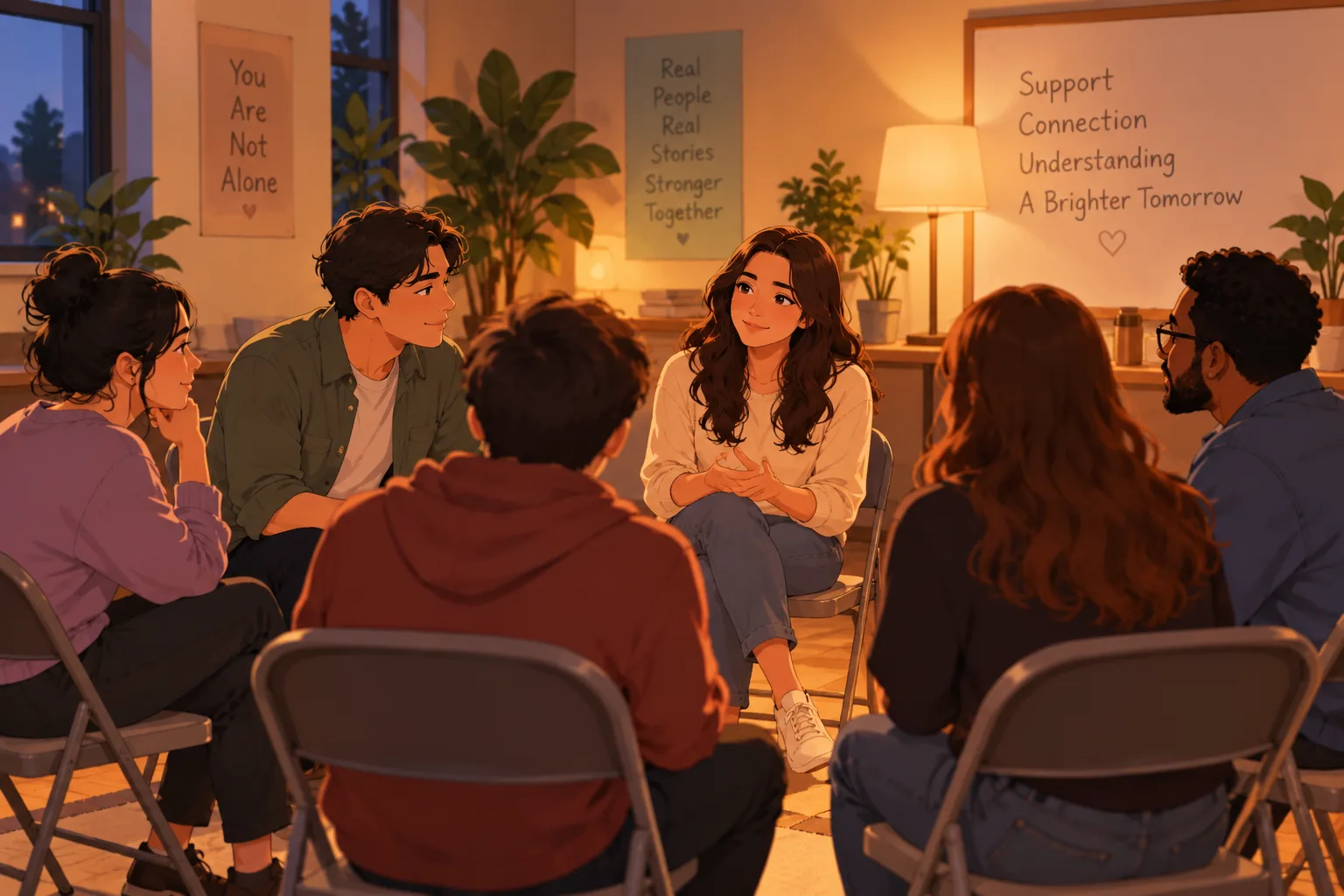
The first time I walked into an STI support group, my hand hovered over the door handle for three long seconds, ready to turn around.
I'd pictured a somber, clinical ritual: damaged people sitting in a silent circle on folding chairs, taking turns recounting medical trauma and their worst rejection stories.
The reality was almost comical in its ordinariness.
The meeting took place in a drafty community center room that smelled faintly of lemon floor cleaner, with a cheap drip coffee maker humming in the corner. Instead of weeping, one woman was halfway through a passionate rant about a guy who had taken two days to text her back. Another was debating what dress to wear for a third date. Someone burst in ten minutes late, dropped her keys, and asked if there was still decaf left.
When someone finally mentioned herpes, it was tossed into the conversation as a brief afterthought—a minor detail between a complaint about a landlord and a debate over whether a second date was worth the Uber ride.
That nonchalance shocked me. I'd spent years elevating my diagnosis into a defining tragic identity. But around that table were teachers, divorced mothers, party girls, introverts, and hopeless romantics. They weren't a subculture of patients walking around with a scarlet letter. They were just people.
Nobody in that room suggested that having an STI meant settling for a smaller, safer dating pool. When I admitted my fears, a woman sitting across from me waved her plastic coffee cup dismissively. "Honey, rejection is just rejection," she said. "Don't turn a guy being boring or unavailable into a grand verdict on your medical history."
Walking out into the cold night air, a heavy weight lifted from my chest. The support group handed me back my perspective: my diagnosis hadn't narrowed my world half as much as my own fear had.
Game 5: Nightlife & Bars — High Stakes and Physical Boundaries
If support groups restored my perspective, bars tested my resolve in real time.
Bars were intoxicating in their immediacy. There were no curated bios or strategic filters to hide behind. A man saw me first simply as an attractive woman in a crowded room—the line of my back, the way I laughed over a drink, the slow burn of real-time chemistry. My diagnosis didn't exist in that atmosphere.
I loved that freedom. Until the temperature of the night began to rise.
I remember one night sitting at a dimly lit corner booth, the low bass vibrating through the floorboards. We'd been flirting for two hours, our knees casually touching under the small table. When he finally leaned in close, his breath warm against my neck, and asked if I wanted to head back to his place, the silent countdown in my head hit zero.
This was the inescapable catch of night-life intimacy. Disclose too early—say, over the second round of gin and tonics—and you risk turning a playful flirtation into an unsolicited medical seminar. Disclose too late—in the quiet back seat of an Uber or at his front door—and you risk creating a momentum that feels unfair to both of you.
In person, there was no laptop screen to shield me from a bad reaction. I've seen the subtle, crushing shift in a man's eyes when the mood suddenly evaporates—the awkward throat-clearing, the polite step backward, the sudden remembered early meeting the next morning. Rejection hurts twice as much when you're looking directly into someone's face.
Yet, over time, navigating those fast-paced spaces gave me something invaluable: my own physical boundaries.
I stopped viewing disclosure as an apology or a plea for mercy. It wasn't something I handed over out of guilt. It was a threshold I required men to cross before they earned access to my body and my private life. If a man recoiled at the word herpes, I wasn't losing a soulmate—I was simply filtering out someone who lacked the maturity for the intimacy I deserved.
There was never a perfect, scripted moment to explain my status over loud music and half-dunked ice cubes. There was only the moment I chose to pause the night, press a hand against his chest, and see if he was capable of handling the full, real version of the woman standing in front of him.
Conclusion: From Pleading to Choosing
By then, I had moved through almost every ecosystem the modern dating world had to offer.
The STI site offered immediate relief—the luxury of skipping the terrifying disclosure talk with a stranger. The mainstream apps handed me a massive pool of options alongside endless ambiguity. Online groups gave me late-night solidarity, while the local support group pulled me back down to earth. And the loud, sticky floors of bars reminded me that attraction doesn't wait for a clinical invitation.
None of those environments solved dating for me. They simply offered different trade-offs.
For years, I'd approached every new connection like an applicant standing before a tribunal: Will he accept me? Will his face change when I tell him? Is he open-minded enough to look past this?
I believed that this hyper-vigilance was simply the price of dating with a diagnosis. It wasn't. It was just an exhausting way to live. The more I viewed men through the lens of whether they might reject me, the less attention I paid to whether I actually enjoyed their company.
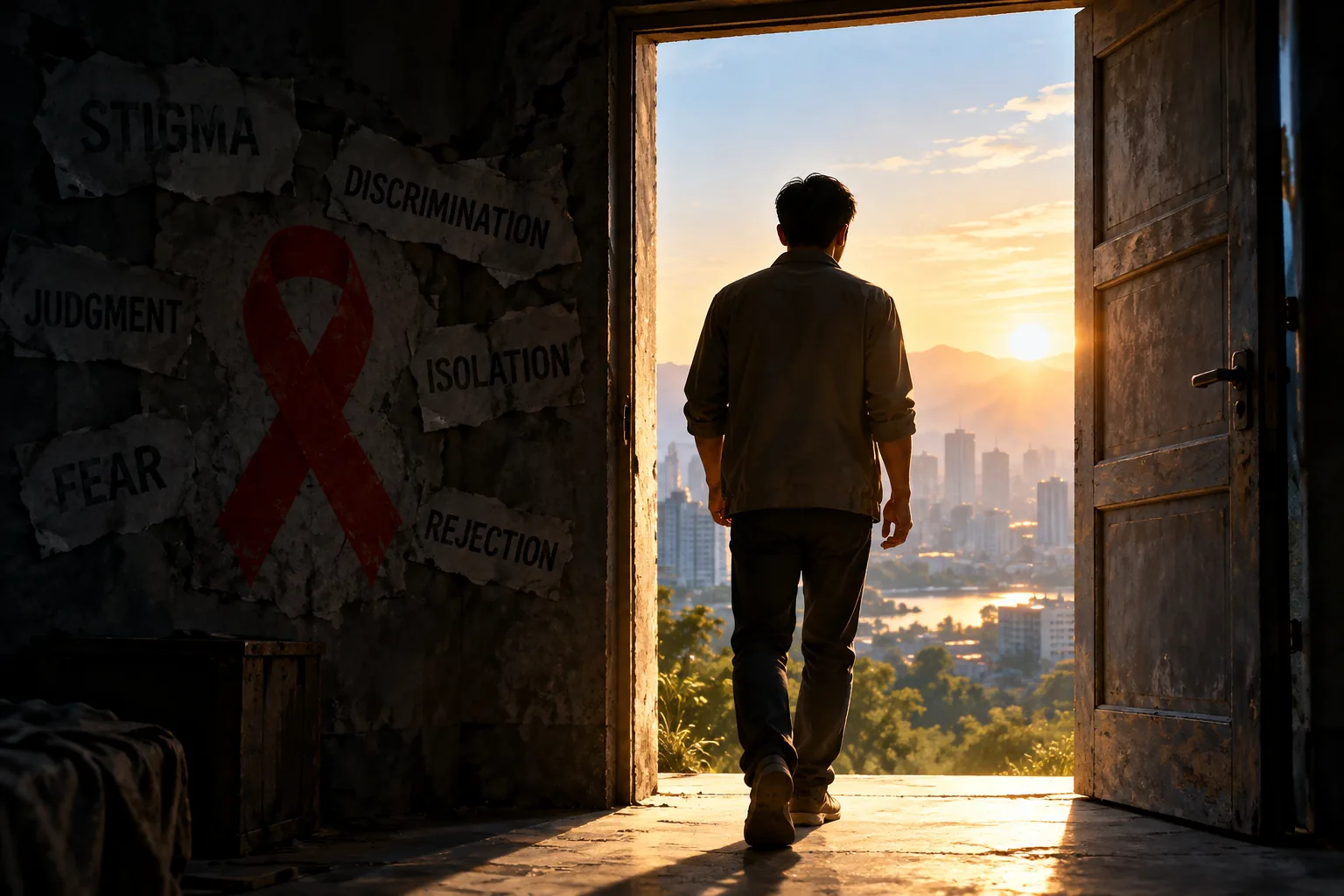
That was the seismic shift I never saw coming: my diagnosis could function as a powerful filter, but only if I stopped treating it as a moral verdict.
I needed a partner capable of an adult conversation about sexual health without descending into judgment or panic. I needed someone who could process uncomfortable information without making my past an interrogation. Those men existed, but so did men who simply couldn't handle it—and eventually, I stopped treating their discomfort as a personal flaw I needed to fix.
When a man heard my status and decided to walk away, it didn't make him cruel, nor did it make me defective. It simply meant the answer was no. Accepting that boundary with grace took me longer to learn than anything else.
Dating with an STI never became effortless. The awkward conversations remained. The sudden exits still happened. But the fundamental motivation behind my steps completely changed: I stopped walking into dates hoping to be chosen. I started paying attention to whether I actually wanted to choose them.
I didn't need a perfect app, a secret disclosure script, or the approval of every man I met. I just needed enough self-possession to be honest, enough judgment to spot who handled that honesty with maturity, and enough self-respect to walk away when they didn't.
I still have an STI. I still disclose it before intimacy, and my stomach still does a tiny flip before the words leave my mouth. But I no longer look at a partner and plead, Will you accept me?
Instead, I look across the table and ask myself: Do I like you? Do I trust you? Do I like who I am when I'm sitting next to you?
And if the answer is no, I know how to put my coat on and leave.
I spent years searching for a magical corner of the world where dating with an STI would feel easy. I don't believe that place exists. What changed was far simpler: I got better at choosing where I wanted to be—and far more selective about who earned the right to stand beside me.