
I Wasn't Looking for Anything Serious Until I Met Him
I wasn't looking for anything serious when I met him.
He was the kind of man I would have noticed anyway. Tall, well-dressed without looking like he'd tried too hard, with the sort of face that made people look twice without him seeming to care. He kept a short beard, often just a day past neat, and when he smiled, faint lines gathered beside his eyes.
He had a steady job and seemed completely at ease with the life he'd built. He knew how to talk to people without talking over them. He remembered names, listened when servers spoke, and never seemed in a hurry to prove he was the smartest person in the room.
On our first coffee date, I noticed he had a soft laugh—almost a chuckle to himself—right before a full smile took over, as if he were giving himself permission to enjoy his own joke.
He remembered things. Weeks after I mentioned a movie in passing, he asked if I still wanted to see it. I had forgotten I'd ever brought it up. Another time, as we were ordering lunch, I offhandedly mentioned I always got the same drink. The next time we went out, he ordered it for me before I even opened the menu.
"You remembered that?" I asked.
He shrugged. "Yeah."
It wasn't a grand gesture, which is probably why it landed so hard. He wasn't trying to impress me; he was just paying attention.
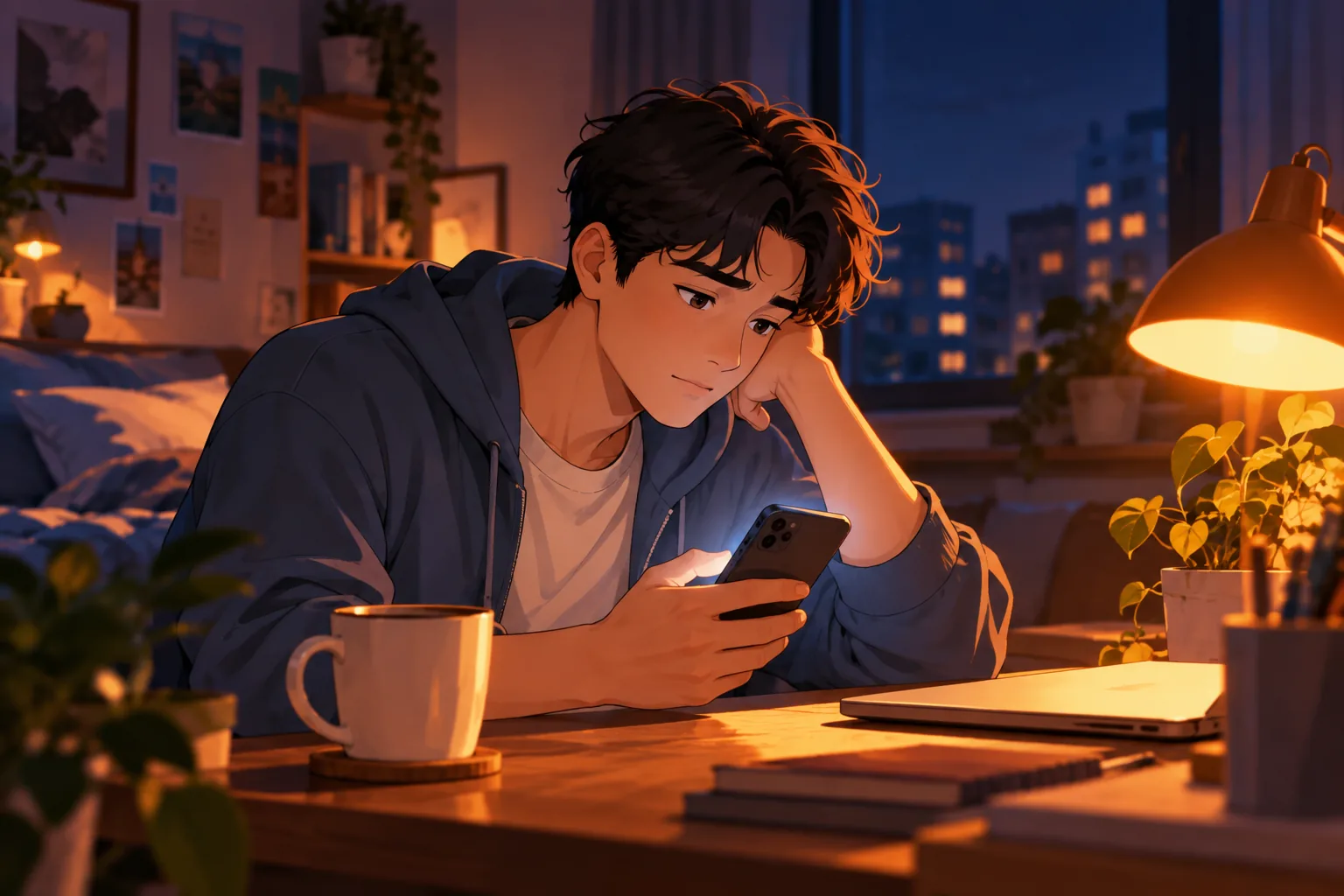
Quick coffees turned into long dinners. Dinners turned into sitting in parked cars past midnight because neither of us wanted to end the night. Soon, I was checking my phone the moment I woke up. I picked restaurants thinking about what he'd order. I mentioned him to friends before I even knew how to define what we were.
His flaws made him even harder to resist. He was stubborn when he thought he was right. He was useless at picking a restaurant when I gave him free rein. He had a habit of leaving his coat over the back of whatever chair was closest to the door. Those minor frustrations only made him feel grounded and real.
Somewhere between the late dinners, the dumb text messages, and the Saturdays that naturally filled themselves with plans, I stopped thinking of him as someone I was casually seeing.
He had become the person I couldn't wait to see.
That was when the panic set in. Because I had herpes.
Suddenly, every good thing about him came attached to a shadow. I couldn't just enjoy liking him; I was constantly haunted by the same question: What happens when he finds out?
It wasn't there at the start. It crept in alongside my feelings. The more I loved him, the more terrifying the thought of losing him became.
I realized then that the hardest part wasn't going to be the act of disclosing a medical diagnosis. It was going to be disclosing it to him.
The More He Mattered, the More I Postponed the Truth
The problem was that I liked him more with every passing week.
I was no stranger to disclosure. I knew the routine by heart: say the words, wait for the shift in his eyes, answer the clinical questions, and try not to apologize for something I never asked for. I'd survived it before with casual partners.
But this time felt entirely different because my heart was already on the line.
I'd catch myself smiling at my phone, reading into the subtle phrasing of a "Good night" text to gauge how tired he was. I began recognizing the distinct hum of his car engine before it even pulled into my driveway. The more ordinary and comfortable our dynamic became, the more impossible the talk felt.
I started postponing it in increasingly absurd ways. We'd have a wonderful dinner, and I'd tell myself, Not tonight. He'd kiss me goodbye, and I'd think, Definitely not tonight. Then I'd get home, close the door, and realize I had kicked the moment down the road once again.
I kept waiting for some mythical "right time" to appear—a quieter evening, a deeper conversation, a threshold of emotional intimacy where he'd understand me so deeply that the diagnosis wouldn't register as a barrier.
Of course, that perfect moment didn't exist. There was always a reason to stall. I didn't want to ruin a good date, turn a gentle kiss into a discussion on sexual health, or watch his eyes change while he was looking at me the way I'd come to love.
And if I'm being honest, I just wanted to buy time. More dinners, more weekends, more ordinary afternoons where I could pretend we were already safe.
That was the hardest truth to admit: I wasn't just afraid of rejection anymore. I was terrified of losing someone specific.
Sometimes I'd lie awake and envy women whose bodies didn't require an explanation—women who could simply fall in love, share a bed when they were ready, and let things unfold without this shadow waiting just ahead. I knew those thoughts were unfair to myself. HSV didn't define my worth, but the resentment lingered anyway.
I didn't resent him; I resented the interruption. I hated that a connection so effortless required me to sit across from him and hand over information that might shatter it.
So I kept rationalizing. I convinced myself that waiting one more week wasn't technically lying—it was just waiting. But underneath all the mental gymnastics, the real question was already taking shape in my head: How was I actually going to do this?
Drafting Messages, Rehearsing Scripts, and Searching for a Safe Way Out
Once I accepted that I couldn't avoid it forever, I became weirdly obsessed with finding the least terrible way to execute it.
First, I considered texting. It seemed mercifully cowardly. I could draft the exact wording, delete anything that sounded overly dramatic, and press send without having to watch his expression shift in real time.
I opened a blank note on my phone and spent an hour typing and deleting iterations.
"There's something I should tell you before this goes any further." Deleted. It sounded like I was breaking up with him or joining a cult.
"I have herpes." Too blunt, almost aggressive.
I tried softening it with medical statistics, but that somehow felt worse, like I was pitching a defense case in court. Every draft ended with me imagining the same agonizing sequence: him reading the message, going quiet, and looking at me differently the next time we met.
So I thought about calling. A phone call felt more authentic than a text. At least he'd hear the human tone in my voice. But then I pictured the silence immediately following the revelation. What would I do with those five seconds of dead air? Ten seconds? What if he just said, "Okay," and fell silent? What if he hung up?
I closed the phone app.
That left in-person disclosure—obviously the most terrifying option, but the one I kept circling back to. I wanted to see his eyes. I wanted to know if he was uncomfortable, confused, or simply processing. At the exact same time, I completely dreaded seeing his face. There was no winning scenario.
I began rehearsing hypothetical conversations like a play script. If he asked about transmission, I'd explain the stats. If he looked overwhelmed, I'd offer him space. If he stumbled over his words, I'd tell him he didn't have to process it right then. I even mentally mapped out exiting the restaurant first, just to spare us both the brutal awkwardness of walking to our cars together afterward.
Then one midnight, I hit a low point of absurdity: I considered going dark for three days. Not forever—just disappearing long enough for him to worry and ask what was wrong, giving me an unprompted opening to spill the truth.
I actually laughed out loud when I caught myself plotting that out. The fact that engineering a fake crisis felt briefly reasonable proved how desperate I was. But that's what fear does: it renders ridiculous ideas practical when you're trying to dodge pain.
The reality was that I wasn't searching for the right way to tell him. I was searching for a way to tell him that guaranteed he wouldn't leave.
And that option didn't exist. No careful wording could control his reaction. No quiet corner in a cozy coffee shop could render the truth painless.
I was running out of scenarios to rehearse. The only thing left was the reality I was trying so hard to delay.
I Realized My Silence Was Taking Away His Choice
I could always invent another reason to wait.
We had just enjoyed a peaceful week, and I didn't want to ruin the momentum. He was stressed about a major project at work, and I didn't want to add another burden. We had weekend plans, so I told myself I'd do it afterward.
The excuses evolved, but the underlying panic remained unchanged.
Then, one evening, the hypocrisy of my delay caught up with me. I realized I was measuring our growing intimacy purely by how long I could stall. I was dodging physical escalation, steering conversations away from long-term topics, and holding my breath, hoping a mythical "safe moment" would magically present itself.
It was never going to.
More importantly, I forced myself to confront an uncomfortable truth: by withholding the facts to protect my own feelings, I was taking away his right to choose. I was quietly deciding what he could handle, prioritizing my desire to keep him over his right to informed consent.
That realization stung. If I truly respected him—if I truly loved him—I couldn't treat his agency as collateral damage just because I was terrified of what he might decide. Real connection couldn't coexist with managed silence.
So I stopped waiting for perfect conditions. I picked a Tuesday. I picked a quiet, familiar setting. And I made a pact with myself that once the words started coming out, I wouldn't back down.
On the drive over, my stomach was in knots. I pulled over to the side of the road twice, gripping the steering wheel, every instinct screaming at me to turn back, make an excuse, and buy myself another week of blissful ignorance.
I didn't.
I pulled into the parking spot, turned off the engine, and waited for him to get into the car.
Speaking the Words Out Loud
I had rehearsed the conversation so many times in my head that the real moment felt strangely disorienting.
We were sitting in his parked car after dinner. Nothing about the night signaled that everything was about to change. A crumpled coffee receipt sat wedged in the center console, his jacket was tossed over the back seat, and an unfamiliar song played softly through the dashboard speakers. He was telling me a story about his workweek.
I wasn't listening. I was staring down at my knuckles, watching my fingers interlock and untangle.
At some point, his story trailed off. "You okay?" he asked quietly.
"Yeah," I lied. Then the air left my lungs. "Actually... there's something I need to tell you."
The words came out as a breathy whisper. He immediately reached over and muted the audio. In that beat of sudden silence, my brain screamed that I still had a split second to pull back, change the subject, and make a joke.
I didn't.
"I have herpes."
Then came the silence. It wasn't a movie-style dramatic gasp, just the heavy, dense quiet that expands to fill a closed car when two people are trapped inside it.
He turned toward me. I braced for repulsion, but what I saw in his eyes was simply raw surprise. It wasn't anger or disgust—just the look of a man who had suddenly been handed information he hadn't prepared for on a Tuesday night.
My immediate defense mechanism was to launch into a clinical defense. I had a mental slide deck ready: transmission rates, antivirals, antibody stats, how common HSV actually is. But I caught myself and stopped. This wasn't a business presentation, and he hadn't asked me to convince him.
He sat back against the headrest, looking out at the windshield for a long moment before looking back at me.
"How long have you known?" he asked.
"A few years," I said.
He digested that. "Does it... happen often?"
"No. Not usually."
He nodded slowly. He looked down at his lap, then met my eyes again. "Are you okay?"
The question caught me completely off guard. For months, I had been mentally preparing for him to ask what herpes meant for him. I hadn't prepared for him to ask what carrying it had meant for me.
"I had a hard time with it at first," I admitted.
He didn't interrupt. I don't remember every exact sentence that followed. I stumbled over my words, repeated myself, and apologized more than once—an instinctive, reflexive apology I now know I didn't owe anyone.
He didn't give me a grand, romantic speech. He didn't promise that it changed nothing, nor did he declare that we were going to figure it out together.
He just sat with it.
At one point, he reached over, touched my arm gently, and said, "Don't overthink this tonight."
It wasn't a perfect cinematic line, which is precisely why I believed him. I desperately wanted to grill him for reassurance. I wanted to ask if he was still attracted to me, if he felt betrayed, or if he was going to wake up tomorrow and quietly fade out of my life.
Instead, I took a deep breath and said, "You don't have to have an answer right now."
He nodded, his jaw relaxing slightly. "Okay."
That was it. No clean resolution, no cinematic closure. Just two people sitting in a dark car with a heavy truth resting between them.
On the drive home, relief and panic washed over me in alternating waves. The secret was out of my chest, but it now belonged to him too. For the first time since I'd met him, the outcome was completely out of my hands.
The Agonizing Vacuum of Waiting for an Answer
For about ten minutes after I stepped out of his car, I felt air in my lungs again.
It was an almost physical lightness. I had carried the secret for so long that simply speaking the words out loud felt like putting down a crushing weight.
Then I got home, closed my front door, and the real agonizing began.
He had said he needed time to process. I knew that was reasonable. In the car, offering him space had made me feel mature and composed. By the next morning, that same grace felt like self-inflicted torture.
I reached for my phone before my eyes were fully open. Screen empty. I set it face down on the nightstand, rolled over, and checked it again two minutes later. Still nothing. He usually texted by mid-morning—a random photo, a voice note, or a complaint about traffic.
By 9:30 AM, my mind was already constructing catastrophic explanations. He's overwhelmed. He's drafting a soft-rejection text. He's quietly backing out.
Then the quieter, more terrifying fear settled in: What if this is how the slow fade begins? Not a dramatic breakup, just a subtle shift in momentum. A slightly longer gap between replies. One canceled weekend. A sudden drop in enthusiasm.
I hated how instantly my brain spiraled into paranoia. Nothing had actually gone wrong. He hadn't said he was leaving, he hadn't expressed anger, and he hadn't changed his tone. Yet I was living in the fallout of a scenario that hadn't even happened.
Still, I couldn't stop auditing our recent exchanges. I scrolled through old text threads, studying time stamps. I noticed that his usual "Good morning" had been shaved down to a plain "Morning" that day. One word instead of two. I stared at the screen longer than any sane person should, then threw my head back and groaned.
Seriously? I thought. Are we analyzing word counts now?
I put the phone in another room. Ten minutes later, I was back, staring at it again.
The insidious thing about post-disclosure waiting is that every interaction becomes a double-edged clue. If he replied quickly, was he just pitying me? If he replied slowly, was he pulling away? If he was warm, was he overcompensating? If he was quiet, was he building an exit strategy?
I replayed every second of our conversation in the car, hunting for missed subtext. Had his eyes softened out of sympathy or pity? When he touched my arm, was it affection or a gesture of goodbye? I analyzed his expressions until the memory lost all meaning.
By the third day, I was exhausted from holding intense arguments with a phantom version of him in my head. I'd type out drafts—Are you okay? Have you thought about what I said? Are we okay?—only to delete them in embarrassment.
Instead, I sent him a completely mundane text about a book he'd recommended.
He replied promptly. For five minutes, relief flooded my chest. Then I reread his text and caught myself scrutinizing his choice of a period over an exclamation mark like a cryptographer. I literally rolled my eyes at my own absurdity.
Underneath the exhausting mental gymnastics was a brutal, simple truth: I loved him, and I had handed him complete power to decide what happened next.
That was the lesson I hadn't anticipated. I had assumed the hardest part would be uttering the words I have herpes. It wasn't. The hardest part was living in the vacuum after the words left my mouth—realizing I had surrendered control, and that no amount of overthinking could speed up his answer or guarantee his stay.
So I waited, attempting—badly—to function like a normal human being while every notification sounded a little too loud, and every quiet hour felt a little too long.
Nothing had actually shattered. I was just trapped in the waiting room of my own making.
He Didn't Give Me a Grand Answer. He Just Kept Showing Up
By the end of that week, he still hadn't delivered a formal verdict. He hadn't vanished either. His texts kept coming—checking on my day, sending mundane updates, and sharing stupid photos of things he thought I'd find funny.
When he asked if I wanted to grab dinner a few days after the car conversation, I stared at his message for a long beat. Part of me wanted to say yes instantly; another paranoid part wondered if this was a pre-planned exit interview, a gentle goodbye over pasta.
I went anyway.
He was slightly quieter when we first sat down, and I picked up on it immediately. I had become hyper-attuned to non-verbal cues that likely meant nothing. But within twenty minutes, we were back to our familiar banter, arguing over the menu. He complained that I took too long to order; I pointed out that he had chosen the exact same entree three visits in a row. He laughed, reached across the table, and stole a fry off my plate.
It was so disarmingly ordinary that it almost made me uncomfortable. I had spent seven days bracing for a seismic shift in our dynamic, yet here he was, complaining about the restaurant's lighting.
Later that evening, I confessed how terrified I had been in the days following my disclosure. "I was convinced you'd quietly pull away," I admitted.
He looked at me, genuinely surprised. "I was never planning to."
There was no grand romantic monologue after that, no binding promises about the future, no vows that nothing would ever change. Just that simple statement.
A few days later, while hanging out at his apartment, he casually dropped a detail about managing viral shedding during an outbreak—a specific nuance I had never brought up.
I paused, looking at him. "Where did you read that?"
He shrugged, eyes still on his laptop. "Just searched it online."
He hadn't made a big production out of it. He hadn't sent me academic links or turned our evenings into medical seminars. He had simply wanted to educate himself on the facts before deciding what they meant for his own life.
Looking back, I realized I had been bracing for one of two extreme reactions: either he would panic and leave, or he would dismiss my disclosure entirely, making me feel foolish for worrying in the first place. Instead, he did something far more mature: he took me seriously, he took the diagnosis seriously, and then he simply kept showing up.
He didn't start treating me like fragile glass. He still asked where I wanted to eat, still complained about his boss, and still expected me to speak up when something was on my mind. HSV hadn't magically disappeared, nor had he swept it under the rug. He had simply refused to let a manageable health fact become the main character in our relationship.
That was when I first understood the vital difference between reassurance and certainty.
Reassurance says: I am here with you right now. Certainty says: I promise I will be here forever.
He was capable of giving me the first. Neither of us had the power to guarantee the second.
I Wasn't Looking for Reassurance—I Was Hunting for Certainty
For weeks after that, I realized I had still been quietly demanding an answer he couldn't possibly provide. It wasn't really about herpes anymore; it was about us.
I wanted an ironclad assurance that he was staying—not just for the weekend, not just for the next month, but forever. In my head, I was endlessly repeating the same desperate question: You're not going to leave me, right?
I never said the words out loud. I didn't have to. I asked it implicitly every time he took a few minutes longer to reply, every time he seemed tired after work, or every time his focus drifted while I was speaking. If he offered reassurance, I'd feel a temporary wave of relief for a day or two, until a new shadow found its way into my mind.
That was when I finally confronted my own hypocrisy. I wasn't looking for reassurance; I was hunting for certainty.
And there was simply no certainty to be had.
Even if I had never contracted HSV, he couldn't promise that he would love me indefinitely. He couldn't guarantee that neither of us would change, that we'd want the same life five years down the road, or that circumstances wouldn't pull us apart. Neither could I.
I had simply turned my diagnosis into a concrete anchor for a universal fear. I was treating herpes as if it were the sole point of fragility in our relationship, ignoring the broader reality: all human connections are fragile. People change their minds, people evolve, and sometimes love ends without a neat, villainous explanation.
Because I couldn't control the future, I had been trying to audit the present like a crime scene.
Sometimes I caught my reflection while spiraling and felt profoundly absurd. The tragic irony was that our actual relationship was doing fine. He was still showing up. We still laughed until our stomachs hurt, argued over silly things, and made weekend plans. Yet I was spending so much energy preparing for the painful possibility of losing him that I was barely present enough to enjoy having him.
That realization cut deep. For years, I had blamed herpes for taking away my sense of security in dating. In truth, maybe all herpes had done was strip away the comfortable illusion that love had ever been secure to begin with.
Once I grasped that, I stopped asking whether he was going to stay forever. I replaced it with a smaller, more honest question: Is this connection good today?
The shift wasn't a sudden, cinematic epiphany. The old terror still flickered occasionally. But when it did, I learned to recognize it for what it was: You're trying to read the ending again.
And there was no ending to read yet. There was only the present moment: dinner tomorrow night, a planned weekend trip, another petty debate, another shared laugh. Another ordinary day I could either waste worrying about loss, or actually choose to live.
Strangely, once I surrendered the demand for certainty, I finally felt free enough to just love him.
Loving Him Without Trying to Control the Outcome
For a long time, I believed my sole mission was to make sure he stayed. I didn't frame it so bluntly, even to myself. I called it being careful, being honest, being responsible. But underneath every calculated move was the same desperate hope: if I said the right words, handled my diagnosis impeccably, and never made a mistake, perhaps I could prevent this relationship from becoming one more precious thing I lost.
I don't believe in that bargain anymore.
Not because I stopped loving him, but because I finally grasped the fundamental difference between loving someone and attempting to control their choice to stay.
I couldn't force him to stay. I couldn't guarantee he would love me forever, nor could I guarantee that I would be the exact same person ten years down the road. There was simply no version of love that came with a lifetime warranty. Once I stopped demanding one, ordinary life began to breathe again.
I still noticed when he was quiet after a long day. I still missed him when our schedules kept us apart. I still had fragile moments when the old fear flickered—especially on exhausted days when my defenses were low. But I no longer constructed catastrophic futures around a text message sent twenty minutes late. I stopped auditing our past conversations for hidden warnings. I stopped requiring every good day to be a binding contract for tomorrow.
I learned to enjoy a good day simply because it was good.
That sounds modest, but to me, it was revolutionary. I had spent so much time trying to jump ahead to the ending that I was entirely missing the middle. The real relationship was happening in all the unscripted moments I hadn't tried to manage: late-night dinners, inside jokes, mild disagreements, last-minute weekend shifts, and a quick text sent from the grocery aisle asking if we needed milk.
None of those moments contained a permanent promise. They didn't need to.
I had misunderstood the nature of peace in a relationship. I used to think that absolute certainty was what allowed you to finally relax. Now I know it's the exact opposite: you relax when you finally accept that certainty was never on the menu to begin with.
I still don't know where our story will ultimately lead. Perhaps that is the quiet truth for every couple, whether HSV is part of the narrative or not. I just happen to be painfully aware of it. And I no longer spend my days trying to convert that natural uncertainty into an ironclad guarantee.
I gave him a difficult truth because he deserved honesty. He was granted the dignity of deciding what to do with it. And I claimed my own right to decide what I wanted, too.
That was the lesson I couldn't have comprehended when I was first diagnosed in that sterile clinic years ago. Back then, I thought the hardest obstacle would be finding a partner willing to accept my condition. It wasn't. The far greater challenge was learning that even after someone accepts you, loves you, and stays, you still don't get to hold the future in your hands.
You simply love the person sitting across from you. You make plans, you make mistakes, and you try again. You trust what is real today without demanding a permanent seal before you allow yourself to feel it.
Somewhere along the way, I stopped asking myself if he was going to leave. Not because I possessed a guarantee he wouldn't, but because I realized I was resilient enough to survive not knowing.
I still love him. I still hope this lasts. I still want all the quiet, ordinary things people dream of when they find someone they don't want to lose. But I no longer require a promise about tomorrow to believe that what we share today is genuine.
Maybe that was the whole point of this journey. Not learning how to keep him. Not learning how to master the future. Just learning how to love someone deeply without trying to control what happens next.
And for the first time since herpes entered my life, that was more than enough.