Editor’s Note
By the end of June 2024, China had reported approximately 1.329 million people living with HIV or AIDS. The figure comes from China’s HIV surveillance data and gives some sense of the scale of the population involved. But a large number of people living with HIV does not necessarily make public disclosure feel any less frightening for an individual. (China National Center for Infectious Diseases)
For someone living with HIV, saying “I have HIV” is not simply sharing a medical diagnosis. It can also expose parts of a person's sexual history, family life, employment, and private relationships to public scrutiny. For Jack, the decision was especially difficult because he knew that once his face and status were online, he would no longer be able to decide who knew, who talked about him, or what they believed about him.
Jack still chose to do it.
In Part 1, he believed that sharing his experience might turn something painful into something meaningful. He wanted to warn others about the risks he had taken, speak openly about living with HIV, and perhaps help people see the person behind the diagnosis.
He knew some people might judge him.
He had even imagined that friends and relatives might distance themselves.
What he had not understood was how different it would feel when those possibilities stopped being things he imagined and became things he had to live through.
The video spread quickly.
His HIV status spread with it.
And the story was about to leave the internet and enter every part of his real life.
Also in this series:
After Going Public Ⅰ: An Irrevocable Choice
The Video Spread Fast. So Did My HIV Status.
The video kept spreading, and the numbers attached to it kept climbing. At first, part of me was excited. I had imagined myself becoming an HIV advocate, someone willing to step forward and talk about something many people still wanted to keep hidden.
Then the comments began to change the meaning of what I had done.
Some people did not believe I was actually living with HIV. They questioned why someone with HIV would be willing to appear on camera so openly. Others seemed to believe that a person with what they imagined was a terminal illness could not look as calm or physically composed as I did.
So I kept showing my diagnosis report.
I showed it again and again, trying to prove that I was not pretending.
The more I tried to prove it, the more exposed I felt.
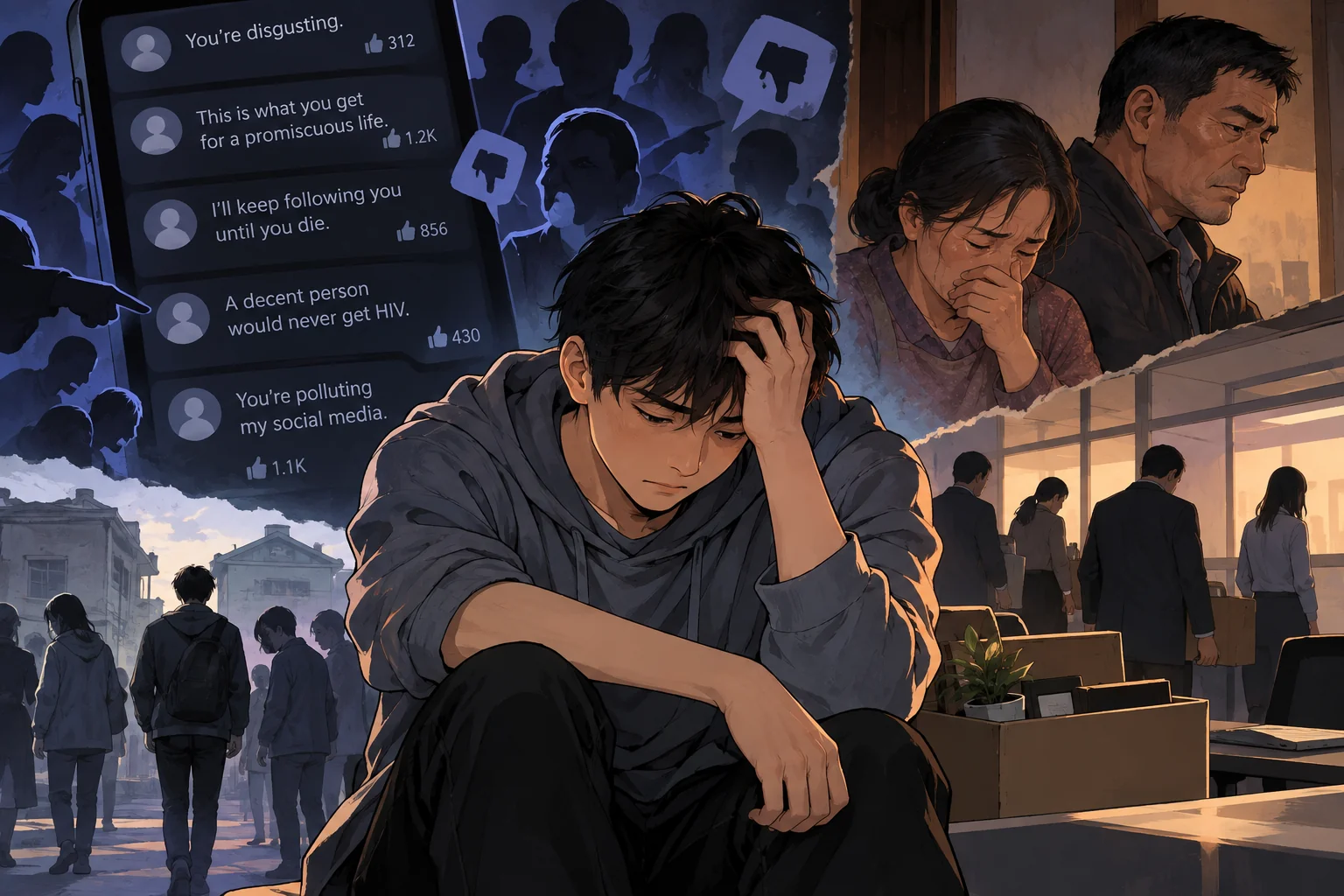
Then came the insults.
“You disgusting bastard. This is what you deserve for your filthy sex life.”
“I’ll keep watching until I see you die.”
“If you were a decent person, you wouldn’t have gotten HIV.”
“Oh my God. I can’t believe I just saw an HIV patient on my phone. You’ve contaminated my social media.”
I was not proud of every decision I had made in my past. I had made mistakes, and I had already spent years living with the consequences of them.
But online, I was no longer simply Jack.
I had become a diagnosis. A person living with HIV. A stranger whom people felt entitled to judge, mock, or curse.
There were kind comments too. A few people told me they respected my courage. Some thanked me for speaking openly. Those messages felt like a faint light in the middle of everything else.
The hatred from strangers was painful, but I could survive it. I had already lived through some of the darkest parts of my own life.
What I was not prepared for was what happened when the people who knew me saw the same video.
Then the People Who Knew Me Started Disappearing
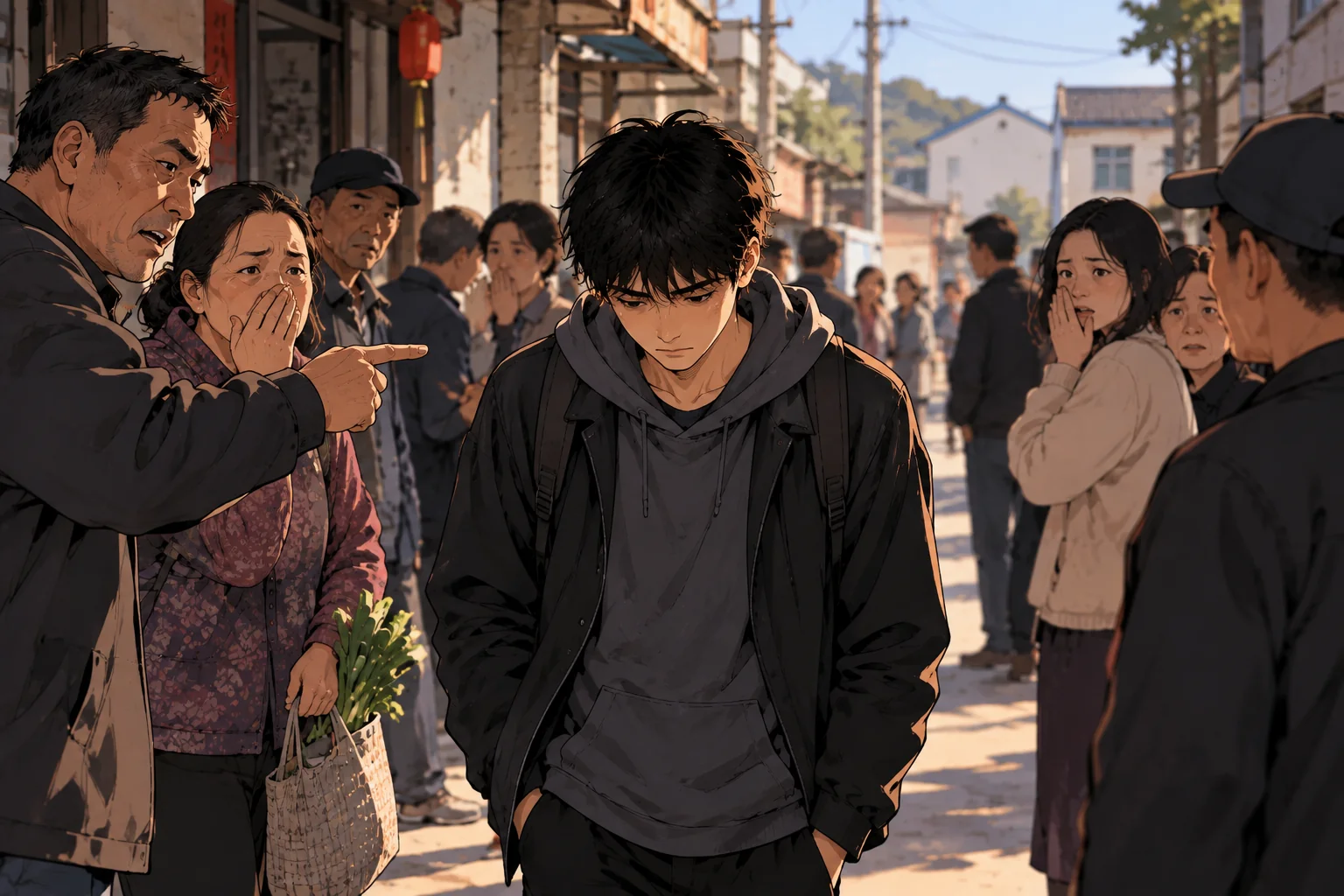
At first, relatives and acquaintances sent messages asking what had happened. Some sounded sympathetic. Some sounded worried. A few expressed pity.
Then, gradually, the conversations became shorter.
People stopped asking questions. Then they stopped replying altogether.
What had happened online had not stayed online.
In the place where I grew up, people knew each other. News traveled quickly, especially in a small community where family relationships, neighbors, work, and old friendships were closely connected.
No one came to our house.
There was no dramatic confrontation. No one stood at the door and told me I was no longer welcome.
They simply stopped coming.
That was almost harder to understand.
I began to feel like a ghost in the place where I had spent so much of my life. I was physically there, but it felt as though I had somehow stepped outside the world everyone else still belonged to.
I understood why people were afraid. I knew what it was like to hear the word HIV and immediately imagine the worst.
Still, I had imagined something very different when I decided to speak publicly. I had thought I might lose some privacy. I had thought strangers might attack me.
I had not imagined that the first people to disappear would be people who already knew my name.
“Is That You?” — The Message That Ended Our Friendship
I did not have many close friends. There was one person who had known me for years, someone I had always thought of as a lifelong friend.
Then one day, I received a message.
“Is that you? The person with HIV they exposed online?”
I knew exactly what he meant.
I replied that it was me.
He never replied again.
That was it.
No argument. No accusation. No final goodbye.
Just silence.
It hurt more than I expected.
But I could not bring myself to hate him. I understood fear because I had lived with that fear myself. I knew how easily the word HIV could turn something familiar into something frightening.
Understanding someone's fear, however, did not make losing them hurt any less.
I had thought going public might turn me into some kind of HIV advocate. Instead, one of the first things it did was make an old friend disappear.
The Look in My Parents’ Eyes Hurt More Than the Insults
My parents could not simply disappear from my life.
I was their only child.
My mother was a rural woman who had only finished about the third grade. She did not have much medical knowledge. For her, HIV was simply a terrible disease, something she had heard about for years through the same frightening images and assumptions that many people had grown up with.
She did not know what to say to me.
What I remember most was the look in her eyes.
It was not simply fear. It was helplessness. It was pain. She seemed to be looking at someone she loved and realizing that she could not protect him from what had already happened.
My father had spent years working in cities and had more exposure to the outside world. He did not say much.
But one sentence stayed with me.
“You deserve it.”
Two words.
They hurt more than most of the things strangers had written online.
I understood some of the anger behind them. My father knew about the risks I had taken. He may have been angry that I had not protected myself. He was also, I believed, angry that I had exposed our private lives by putting my HIV status in front of the entire world.
There was disappointment in it too. And fear. And pain.
After that, our relationship became quiet.
We still lived under the same roof. We still talked about things that had to be handled every day.
But we stopped talking about anything that mattered.
I learned that sometimes the deepest distance between people is not measured by how far apart they live, but by how much they have stopped saying to one another.
Nobody Asked Me to Leave. They Just Made It Impossible to Stay.
Then there was my job.
My coworkers had seen the video. At first, I expected questions. Instead, the office became quieter.
No one came up to me and said anything openly discriminatory.
Then, one after another, coworkers began to resign.
Each person had a different explanation. Family reasons. Personal reasons. Other plans.
I could not prove that every resignation had anything to do with my HIV status.
But the timing was difficult for me to ignore.
One person left. Then another.
The office became increasingly uncomfortable. No one said the word HIV to my face, but it felt as though everyone knew exactly what had changed.
There was no formal announcement, no confrontation, and no sentence telling me that I was the problem.
Instead, the exclusion seemed to hide inside ordinary behavior: polite silence, excuses, resignation letters, and people trying not to look directly at what had happened.
From where I stood, it felt as though the company had decided that keeping everyone else comfortable was easier than keeping me.
But that was my interpretation of what I was seeing. No one ever said those words to me.
The HR Call After Everyone Had Gone Home
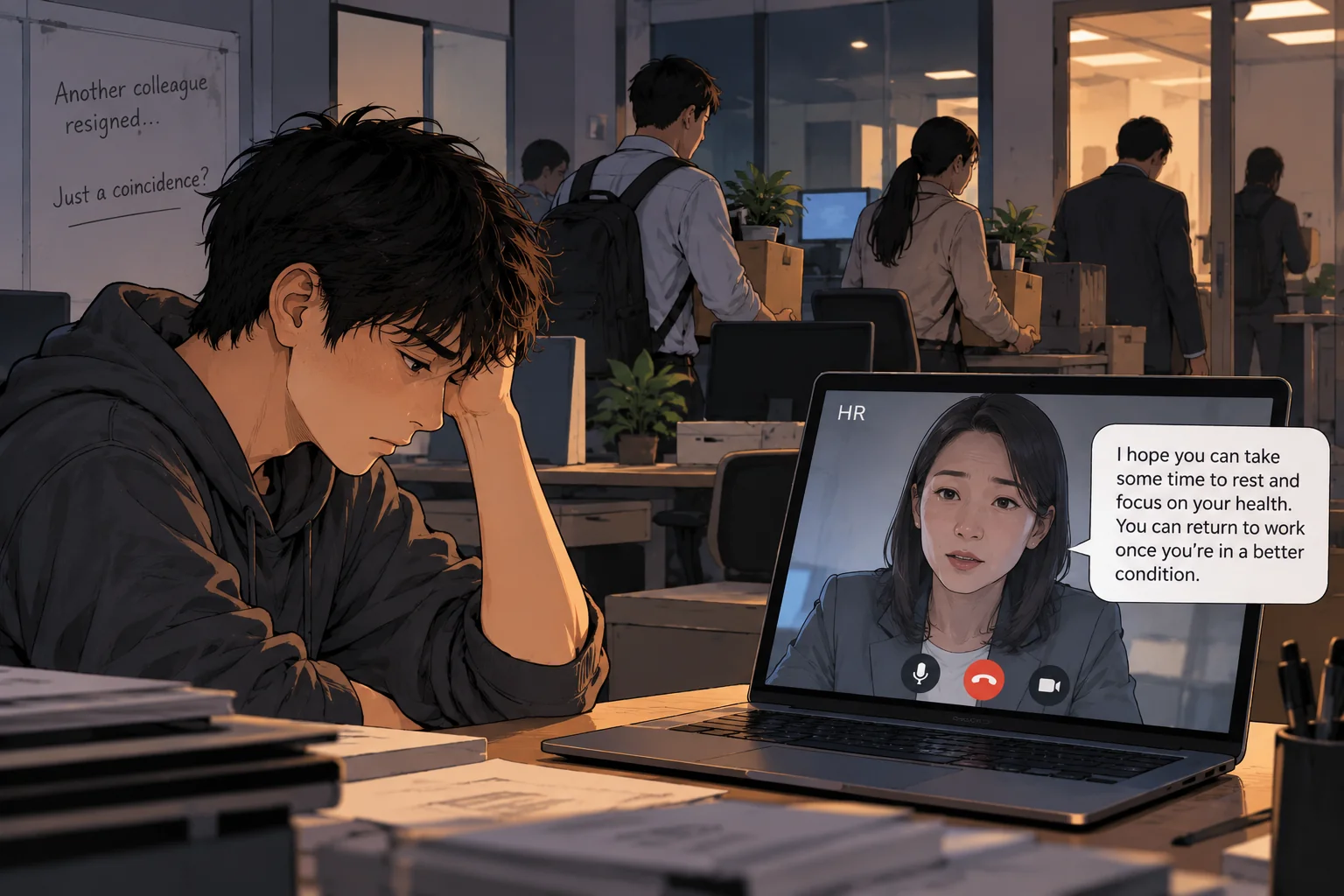
One evening after work, HR called me by video.
Not in person.
By then, I already had a feeling about what the conversation meant, although I knew that was my interpretation rather than something anyone had explicitly told me.
The HR representative began by expressing sympathy. They said they admired my courage and respected my decision to speak openly about HIV.
Everything sounded polite. Careful. Almost rehearsed.
Then came the part that mattered.
They said they hoped I would recover and return when I was healthy again.
The words were presented as concern.
But I understood what I was hearing.
No one said, “We want you to leave.”
No one said, “Your HIV status is the reason.”
They did not need to.
By that point, I was exhausted from trying to interpret what people meant when they refused to say it directly.
So I broke the silence myself.
“I’ll Resign.” — I Was the One Who Said It First
I told them I would resign.
I received a small amount of compensation and left.
There was no argument. No dramatic confrontation. No final accusation from either side.
I simply left the job I had depended on for a stable income.
I felt angry. I felt humiliated.
And strangely, I also felt relieved.
At least the final words had been mine.
“I’ll resign.”
I was the one who said them first.
Only later did I fully understand the economic price of going public. Losing privacy was one thing. Losing a job and a stable source of income was another.
Still, I told myself there had to be something positive left in all of this.
Now I had time.
I could devote myself to HIV advocacy. I could keep sharing my story. I could talk about prevention and what I had learned. Maybe people would listen. Maybe someone else would make a different decision because they had heard mine.
I needed to believe that the loss had a purpose.
I Told Myself This Was Rock Bottom
After I lost my job, I tried to calm myself down.
Maybe this was as bad as it gets.
I had lost friends. People around me had changed. My relationship with my parents had become distant. My job was gone.
What else could happen?
I kept telling myself there was still something I could do with the life I had left.
I started trying to reorganize everything around that idea. I wanted to put whatever time and energy I had into HIV education and advocacy. I wanted to tell my story more completely. I wanted people to understand what could happen when someone treated risk casually and waited too long to face the consequences.
I also began deleting things I did not want to see anymore: cruel comments, messages, and other reminders of what had happened after I went public.
I told myself to stop looking backward.
Just get through this.
Maybe I had finally reached the bottom.
My friends were gone. My family had become distant. My job was gone too.
Perhaps this was simply the price of telling the truth in public.
I thought losing my job was the worst consequence of what I had done.
I was wrong.
There was something worse waiting for me.
To be continued.