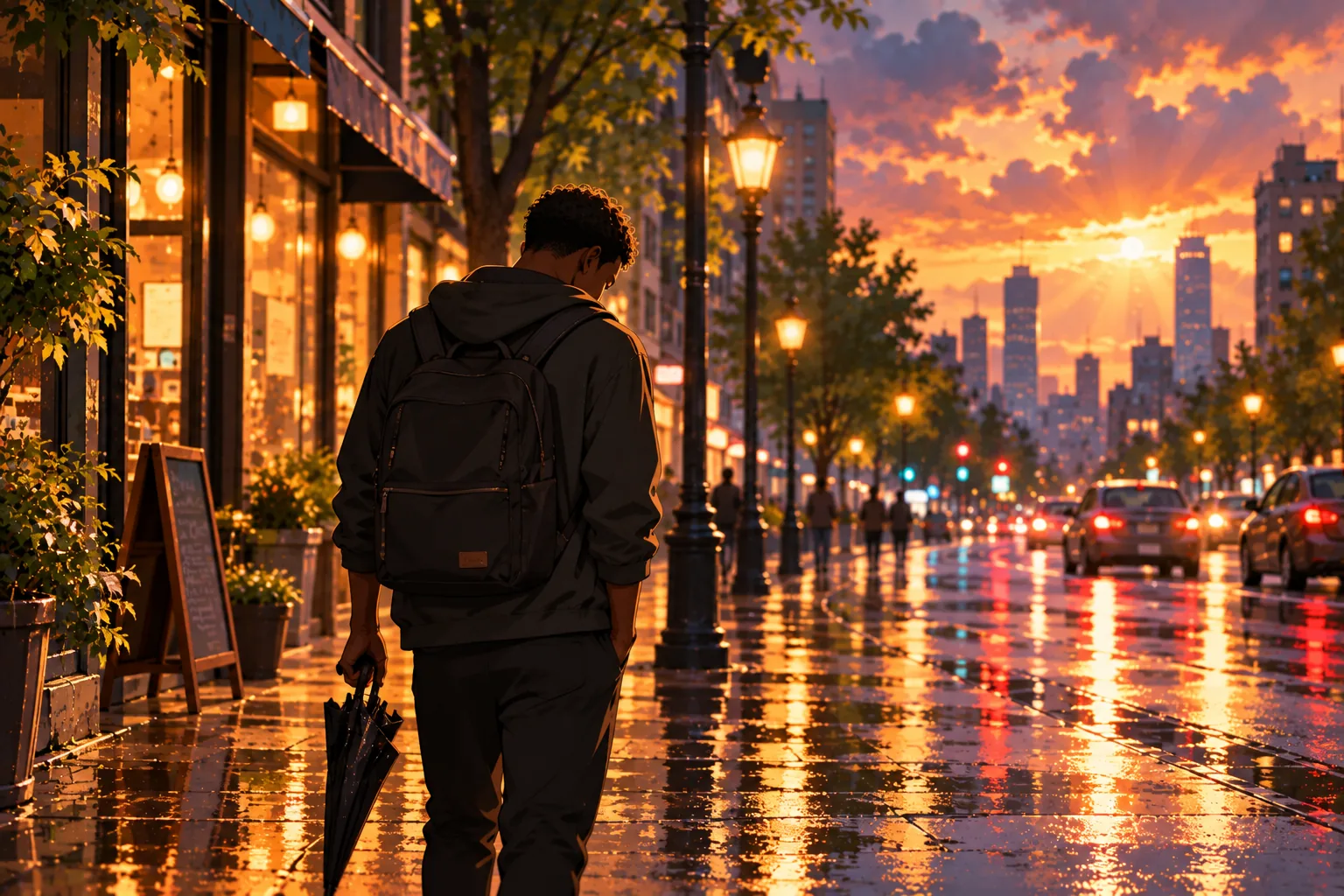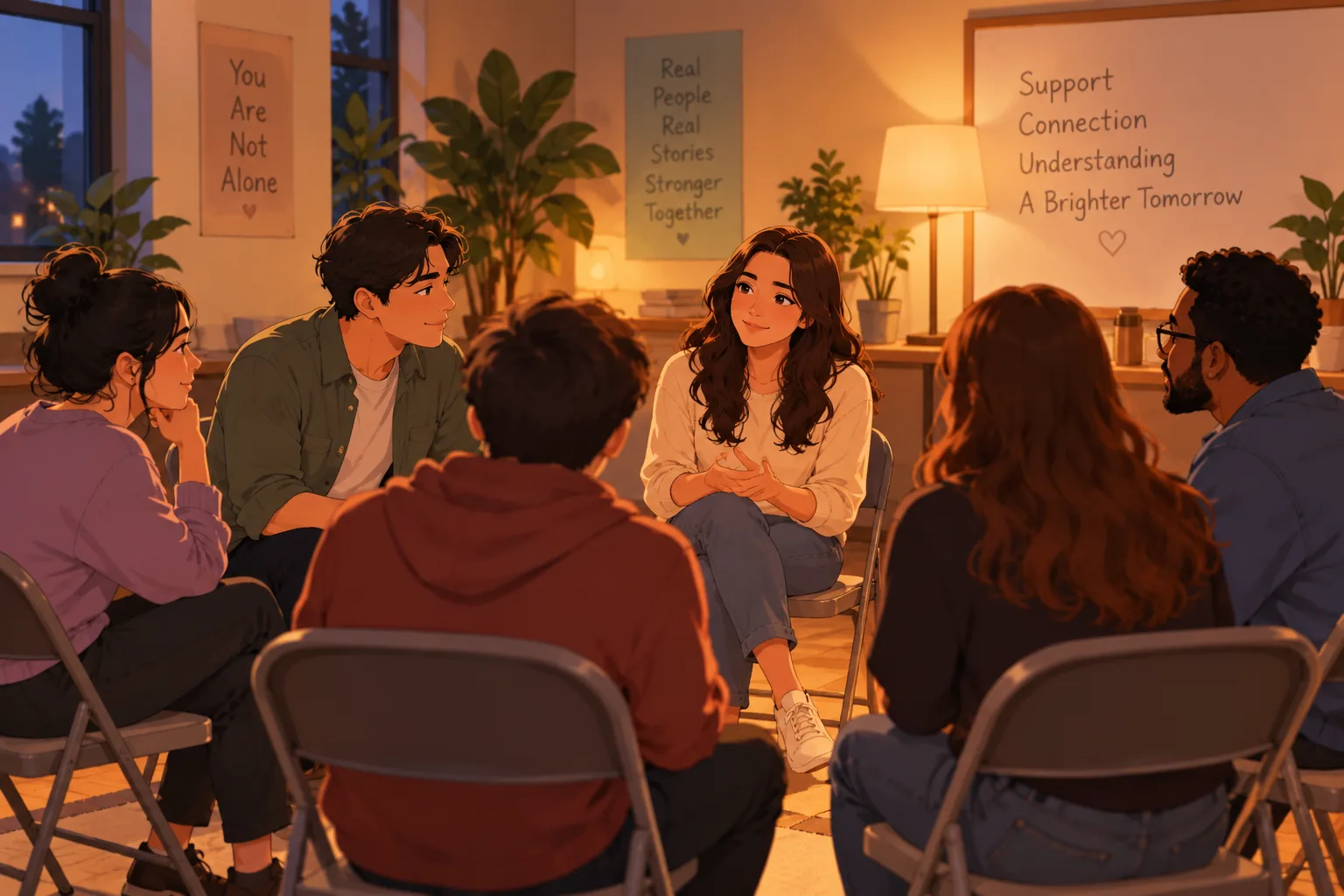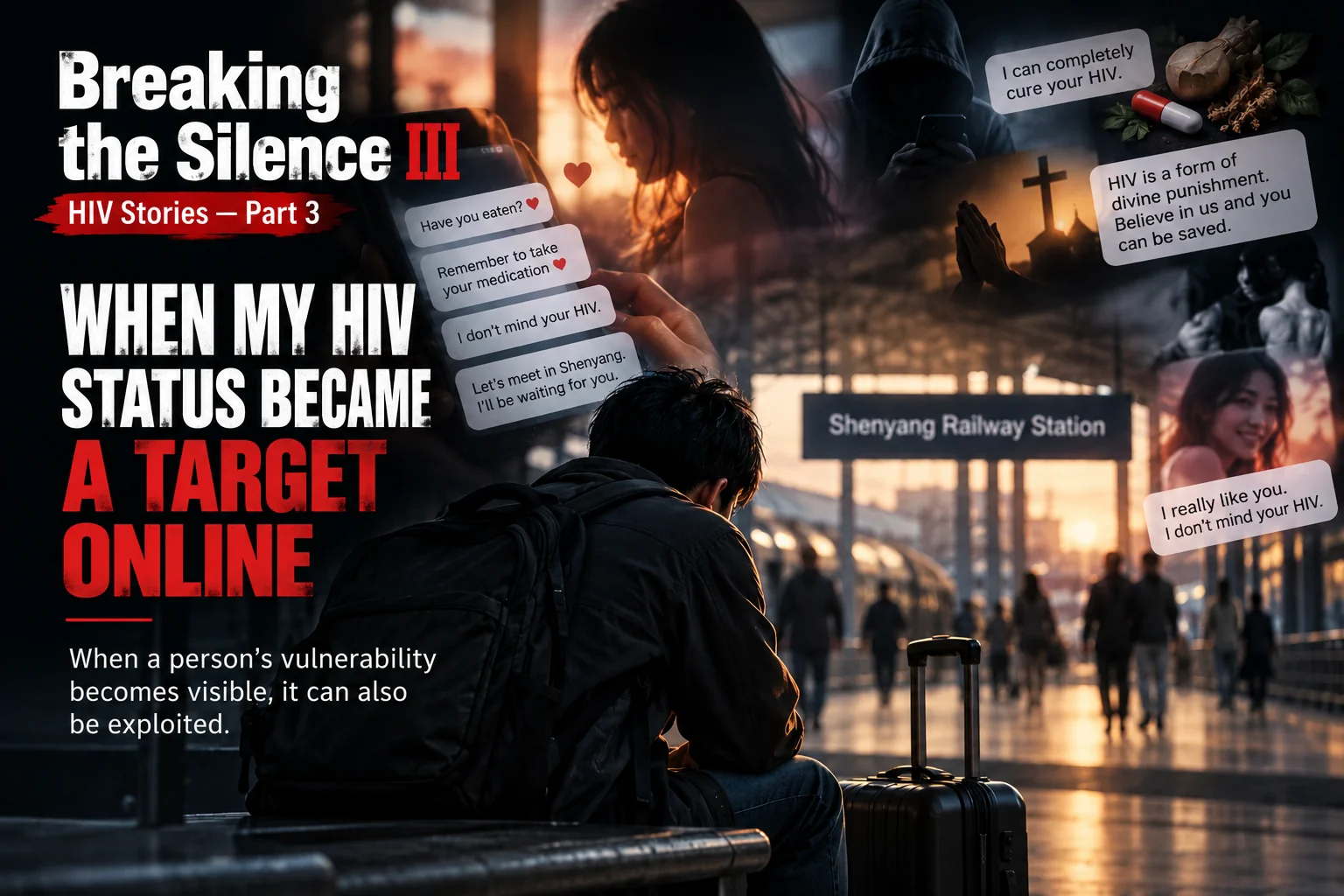
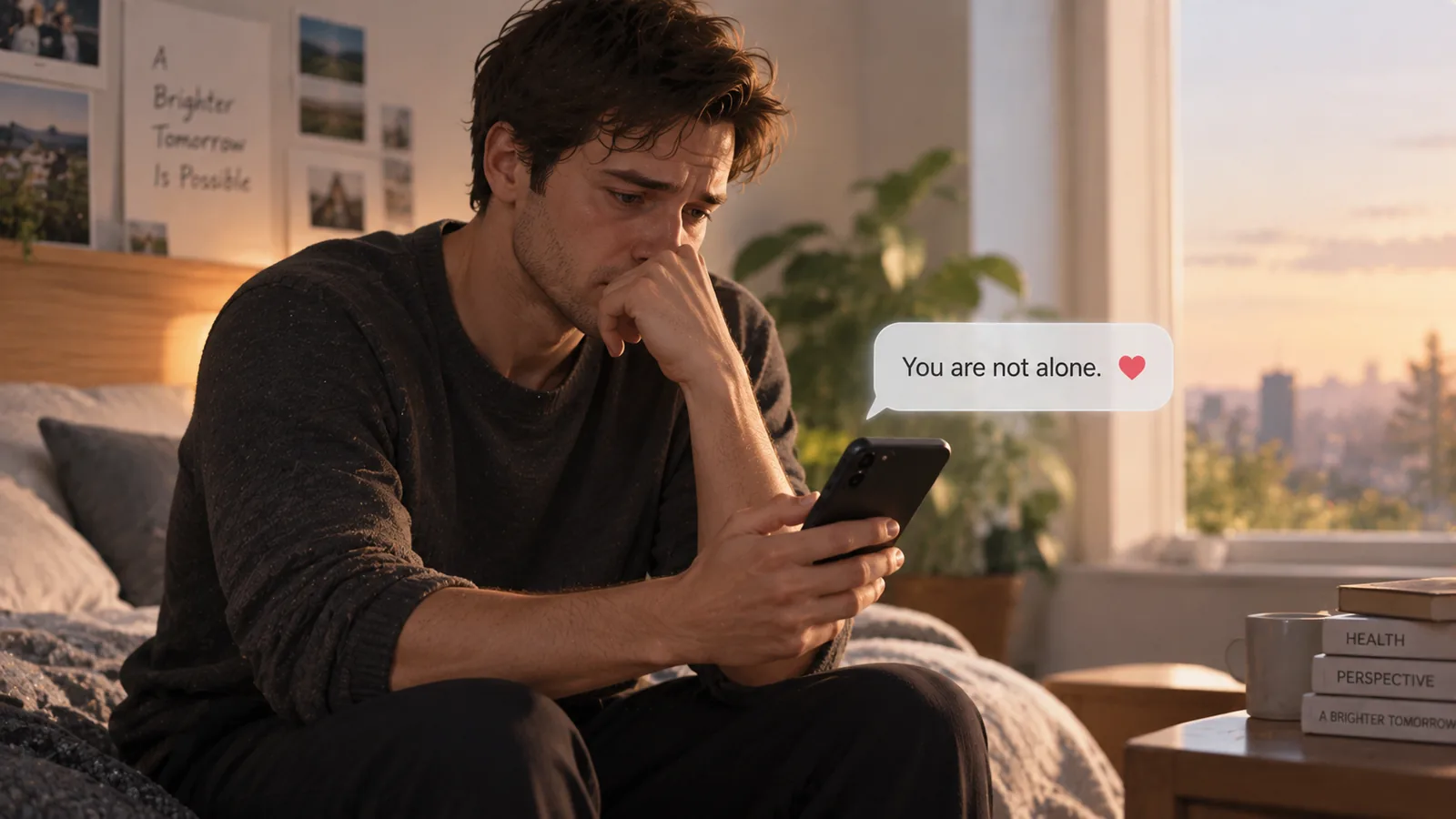
I work as a bank officer in New York, and I am gay. In early 2025, I was diagnosed with HIV. A little over a year has passed since then—a year during which my emotions went on an intense roller coaster ride. Shortly after my diagnosis, I met someone I thought was the love of my life, and we fell into a passionate, tangled romance. But in the end, we split up. At first, I was shattered and even thought about ending my life, until those quiet days of healing when I finally saw the truth.
I Thought I Had Accepted My Diagnosis
When I was diagnosed in early 2025, my world didn't crumble the way many might imagine.
As part of New York's queer community, HIV wasn't a foreign concept; subconsciously, I had even rehearsed this moment. I knew the medical facts: with modern treatment, it's just a manageable chronic condition. As long as I took my meds on schedule and stayed healthy, life could move forward as usual.
Back then, I firmly believed one thing: HIV changes my body, but it won't change my life.
I was intensely rational, but also intensely naive. I thought I had accepted HIV, but later I realized I had only accepted "medical HIV." I was completely unprepared for the real weight of living with it. I understood the logic of medical control, but I had never stopped to consider the suffocating silence that would await me when I looked into the eyes of someone I deeply loved and confessed my diagnosis out loud.
Then I Met Jack
That same year, Jack walked into my life.
He was a commercial client at our bank—dashing, witty, possessing that effortless composure typical of New York professionals. What drew me in most was his smile—a warm, disarming smile that always made me smile back before I even realized it.
When I learned he was also gay, our connection quickly spilled over from business into our personal lives. From cozy dinners at quiet bistros in the West Village to weekend strolls along the Hudson River, everything unfolded naturally. We fell head over heels in love.
Before Jack, HIV was merely a "medical issue" solved with a daily pill. But after falling in love with him, it suddenly mutated into a "relationship issue" standing between us. For the first time in my life, I had something I desperately cherished—and for the first time, I felt the terrifying vulnerability of having everything to lose.
I Hid My Status Because I Couldn't Bear to Break the Spell
When we first got together, I didn't tell Jack about my status. Internally, I was torn apart by three layers of agony:
First was reluctance. The sweet high of new love was intoxicating; every embrace and every tender response swept me away, and I couldn't bear to shatter it with cold reality. Second was wishful thinking. I kept reassuring myself, "I'll tell him once our bond is stronger," believing time would cushion the blow. But third came the overwhelming guilt. The deeper I fell for him, the more my silence felt like a cruel betrayal.
Tortured by guilt, I finally swallowed hard and confessed the truth. Jack's expression froze instantly; his gentle warmth dissolved into shock and anger. He sat in silence for a long time, then turned and left without a word.
Later, I found out that he had stayed up all night, frantically searching online for medical info on U=U (Undetectable = Untransmittable). He was desperately trying to overcome his own internal fear and social prejudice. A few days later, unwilling to let go of the warmth we shared, he chose to come back to me.
He didn't walk away right then, which filled me with a surge of newfound hope. I clung to that signal like a drowning man grasping a straw, completely blind to the fact that his struggle and hesitation were never true acceptance.
He Didn't Leave Right Away, But I Knew a Wall Had Risen Between Us
Though he stayed, I could feel an invisible wall rising between us.
I became impossibly sensitive and submissive. To make things easier for him, I yielded to his every wish, catering to him unconditionally just to prove that I was "still worthy of love." But when you have to constantly beg for permission to exist in a relationship, that relationship is already terminally ill.
I began obsessively overanalyzing his every micro-expression. I remember one afternoon at a café in Greenwich Village, when my hand accidentally brushed against his water glass. Almost instinctively, he pulled the glass half an inch away, before offering me a quick, awkward smile to cover it up. In that split second, I felt the high wall inside me completely crumble.
We saw each other less and less. The once passionate hugs shrank into cold text messages on a screen. What truly tortured me wasn't anything he said, but my relentless agonizing over whether he was quietly drifting away.
After Our First Breakup, I Took His Departure as a Sentence Against Me
In July 2025, during the sweltering Manhattan summer, we had our first breakup. My mind told me not to hold him back, but emotionally, I couldn't bear to let go.
Three months later, he reached out again. We resumed sporadic contact, but this connection was like the shallow gasps of a dying patient—faint, distant, barely alive. Even though I could feel his cold detachment, whenever his name lit up my phone screen in the dead of night, I felt a desperate, toxic satisfaction.
During this painful back-and-forth, my mindset completely warped. I blamed the entire failure of our relationship on my HIV diagnosis, building a hopeless chain of logic: Jack left me because of HIV, therefore no one will ever accept HIV, therefore I will never be loved again. I took one specific person's retreat from one specific relationship and interpreted it as the universe issuing a final verdict on my worth as a human being.
When He Said "Unless You're Cured," I Completely Fell Apart
In early February 2026, as a heavy snow blanketed New York, we agreed to delete each other's contact information after receiving one final goodbye text filled with polite well-wishes.
But I couldn't do it. I kept texting and calling unilaterally, frantically trying to win him back like a madman. In the end, he blocked me everywhere and changed his phone number.
Before disappearing forever, he left me with one last text: "Unless you are completely cured of HIV, there is no way we can ever be together again."
In New York's gay community, U=U is common knowledge. Jack wasn't ignorant of this, yet he still demanded a complete cure. It looked like a ray of hope on the surface, but it was actually the ultimate rejection—holding out a condition that is impossible to meet.
Reading those words, I had only one thought: just kill me now. If I'm gone, the pain ends.
My last shred of hope dissolved. I fell into a spiral of intense self-loathing, blaming my past recklessness, hating the virus, and hating myself. I convinced myself I was "dirty" and unlovable, unworthy of a normal life. I spent those days in a daze, surviving on foolish illusions—fantasizing that we still had a chance, dreaming of a miraculous cure, even turning to tarot cards and fortune-telling. I sank deeper and deeper into despair. The profound shame and agony rising from the bottom of my soul made me want to let it all end on one of those freezing nights.
I Thought HIV Was Killing Me, But What Really Trapped Me Was My Refusal to Accept Loss
Driven by sheer despair, I poured my story into a post on Reddit. I wasn't seeking redemption or help; I just wanted someone out there to know what I had been through, to know that I had truly loved someone.
Comments flooded in with words of encouragement—people telling me to stick to my meds, move to a new city, or stay strong. None of it penetrated my numbness, until I stumbled across a comment from a stranger:
"Bro, have you ever considered that even if you didn't have HIV, you might still face the pain of losing someone you love? The point isn't to hate what HIV did to you; the point is having the courage to accept that people leave."
God, it was like a lightning bolt snapping me awake from an endless nightmare.
I stared at those words on the screen, reflecting for the very first time: what if I didn't have HIV? Could I guarantee that Jack would love me forever?
The answer was a resounding no. Even without HIV, people fall out of love, drift apart, change their minds, or simply realize they want different paths.
It had never crossed my mind that even if I were completely healthy, this relationship might not have lasted anyway.
I had been soaking in the agony of loss with every pore of my body, completely blind to the fact that my own helplessness, anxiety, and fear of abandonment were the real roots of my torment. I wasn't someone who lost everything because of HIV; I was simply a person going through heartbreak. HIV might have been one of the reasons Jack retreated, but what pushed me to the brink wasn't the virus—it was my refusal to accept his departure, insisting on slapping a label of shame onto my broken heart.
I Finally Understood: What I Needed to Heal Wasn't HIV, But Myself After Losing Someone
Epiphany didn't instantly wipe away the pain, but it severed my cycle of self-destruction.
I stopped chasing after him and surrendered the foolish fantasy that a medical breakthrough would bring him back. I accepted the reality that Jack was gone, just as I accepted that HIV was a part of my body.
I returned to my desk at the bank, reconnected with friends, and eventually tiptoed back into dating. This time, I stopped treating my disclosure like a groveling confession of guilt. Instead, I saw it as a transparent, honest courtesy—presenting the facts openly and giving the other person the dignity of choice.
I learned to accept that people have the right to decline, while reminding myself that I still hold the right to be loved. True liberation isn't forcing everyone to accept my status; it's knowing that even if someone walks away because of it, I will never again question my worth as a human being.
HIV Didn't Give Jack Back to Me, But It Taught Me to See Myself Again
HIV didn't bring Jack back, nor did it rewrite our story into a fairytale. But it completely shattered my delusion that losing him meant losing my entire life.
I still live in a body with HIV, but I am also a bank employee handling accounts in New York, a friend who laughs at silly jokes, and a person who is still capable of loving bravely. HIV is a medical reality I manage, but it is not the entirety of who I am.
Disclosing my status is no longer a desperate job interview where I beg to be hired; it's simply an honest conversation with a partner. They can choose to stay or walk away, but their choice will never define my value. Partings and reunions are the natural rhythm of human life—no relationship comes with a lifetime guarantee.
Jack left, and I survived the brutal heartbreak. Standing on top of those ruins, I finally retrieved the self I had abandoned for so long.