Almost a Year Went by After My STI Diagnosis
I don't remember the exact day I stopped dating.
There was no dramatic breakup, no tearful confrontation, and nobody standing in a doorway telling me I was broken. No one ever said the word undateable to my face.
I simply quietly withdrew.
At first, I framed it as a temporary pause. I deleted my dating apps because I didn't have the stomach for small talk, then let unread messages sink to the bottom of my inbox. When friends offered to set me up, I laughed it off with a practiced line: "I'm just taking a break right now."
That phrase became my armor. It explained everything to the outside world without requiring me to confess anything to myself.
The diagnosis itself wasn't the hardest part. I could grasp the medical facts as a simple bodily glitch, an inconvenience to manage. What I couldn't figure out was how to navigate the social friction attached to it.
Before, meeting someone had been plain and linear: you shared a drink, you laughed, you kissed, and perhaps it grew into something real. After my diagnosis, every ordinary milestone felt burdened by a hidden checklist. When do I bring this up? How will their face change? Will they draw back their hand?
Without realizing it, I began performing preemptive strikes. If I caught an attractive woman's eye across a room, my first thought wasn't Maybe I should say hi. It was Don't bother.
Isolation quickly became its own routine. Saturday afternoons were the quietest torture—sitting on the edge of my sofa, telling myself I was enjoying the peace, while staring at a dead screen.
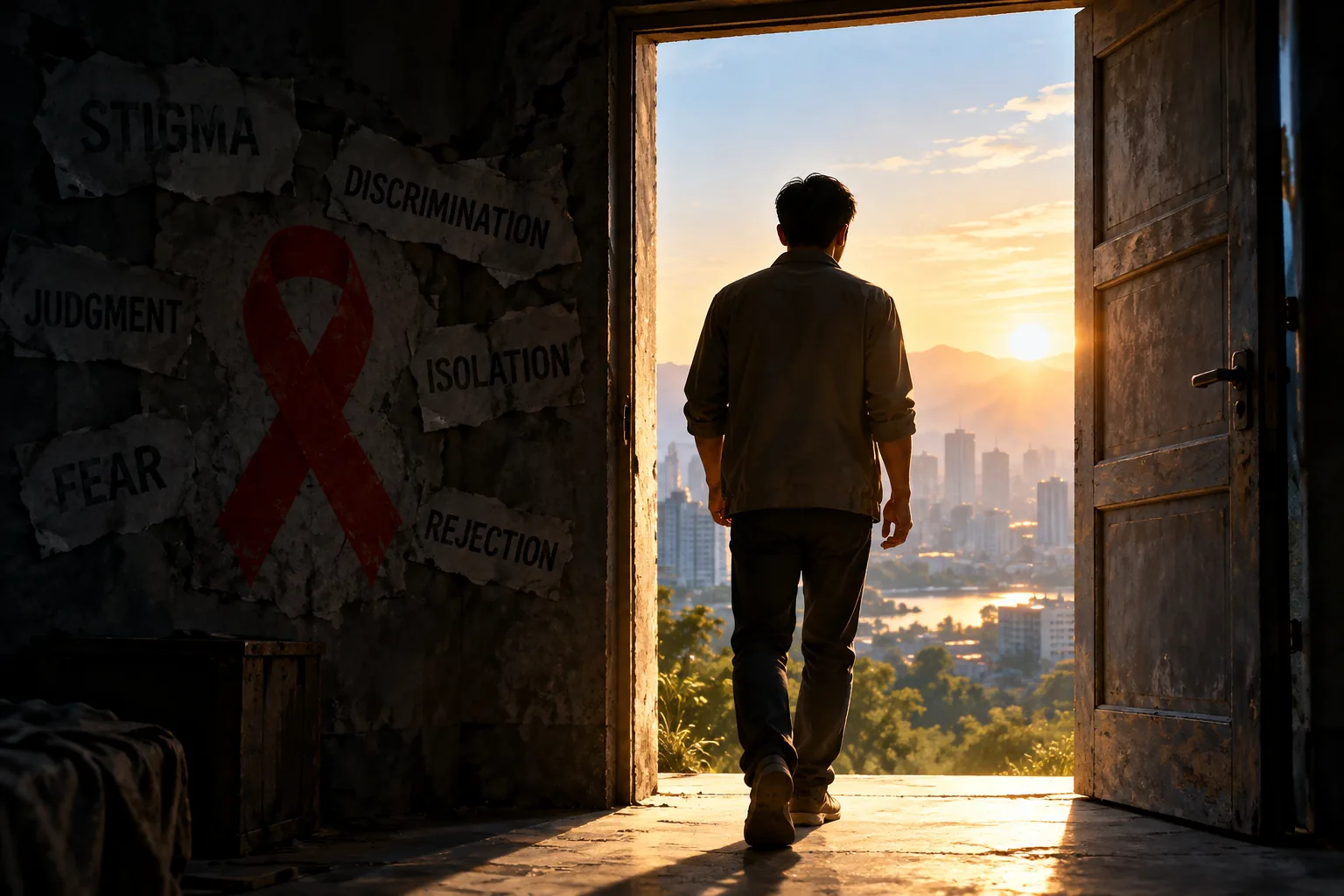
Nearly a year slipped away like that, built out of invisible, everyday concessions. And somewhere in that quiet stretch, my internal narrative underwent a subtle, dangerous shift.
I stopped thinking, I'm just waiting until I'm ready. I started thinking, Maybe this is just who I am now.
Loneliness Made Me Open a Dating App Again
Loneliness doesn't care whether you think you're ready. It simply gets louder.
I didn't miss the dramatic highlights of romance; I missed the mundane scaffolding of intimacy. Having someone to text a useless photo to. Arguing over what to order for dinner. Complaining about a tedious client meeting and having another person say, "Yeah, that sounds terrible."
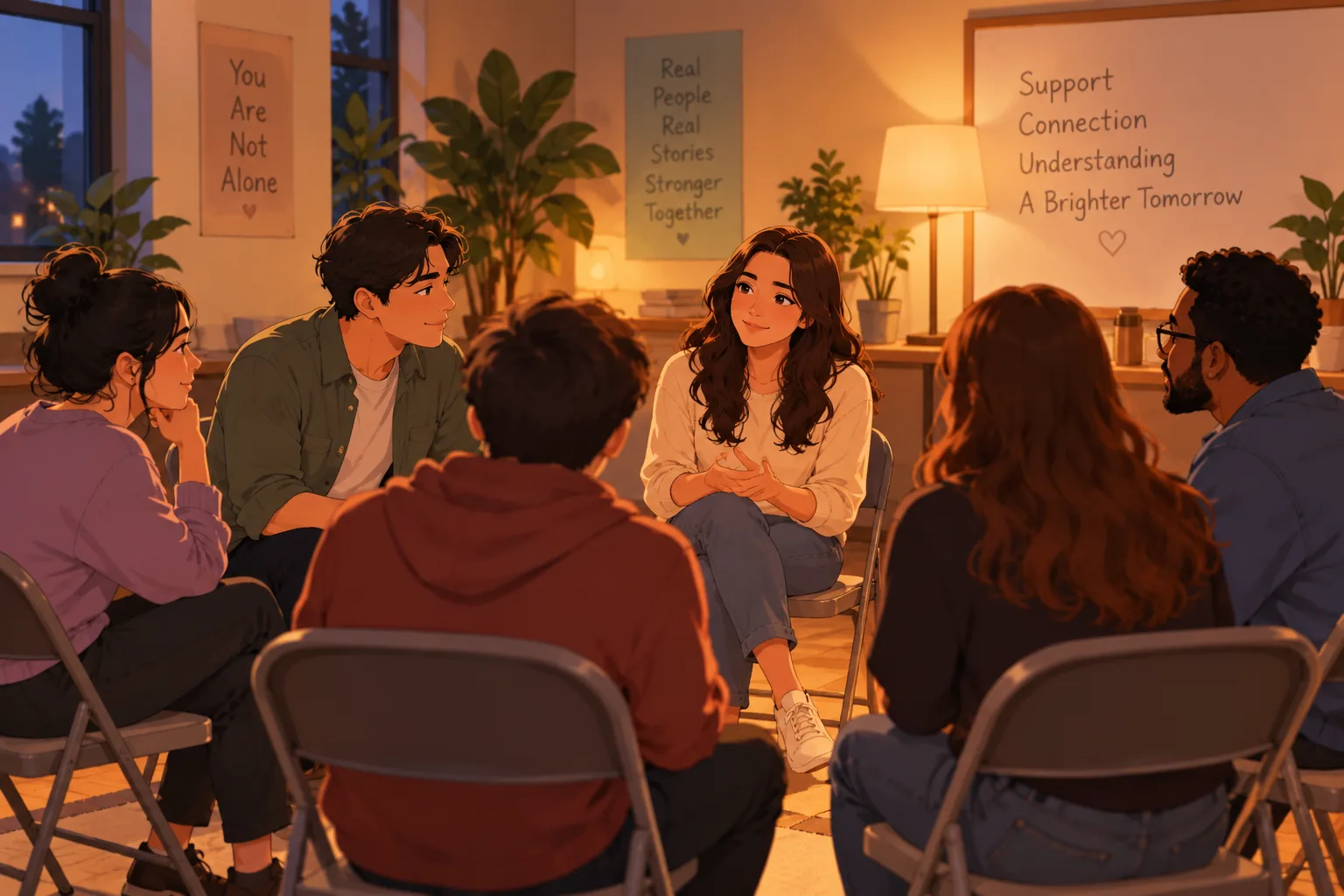
That craving eventually led me to online forums late one night. I hovered as a lurker, reading posts by people navigating first dates, long-term relationships, disclosures, and breakups. A few people who had lived with their diagnosis for years talked about it with the casual irritation you'd reserve for a car that routinely needed an oil change.
It didn't cure my anxiety overnight, but it made my diagnosis feel less like a final verdict.
A few days later, I re-downloaded a mainstream dating app.
To avoid the inevitable question of disclosure, I kept every conversation rigidly on the surface. The moment a chat felt personal, my internal alarm sounded. I'd reply quickly for twenty minutes, then vanish for half a day.
Then I matched with her.
She was the only person who didn't let the conversation die when I retreated. After I gave a flat, polite answer designed to let the chat stall, her name popped up again two days later with a casual reference to a joke from earlier. She wasn't pressuring me; she simply kept finding effortless reasons to restart a thread I had tried to abandon.
Eventually, she floated the question: "Do you want to grab coffee or a drink sometime this week?"
I stared at the screen for a long time. My immediate instinct was to leave it unaddressed, so I did. Forty-eight hours later, she sent a random, funny meme—no passive-aggressive follow-up, just an open door.
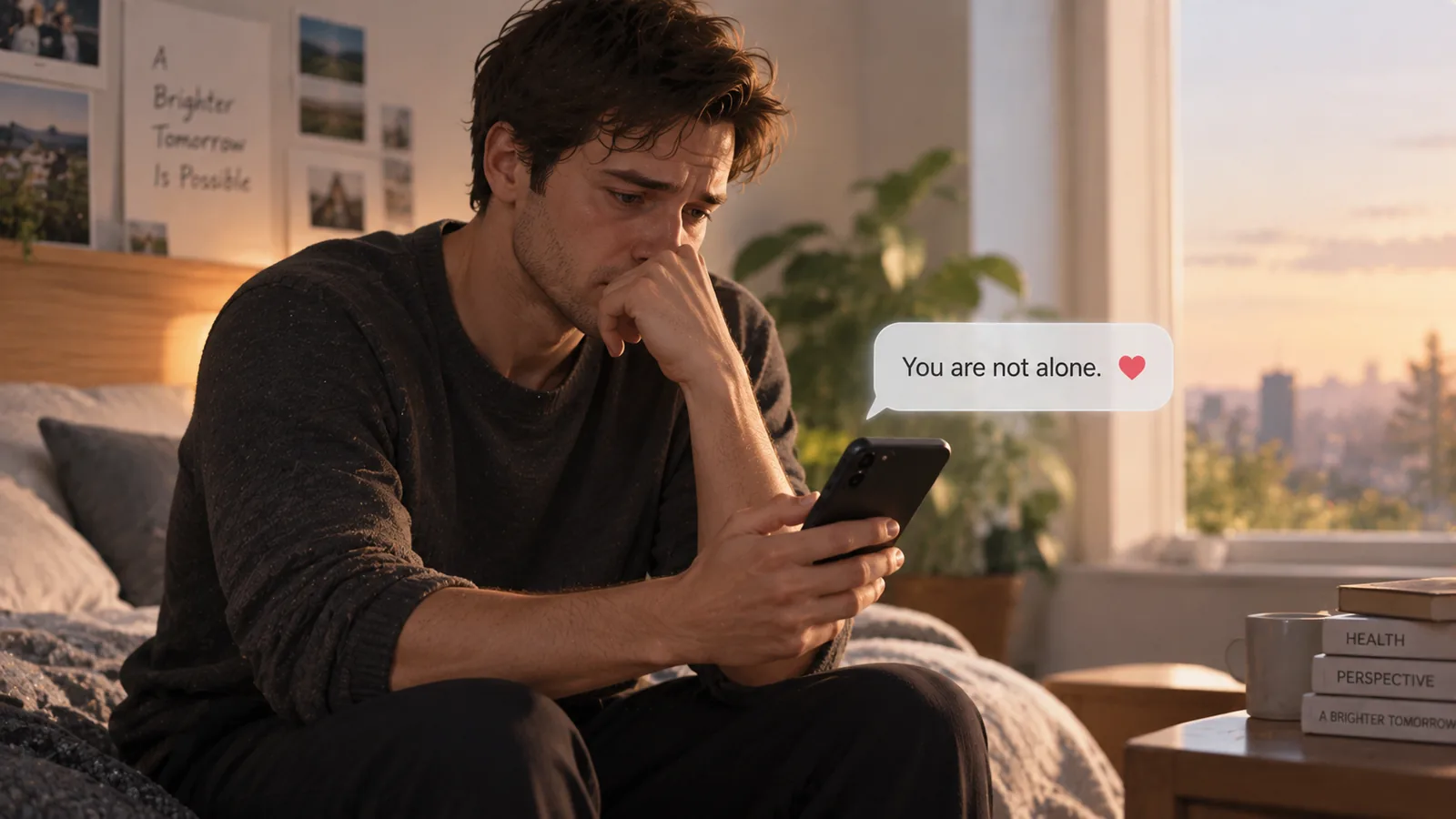
After weeks of gentle attempts on her part, she asked one more time. I sat on the corner of my couch, looked down at the glowing screen, and finally typed out a single word:
"Okay."
Saying Yes Brought Almost a Year of Fear Back All at Once
The moment I hit send, a brief wave of relief washed over me. It lasted roughly thirty seconds before the panic landed squarely on my chest.
I hadn't been on a date since my diagnosis. My brain instantly mobilized its ancient defense systems, fast-forwarding to the inevitable moment of confession. I imagined the slight tightening around her eyes, the awkward beat of silence, and the polite, gentle exit strategy that would follow.
The night before, I spent hours drafting and deleting excuses on my phone: Something came up at work... I'm not feeling great tonight...
By the time I left my apartment the next afternoon, I wasn't excited; I was simply trying to keep my hands steady on the steering wheel.
I arrived at the harbor area hopelessly early and parked three blocks away. When I finally forced myself out of the car and walked toward the waterfront, I spotted her standing by a brick pillar near the water, wearing a dark coat and checking her phone.
I froze twenty yards away. I stood paralyzed on that sidewalk, my thumb hovering over the screen to send a last-minute cancellation.
In the end, I didn't run away, but I didn't handle it gracefully either. I stumbled over to her fifteen minutes late, my chest tight and my mind racing.
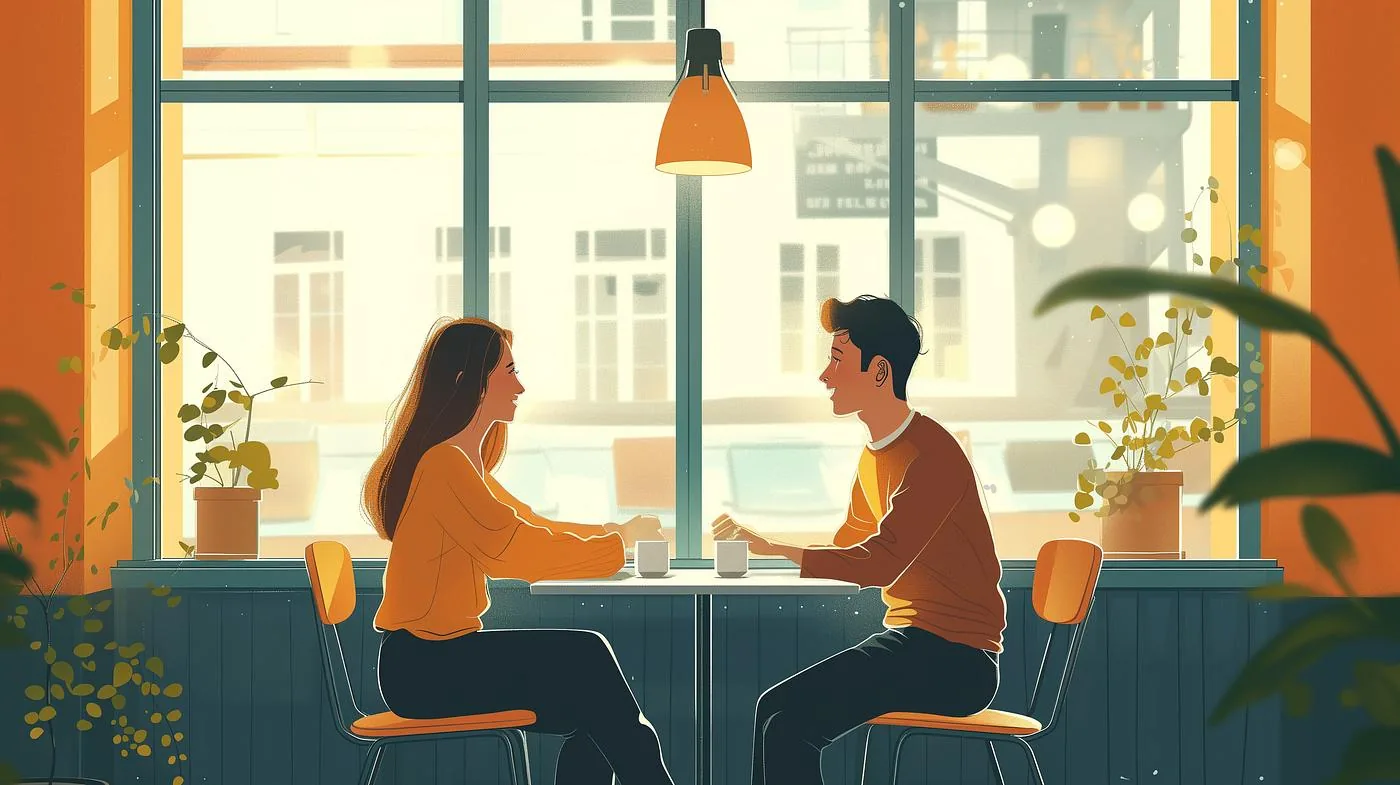
We ducked into a nearby café to escape the wind, but that first meeting was a disaster of my own making. I was so hyper-vigilant, so terrified of letting my guard down, that I could barely hold eye contact. I over-thought every word, stumbled through basic small talk, and checked my watch constantly out of sheer nerve. After twenty uncomfortable minutes over lukewarm coffee, I made a clumsy excuse about an early work commitment and practically fled.
Walking back to my car, I felt a deep wave of humiliation. I was convinced I had ruined any chance of a connection, proving to myself that I was no longer capable of normal dating.
She Kept Asking, and Eventually I Said Yes to a Walk
I expected radio silence after that painful twenty-minute disaster.
Instead, a text came through an hour later: "Hope your work thing goes okay! You seemed super stressed today—no pressure at all, just wanted to say it was nice to put a face to the name."
I read those lines twice. There was no subtle judgment or offended pride.
Over the next two weeks, we kept texting. She didn't interrogate me about my awkward behavior, nor did she press for an explanation. She simply anchored us back to an easy rhythm, sharing small moments from her day.
When she floated the idea of meeting again, I defaulted to my usual hesitation: "Maybe sometime soon."
A few days later, a photo popped up on my phone—a gray afternoon at the harbor path, the water flat against the concrete. Her message followed: "I'm going for a walk along the waterfront on Sunday. No coffee shops, no awkward tables. Just a walk if you want to join."
She had completely removed the pressure of a traditional date.
Sunday arrived under a pale gray sky. I met her by the boardwalk, and this time, when her eyes met mine, her face broke into an unforced smile.
"Hey," she said.
"Hey."
She turned toward the water, and I fell into step beside her.
Walking carries a completely different geometry than sitting across a small table. In a restaurant, silence feels like a failure; on a path, silence is just part of the landscape. There was the moving water, tugboats on the horizon, and cold sea air.
We talked about chaotic work projects, local food, and terrible indie films. At some point along the seawall, I realized I had stopped checking my pockets or clocking the minutes. I was just walking next to someone, breathing quietly.
We walked for nearly two hours. A week later, she suggested another walk. Then another.
Gradually, seeing her stopped feeling like a test and became something I anchored my week around. But as we grew closer, the secret pressed heavier against my ribs. She knew so much of me—my pet peeves, my coffee habits, my bad moods—yet she still didn't know the single fact I had been hiding for almost a year.
I realized the next move had to be mine.
Then I Told Her the Part of Me I Was Most Afraid She Would Reject
By then, we had drifted past the point where I could pretend this was casual. We had built a quiet architecture of habits—walks at dusk, shared meals, inside jokes sent throughout the workday.
We were walking along the seawall one crisp evening when I simply stopped.
She took three steps ahead before noticing, then turned around, pulling her scarf higher against the wind. "What's up?"
Every rehearsed script in my head evaporated. I cleared my throat, my palms damp inside my coat pockets. "There's something about my life... something I should have brought up earlier."
She didn't interrupt. She just waited.
"I have an STI."
The sentence hung in the cold air. No dramatic music, no sudden shift in the tide. Just a quiet, flat beat of reality. I could hear distant laughter from a nearby patio and a bicycle rattling past behind us.
She looked down at her boots for a long moment, then back up. "Okay," she said softly.
My anxiety immediately hijacked my tongue. I started over-explaining, pouring out clinical details, statistics, and medical management terms she hadn't asked for.
She raised one hand slightly, a gentle, grounding gesture. "Okay. You don't have to lay out a legal defense right now."
I stopped mid-sentence. I had spent nearly a year compiling arguments to prove I wasn't careless or broken, but she wasn't asking me to prove anything. She was simply listening.
"Why didn't you tell me before?" she asked gently.
I stared at the concrete and settled for the plain truth: "I was scared."
She nodded slowly. She didn't hand me effortless absolution, nor did she pretend it was trivial. She looked out toward the dark water, then turned back: "I wish you'd trusted me enough to let me make my own decision."
The words hit me deeply. I thought I had been protecting myself through hesitation, but in reality, I had been making the choice on her behalf, assuming rejection before giving her any agency.
"This doesn't make me want to stop seeing you," she added. "But I do need to read up on it and think. I want to understand what this means for both of us."
"Of course," I said.
A few seconds later, she reached out and took my hand.
Things didn't magically become effortless overnight. There were follow-up conversations, medical facts to review, and honest discussions about safety and boundaries. But she stayed.
A Year Later, We Broke Up for the Most Ordinary Reason
A year later, we broke up.
Not because of my STI. Not because she woke up one morning and decided the medical realities were too daunting.
We broke up for a far more ordinary reason: we simply weren't right for each other anymore.
In the months after that evening on the boardwalk, our lives intertwined in all the ways couples do. We spent rain-soaked weekends together, took long road trips, left drawers of clothes at each other's apartments, and met each other's families. We had stupid arguments about who forgot to fix a cabinet hinge or where to get takeout.
My diagnosis didn't vanish—there were still medical precautions and routine conversations—but it no longer sat at the center of the room. We were simply a normal couple managing the everyday variables of life.
And then, slowly, love proved insufficient to bridge our fundamental differences. We envisioned different futures and navigated stress in incompatible ways.
There was no explosive betrayal. It was like watching a door gradually swing shut.
Eventually, late one evening, she looked across the table and said softly, "I don't think we're making each other happy anymore."
I knew she was right.
We sat there for a long time. There were tears, a quiet ache, and a practical conversation about logistics: packing up left-behind boxes, deciding what to do about trip tickets we'd already booked, and breaking the news to friends.
It was painfully, beautifully ordinary.
And that ordinary ending handed me a realization I hadn't known I needed.
For almost a year before meeting her, I had used my diagnosis as an all-purpose explanation for every fear of intimacy. I believed that any rejection would stem from my health status.
Yet here I was, sitting across from a woman who knew every clinical detail of my life, had chosen me anyway, had loved me deeply for a full year, and was now leaving for reasons that had nothing to do with it. She wasn't rejecting my diagnosis; she was ending a relationship that had run its course.
That year changed my internal math. It taught me the difference between someone might reject me and everyone will reject me.
A few months after we split, I found myself standing outside a small café before a first date with someone new. I was ten minutes early. I checked my phone once, then slid it back into my coat pocket.
For a brief second, in the glass reflection, I could almost see the ghost of my former self standing across the street, terrified and searching for an excuse to run.
I understand him now. But he didn't need to become fearless, and neither do I.
I just need to take those final ten steps, open the door, and let the person sitting inside actually meet me. And if she says no, let it be her no—not mine, spoken before she's even had the chance to take a breath.