
Having an STI does not reduce your right to set sexual boundaries.
You do not owe someone sex because they accepted your diagnosis. You do not owe someone condomless sex because they were kind about your health. And you do not have to keep saying yes after you have started.
For people dating with an STI, one of the most subtle risks is acceptance guilt: the feeling that someone who welcomed you despite your diagnosis deserves extra sexual accommodation in return.
They do not.
A healthy sexual relationship is built on mutual consent, clear boundaries, and respect for changing preferences. CDC recommends discussing sexual health with partners before sex, including STI status, testing, and safer-sex choices.
Your STI status is health information.
Your consent is yours.
Those two facts do not cancel each other out.
The "Compensatory Gratitude" Trap: Reclaiming Power in the Bedroom
After STI disclosure, it can be emotionally difficult to enter a sexual relationship on completely equal psychological footing.
You may be thinking:
"They accepted me."
Then:
"I don't want to seem demanding."
Then:
"Maybe I should just go along with what they want."
That progression can quietly turn acceptance into a form of emotional debt.
The problem is not gratitude itself.
It is the belief that gratitude must be repaid with access to your body.
The Psychology of Indebtedness: How "Acceptance Guilt" Silences Boundaries
STI stigma can make rejection feel especially threatening.
Someone may have spent days worrying:
"What if they leave when I tell them?"
So when the other person responds positively, the emotional relief can be enormous.
That relief can create a dangerous mental shortcut:
They accepted my STI → I need to keep them happy → I shouldn't make too many requests → saying no could make them leave.
This is how healthy compromise can turn into self-abandonment.
You may stop asking for condoms.
You may agree to sexual activities you do not actually want.
You may laugh off pressure that would normally bother you.
You may keep quiet when something hurts.
You may apologize for changing your mind.
None of those reactions means you are weak.
They mean the fear of losing acceptance has started competing with your ability to speak freely.
The antidote is a simple reframing:
Someone accepting your STI status does not create a debt that your body has to repay.
A person who respects you is not giving you a special favor.
They are participating in an ordinary, mutually respectful relationship.
Acceptance Is a Baseline, Not a Favor
A healthy partner can simultaneously say:
"Your STI doesn't change how I feel about you."
and:
"Let's talk about what protection feels right for both of us."
Those statements are compatible.
You can also say:
"Thank you for accepting me. I still want to use a condom."
There is no contradiction.
Your STI diagnosis does not lower your sexual worth.
It does not make your preferences less legitimate.
And it does not create a requirement to be more sexually available than someone without an STI.
The basic standard remains equality:
Both people can ask.
Both people can decline.
Both people can renegotiate.
Both people can stop.
RAINN describes consent as clear, voluntary, ongoing, and reversible, emphasizing that agreeing to one activity does not automatically mean agreeing to another and that consent can be withdrawn at any time.
The Condom Negotiation Protocol: Firm Boundaries Without Awkwardness
Condom negotiation becomes easier when you stop treating it as a debate about who is medically "right."
A condom can be an important STI and pregnancy risk-reduction tool. CDC states that correct condom use reduces STI risk but does not eliminate it, with particularly strong protection against infections transmitted through relevant genital fluids and less complete protection for some skin-to-skin infections.
But the sexual-health decision is still personal.
If your boundary is:
"I only have sex with condoms."
that does not need to become a scientific argument.
It is a boundary.
Why Condoms May Still Matter in Same-Status Matches
Two partners having the same STI does not automatically mean that condoms are medically required.
But it also does not automatically make condoms unnecessary.
You may want them because:
- you want additional protection against another STI;
- you want to reduce the chance of transmission or exposure to certain infections;
- you feel psychologically safer with a barrier;
- pregnancy prevention matters;
- you simply prefer sex with condoms.
CDC recommends correct condom use as one component of STI prevention and emphasizes that condoms reduce rather than eliminate risk.
The important distinction is:
Your partner does not have to agree with your reason in order to respect your boundary.
If you say:
"I want to use a condom."
the negotiation can end there.
Word-for-Word Scripts: Negotiating Condom Use Lightly and Firmly
Scenario A: Natural Transition
"I'm having such a great time with you. Let's grab a condom so we can both relax and enjoy ourselves."
Scenario B: Personal-Preference Boundary
"I feel more comfortable using condoms, so that's what I want tonight."
Scenario C: After STI Disclosure
"My disclosure was about being honest with you. Using a condom is about what makes me comfortable during sex. I want us both to respect that."
Scenario D: When a Partner Says, "But We're Both Positive"
"I understand, but I still prefer to use a condom. I'm not asking you to agree with my preference — I'm asking you to respect it."
Scenario E: When the Partner Wants to Skip the Condom
"I'm not comfortable having sex without one. We can use a condom or do something else."
That final sentence is powerful because it gives a clear choice without inviting an argument.
Healthy Negotiation vs. Sexual Pressure
| Situation | Healthy Boundary / Negotiation | Sexual Pressure or Manipulation |
|---|---|---|
| Condom request | "Sure. Let's use one." | "If you trusted me, you wouldn't need it." |
| Different preferences | "Okay, what are you comfortable with?" | "You're ruining the mood." |
| Changing your mind | "No problem. We can stop." | "But you already said yes." |
| STI disclosure | "Thanks for telling me. Let's discuss what we're both comfortable with." | "I accepted your STI, so you should give me what I want." |
| Physical pace | Slows down when asked | Continues after being told to slow down |
| Protection | Looks for a solution both people accept | Treats your boundary as an obstacle to overcome |
A healthy partner may be disappointed by a sexual boundary.
They can still respect it.
Disappointment is not coercion.
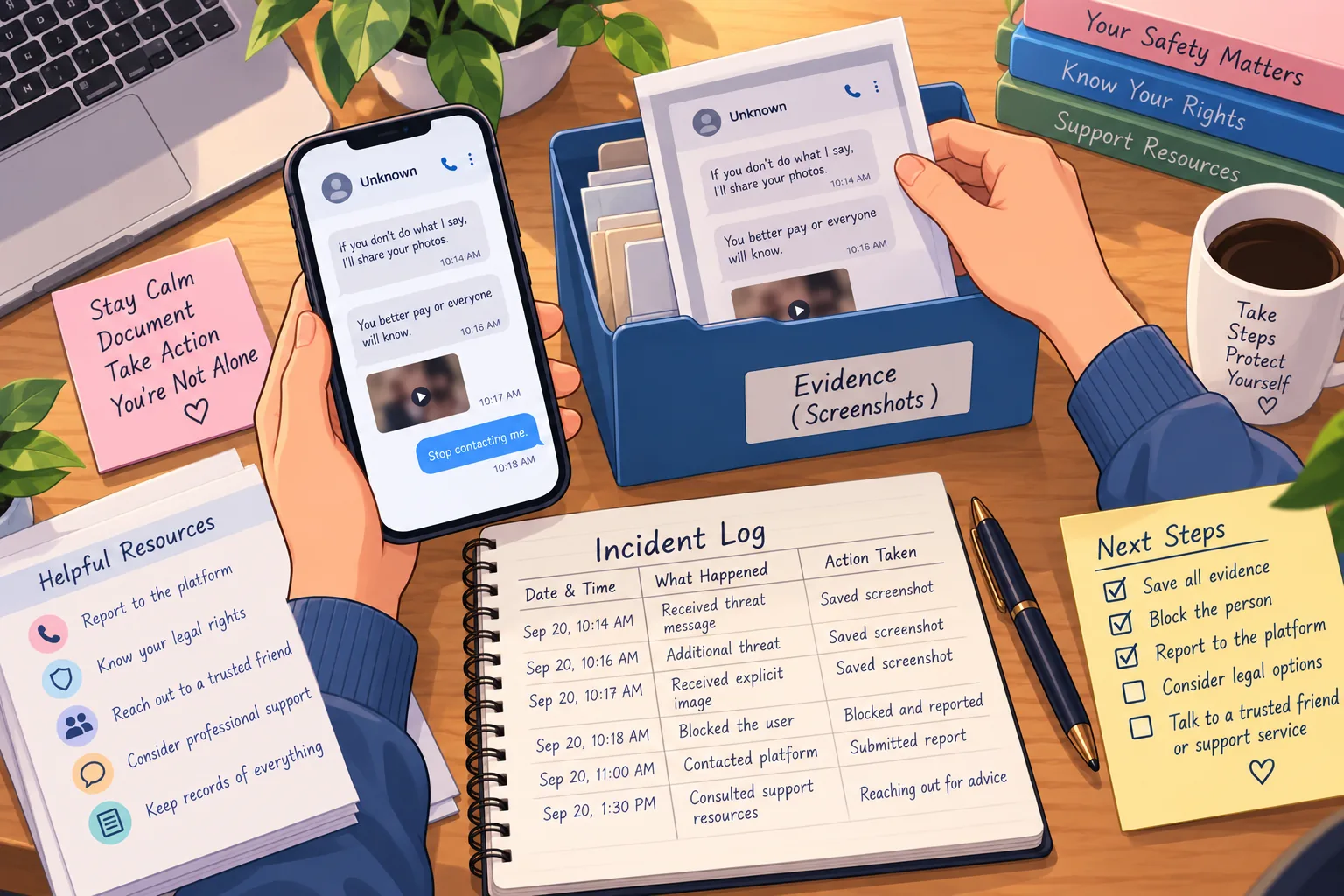
Pressure begins when someone tries to make you surrender a boundary through guilt, fear, humiliation, persistence, or manipulation.
Unmasking Sexual Pressure and Intimacy Coercion
Sexual pressure is not always dramatic.
Often it sounds reasonable on the surface.
Spotting "Acceptance Guilt-Tripping" and Emotional Manipulation
Watch for statements such as:
"I accepted your STI. Can't you do this for me?"
"You're making me feel like I don't matter."
"After everything I've done for you?"
"If you were attracted to me, you'd want this."
"You're being paranoid."
"Everyone else would do it."
These statements shift the discussion away from mutual consent and toward emotional debt.
The key question is not:
"Is my partner angry?"
It is:
"Are they using their feelings to pressure me into something I already said I do not want?"
A person is allowed to be disappointed.
They are not entitled to convert your boundary into a punishment for you.
Red Lines: Stealthing, Non-Consensual Boundary Pushing, and Speed-Up
Some behaviors cross a much more serious line.
Stealthing generally refers to removing a condom without the other person's knowledge or consent after condom use was agreed.
If you consented to sex with a condom, that does not automatically mean you consented to sex without one.
The same principle applies to deliberately damaging a condom or continuing sexual activity after you have withdrawn consent.
Whatever legal label may apply in a particular jurisdiction, the sexual-health boundary is clear:
A change to an agreed condition of sex requires consent.
RAINN emphasizes that consent must remain voluntary and ongoing, and that a person can change their mind during sexual activity.
Other red lines include:
Continuing after "stop."
Ignoring repeated requests to slow down.
Physically preventing you from moving away.
Using intimidation or threats.
Making you feel that refusal will cause retaliation.
You do not have to negotiate with these behaviors.
Your priority is to stop the activity and get to a situation where you can be safe.
Healthy Intimacy Boundaries vs. Sexual Manipulation
| Dimension | Healthy Partner | Sexual Manipulation |
|---|---|---|
| Condoms | Respects your request or discusses alternatives | Complains, pressures, removes, damages, or bypasses the agreed barrier |
| Acceptance | Treats your STI status as health information | Repeatedly says, "I accepted you," as leverage |
| "No" | Stops | Continues, argues, or keeps asking |
| Changing your mind | Accepts the change | Uses guilt because you changed your mind |
| Pacing | Follows your comfort level | Treats hesitation as an obstacle |
| Communication | Asks what you want | Tells you what you "should" want |
| After a boundary | Re-adjusts and continues only with mutual agreement | Punishes you emotionally, becomes threatening, or refuses to respect the boundary |
The table is not a diagnostic tool for labeling someone.
It is a decision tool for protecting yourself.
Dynamic Consent: You Can Change Your Mind
Consent is not a contract that locks you into the decision you made five minutes ago.
It is an ongoing process.
RAINN states that consent is required for each type of sexual activity, that agreeing to one activity does not mean agreeing to everything, and that consent can be withdrawn at any time.
That means all of these are valid:
"I want to kiss, but I don't want sex."
"I want sex, but I want to keep the condom on."
"I was comfortable with this a minute ago, but I'm not anymore."
"I want to stop."
"I changed my mind."
None requires a courtroom argument.
The Power of Dynamic Consent: You Can Change Your Mind at Any Second
You can change the scope of consent.
You can change the pace.
You can stop because of pain.
You can stop because you are anxious.
You can stop because the situation no longer feels right.
You can stop because you simply no longer want to continue.
You do not have to identify a dramatic reason.
A common misconception is:
"But I already started."
Starting does not create an obligation to finish.
A second misconception is:
"But I said yes earlier."
Earlier consent does not override a later withdrawal.
A third is:
"But I don't want to hurt their feelings."
Their disappointment does not outweigh your right to choose what happens to your body.
Word-for-Word Scripts: How to Pause or Exit the Bedroom
Sometimes the hardest part is finding a sentence quickly.
Keep it simple.
Script A: Pause and Slow Down
"Hold on for a second. I want to slow things down and take a breath."
Or:
"Let's pause for a minute. I want to slow down."
You do not need to apologize for changing pace.
Script B: Firm Protection Boundary
"If we're not using a condom, we're not going any further tonight. That's my boundary."
Or:
"I'm only comfortable continuing with a condom. Otherwise, let's stop here."
This is clear without attacking the other person.
Script C: Stop Completely
"I'm uncomfortable and I need to stop now."
Or:
"I've changed my mind. I don't want to continue."
Or:
"I'm done. I'm going home."
If the person respects you, they will stop.
If they keep pushing, stop trying to make the conversation emotionally comfortable.
Move away, get dressed, leave if you safely can, and contact someone you trust or emergency services if you are in immediate danger.
What If You Feel Guilty After Saying No?
Guilt is not evidence that you did something wrong.
It may simply mean you are accustomed to prioritizing another person's feelings.
Try replacing:
"I feel bad because I disappointed them."
with:
"I protected a boundary that mattered to me."
Those are not the same thing.
A healthy relationship has room for both people to hear "no" without turning it into rejection of their entire worth.
You are also allowed to say:
"I still like you. I'm just not comfortable with this."
That distinction can be reassuring when both people are emotionally invested.
"No" Does Not Mean "I Don't Want You"
One of the most useful communication habits is separating attraction from consent.
You can say:
"I'm very attracted to you, and I still don't want to do that."
Or:
"I want to keep being close to you, but I'm not comfortable with this particular activity."
Or:
"I'm into you. I just want to slow down."
That makes the boundary about the activity, not the person's value.
What If Your Partner Uses Your STI Status Against You?
This is where the acceptance-guilt trap becomes particularly important.
Suppose your partner says:
"You should be grateful I accepted your herpes."
You do not have to defend your worth.
You can simply say:
"I'm grateful that you're respectful about my health. But that doesn't give either of us control over the other's body."
Or:
"I appreciate being accepted. I still have the right to decide what I'm comfortable doing."
Or:
"My STI status is not something I owe you repayment for."
If the person continues using your diagnosis to pressure you, that is important information about the relationship.
Acceptance that comes with a hidden price is not the same as acceptance.
What If You and Your Partner Disagree About Condoms?
You do not need to prove who has the "correct" opinion.
You need to establish whether you can find a sexual activity that both people genuinely consent to.
For example:
"You don't want to use a condom, and I do. I respect your preference, but that means we're not having penetrative sex tonight."
You can then choose another mutually agreed activity or stop altogether.
This is a key distinction:
Consent does not require compromise on every issue.
Sometimes the appropriate compromise is simply choosing a different activity.
CDC's 2026 sexual-health materials encourage people to discuss sexual health and condom use before sex and to make decisions together.
A Bedroom Boundary Checklist
Before or during intimacy, ask yourself:
Do I actually want this?
Am I saying yes because I want it, or because I am afraid they will leave?
Do I feel free to change my mind?
Am I comfortable with the protection we're using?
Did we both agree to the same sexual activity?
Has anything about the agreement changed?
Is my partner respecting my "no," "slow down," or "not yet"?
Can I stop without being punished emotionally?
If several answers make you uncomfortable, pause.
You do not need to wait until something becomes obviously wrong.
If a Boundary Is Violated
If a partner removes a condom without your agreement, ignores a clear request to stop, or continues sexual activity after consent has been withdrawn, prioritize your immediate safety.
Depending on what happened, you may also want medical care, STI testing, pregnancy-related care, or emotional support.
You do not need to decide immediately what legal or relationship label applies before seeking help.
If you are in immediate danger, move to a safer location and contact emergency services.
If you experienced sexual coercion or assault, organizations such as RAINN provide confidential support and can help you understand available options. RAINN's consent guidance emphasizes that coercion, pressure, and fear are inconsistent with freely given consent.
Your Body, Your Agency: True Intimacy Thrives on Respect
Your STI status does not make you less valuable.
It does not make you less desirable.
And it does not place you in a permanent position of owing someone extra flexibility because they chose to date you.
Someone can accept your health status and still hear:
"No."
Someone can love you and still hear:
"I want a condom."
Someone can be deeply attracted to you and still hear:
"Not tonight."
That is not a failure of intimacy.
That is what healthy intimacy looks like.
The safest sexual relationships are not those in which nobody ever has different preferences.
They are relationships in which differences can be discussed without coercion.
Condom use can be negotiated.
Boundaries can be negotiated.
Activities can be changed.
The one thing that should not have to be negotiated away is your right to decide what happens to your body.
Remember the four principles:
Acceptance is not a debt.
Consent is not a favor.
Protection is not an apology.
Your body remains yours.
You do not need to earn respectful treatment by being sexually accommodating.
You do not need to sacrifice comfort to prove gratitude.
And you never need to continue sexual activity simply because you started it.
The right partner will not ask you to choose between being loved and being safe.
Healthy intimacy gives both people room to say yes — and just as much room to say no.