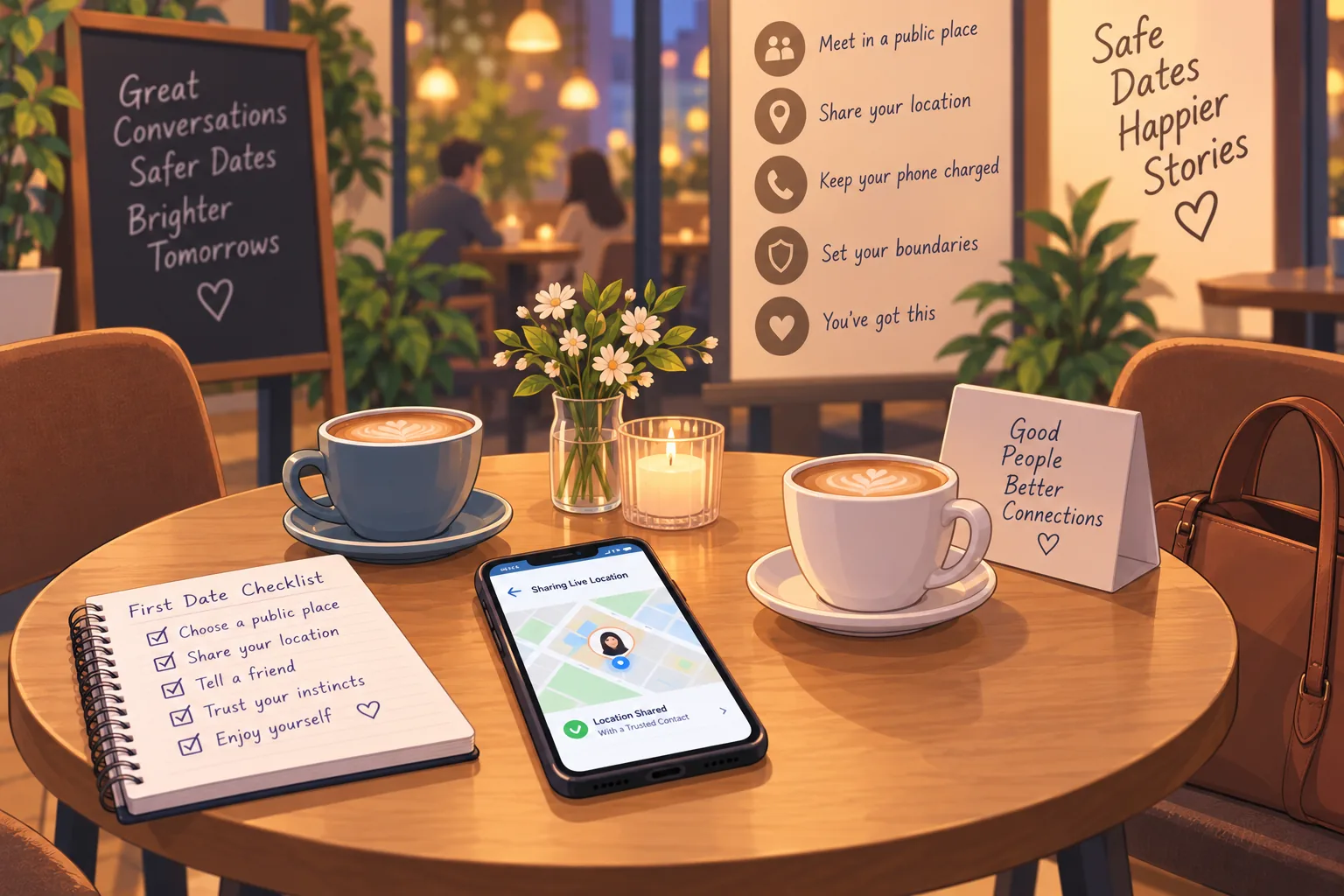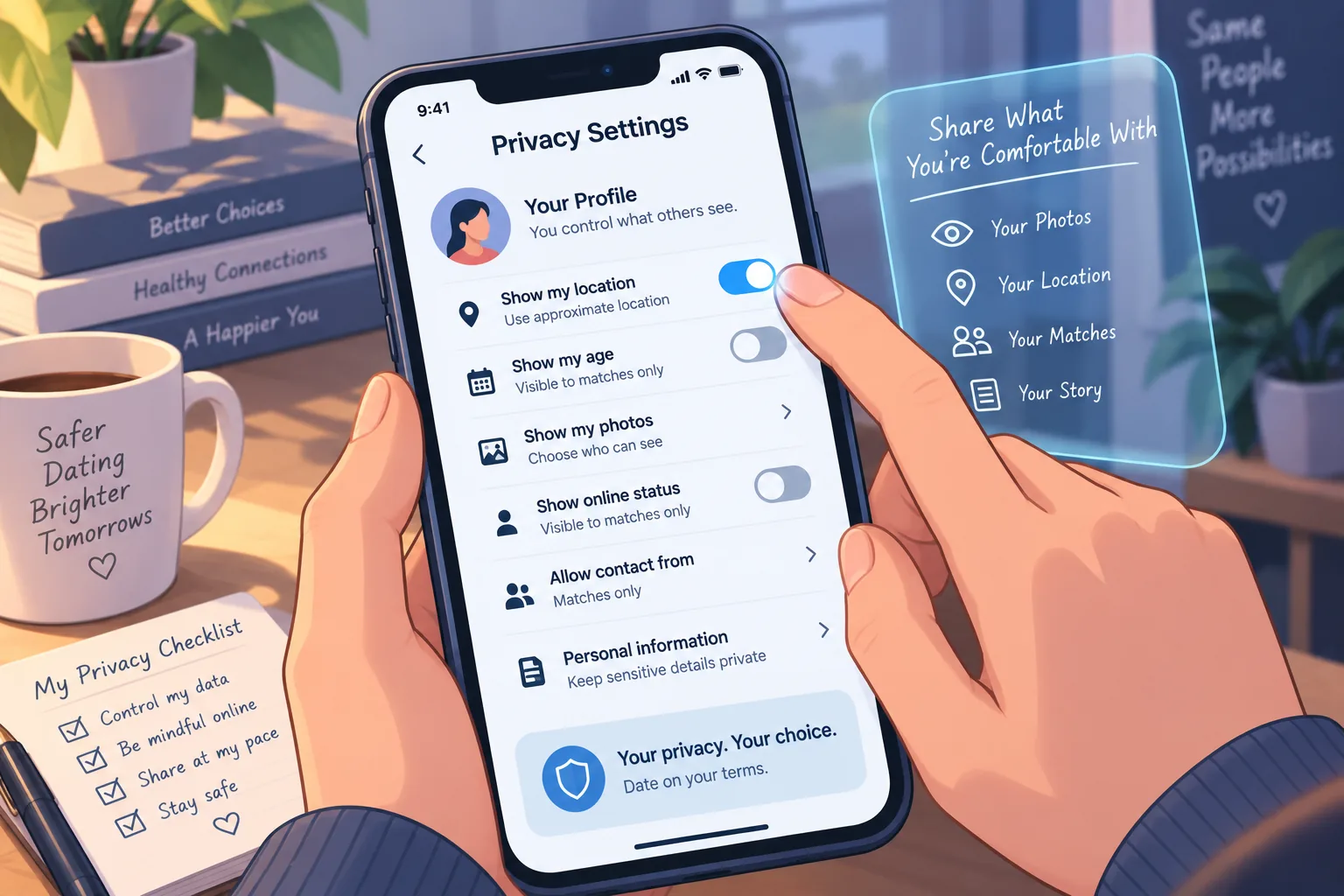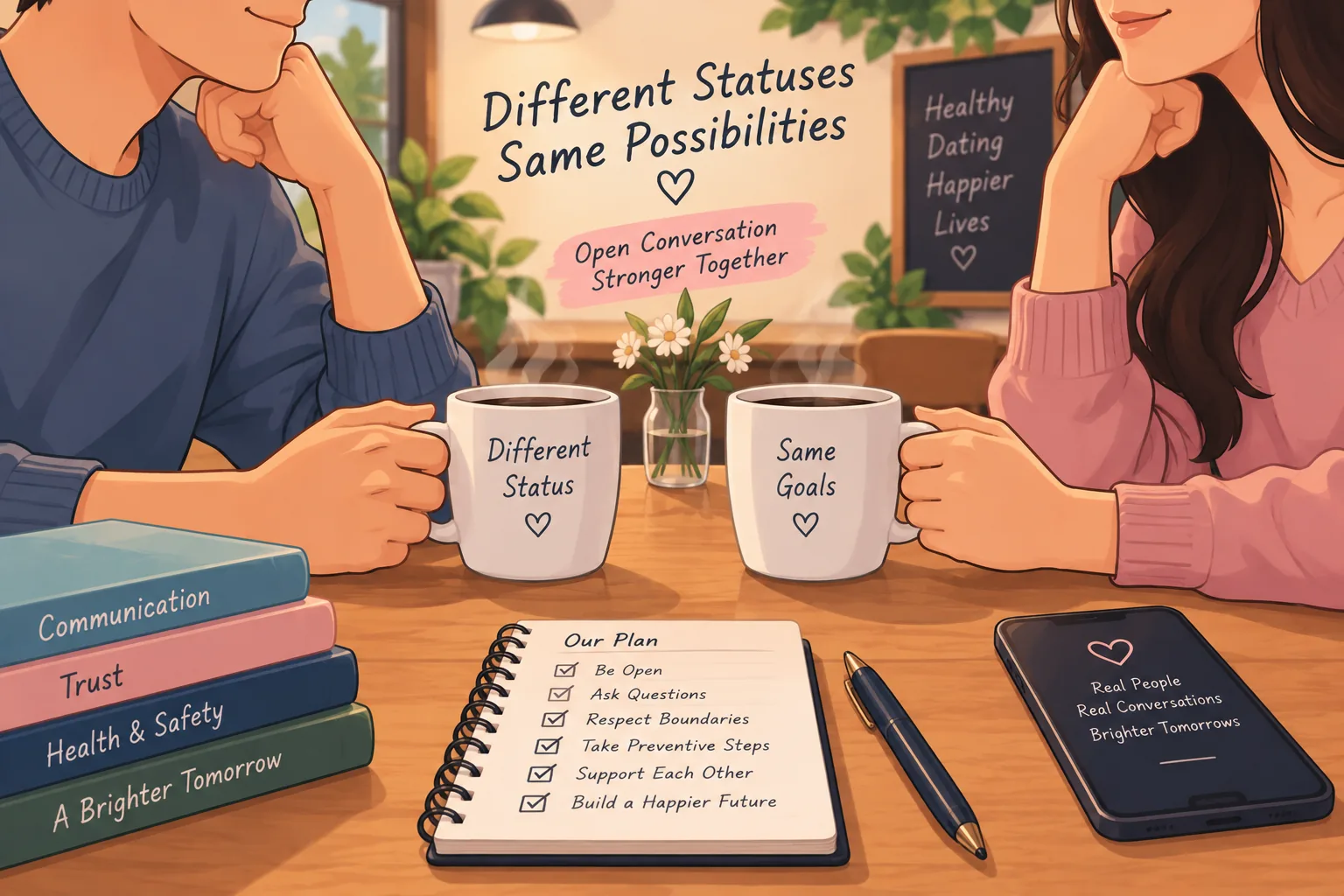
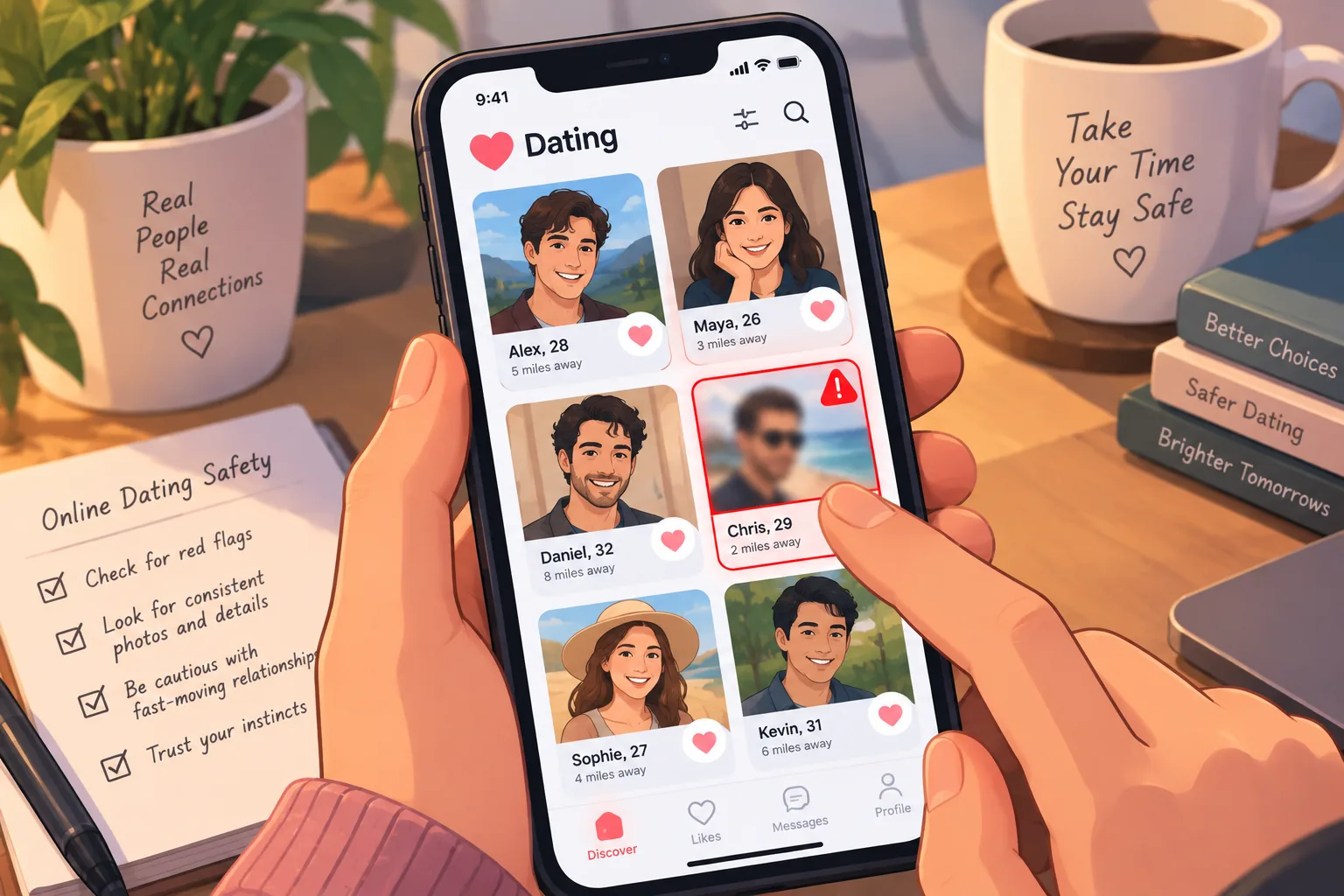
A romance scammer does not exploit your intelligence; they exploit trust, attention, and the hope of being accepted.
For someone dating with an STI, that can create a particularly painful psychological trap. If a new match quickly says, "Your HSV doesn't matter to me," "I would never judge you," or "I've never cared about someone's status," those words may feel deeply reassuring.
Sometimes they are genuine.
Sometimes they are simply flattering.
The important distinction is not whether someone accepts your STI status. It is whether their behavior remains consistent, transparent, and respectful as the relationship develops.
Romance scammers commonly create fake profiles, move conversations toward greater emotional intimacy, avoid meaningful in-person contact, and eventually ask for money or direct the victim toward investments, including cryptocurrency. The FTC specifically warns about stories involving military work, overseas jobs, medical emergencies, travel problems, and investment opportunities.
Your STI status does not make you responsible for proving that you deserve love.
It also does not require you to lower normal standards of identity verification.
The "False Acceptance" Trap: Why STI Dating Can Create a Powerful Trust Shortcut
There is no evidence that having an STI by itself makes someone inherently more vulnerable to romance scams.
The risk is more specific: certain emotional vulnerabilities can be exploited in STI dating, especially when someone has experienced rejection or fears that disclosure will make future partners leave.
A scammer does not need you to be naive.
They need you to want the story they are telling you to be true.
The Psychology of Vulnerability: How Scammers Weaponize Rejection Fear
Imagine disclosing HSV to someone new.
You may be expecting questions, hesitation, or rejection.
Instead, the person immediately says:
"I don't care at all. You're perfect."
Then:
"I've dated people with this before."
Then:
"Honestly, I feel like meeting you was meant to happen."
That emotional sequence can create a powerful shortcut:
They accepted my STI → They understand me → They must be safe → I can trust them.
But those are four different conclusions.
A person can accept your STI status and still be dishonest.
A genuine match may also respond positively without turning the disclosure into an unusually intense emotional bond.
The danger appears when acceptance becomes part of a larger pattern:
rapid intimacy + excessive reassurance + identity ambiguity + pressure + avoidance of verification
That pattern is much more informative than any individual compliment.
Acceptance Is a Baseline, Not an Obligation
Someone treating you with dignity after an STI disclosure is not doing you a favor.
You are still entitled to:
- ask reasonable questions;
- verify that a person is real;
- maintain financial boundaries;
- refuse requests that make you uncomfortable;
- take time before trusting them;
- continue using safer-sex precautions;
- end the conversation when something feels wrong.
A healthy match may say:
"Thanks for telling me. I appreciate the honesty. I have some questions too."
A scammer may say:
"I don't even care about your STI. You're different from everyone else. I already know you're the one."
The second statement is not proof of fraud.
But when extraordinary acceptance arrives far earlier than ordinary trust, slow down.
Your diagnosis is not a reason to suspend ordinary judgment.
Red Flags: How to Spot a Catfish Profile in STI Dating
Catfishing can be obvious, subtle, or increasingly sophisticated. A single unusual profile detail proves very little. Several independent inconsistencies are more meaningful.
Profile Red Flags: Model Photos, Vague Bios, and Missing Local Context
Look for combinations such as:
Only highly polished photos. Every image looks professionally produced, unusually glamorous, or strangely consistent.
Very little ordinary life. There are no casual images, mundane settings, friends, hobbies, or normal day-to-day details.
Generic biography. The profile is full of motivational quotes and broad statements but contains little concrete information about the person's actual life.
Geographic inconsistency. Someone claims to live locally but repeatedly describes places, schedules, weather, or landmarks that do not match the location.
Identity-heavy job stories. Claims involving remote military work, oil rigs, international contracting, overseas engineering, or constant travel are not proof of fraud. They become more relevant when they are repeatedly used to explain why the person cannot meet, video-chat, or verify basic facts.
The FTC specifically warns that romance scammers may claim to be in the military, working overseas, on an oil rig, or otherwise far away, using distance to explain why they cannot meet in person.
Behavioral Red Flags: Rapid Off-App Moves and Refusal to Meet
Pay attention to pace.
A common romance-scam pattern is moving from the dating app to another messaging service unusually quickly, followed by intense daily communication.
Moving off-app is not itself suspicious.
Many genuine matches do it.
The stronger warning sign is the combination of:
rapid off-app migration + escalating emotional intensity + little real-world verification.
The FTC notes that scammers often move conversations away from the dating platform, chat frequently to build trust, claim they cannot meet, and later ask for money.
Other useful questions:
Can this person answer normal local questions naturally?
Do their stories remain consistent?
Have they made several plans to meet and repeatedly canceled?
Do they avoid reasonable identity checks while demanding emotional trust?
A real person may have privacy boundaries.
A scammer often has structural reasons why verification can never quite happen.
Unmasking the Romance Scam: From Love Bombing to Financial Exploitation
Romance scams usually work as a process rather than a single trick.
The goal is to move you from:
interest → trust → emotional dependence → financial compliance.
Phase 1: Love Bombing and Mirrored Vulnerability
Love bombing is not simply "being affectionate."
It becomes concerning when emotional intensity dramatically exceeds the actual relationship history.
Examples include:
"I have never felt this way about anyone."
after several days;
"You're my future."
before you have met;
or:
"I don't care about your STI. I would love you no matter what."
before the person has even taken the time to know you.
Scammers may also mirror your experiences.
If you disclose HSV, they might claim they also have HSV.
If you describe a difficult disclosure experience, they may immediately tell a similar story.
If you talk about rejection, they may say:
"I've been through exactly the same thing."
Mirroring can create a feeling of rare compatibility.
But similarity is not verification.
Phase 2: The "Emergency" or "Investment Opportunity"
After emotional trust has been established, the story often changes.
A crisis appears:
- medical expenses;
- a travel problem;
- a passport or visa issue;
- customs or shipping fees;
- a family emergency;
- a lost wallet;
- a frozen bank account.
Or the request arrives in a more attractive form:
"I know you're not an investor, but I can show you how I make money."
The FTC warns that romance scammers may ask for money for emergencies, travel, medical bills, or fees, and may also encourage victims to invest in cryptocurrency or other assets.
This is a critical boundary:
A romantic connection is never a legitimate reason to send money to someone you have only met online.
Do not let emotional intimacy turn a financial request into a test of love.
The "Money Moment" Is the Biggest Red Flag
There are many strange dating behaviors.
There is one that deserves a much stronger response:
An online romantic interest asks you for money, cryptocurrency, gift cards, wire transfers, or payment-app transfers.
The FTC's guidance is explicit: do not send money or gifts to an online love interest you have not met in person. It also warns against cryptocurrency, gift cards, and wire transfers because scammers prefer payment methods that are difficult to reverse.
At that point, you do not need another six weeks of detective work.
Stop.
Real Match vs. Romance Scammer
| Dimension | Genuine Match | Potential Romance Scam Pattern |
|---|---|---|
| Response to STI disclosure | Respectful, curious, and appropriately paced | Uses unusually intense acceptance to create instant emotional closeness |
| Communication pace | Gradually increases | Rapid escalation, constant attention, early declarations of deep love |
| Identity | Consistent across conversation and available information | Stories or details repeatedly change |
| Video / real-world contact | Generally willing to find a reasonable way to verify identity | Repeatedly avoids meaningful verification |
| Meeting | Makes realistic plans and generally follows through | Repeated cancellations, distance stories, or permanent travel excuses |
| Boundaries | Respects your pace | Uses guilt, urgency, or emotional pressure |
| Money | Does not expect financial help from a new online romantic contact | Emergency request, investment pitch, crypto request, gift cards, transfers |
| Relationship goal | Building a real connection | Emotional attachment becomes a route to financial or personal exploitation |
No single row proves that someone is a scammer.
The pattern is what matters.
The 3-Step Verification Protocol: Confirming Your Match Is Real
Verification should not turn dating into surveillance.
The goal is simply to obtain enough independent evidence that the person is real, consistent, and willing to respect ordinary boundaries.
Step 1: Reverse Image and Social Footprint Check
A reverse image search can help identify whether a profile picture appears elsewhere under a different name.
The FTC specifically recommends reverse-image searching a suspected romance-scam profile photo and checking whether it appears under another identity or with contradictory information.
You can also look for basic consistency:
Does the name used online match the story they've told you?
Does the claimed job exist in the place they describe?
Does the social profile look established and internally consistent?
Are photographs, dates, locations, and life details compatible?
Do not treat social-media presence as proof.
Fake accounts can also have followers, posts, and apparently convincing histories.
The purpose of this step is to find contradictions, not to manufacture certainty.
Step 2: The 3-Minute Video Call Rule
Before investing deeply in someone you met online, a short real-time video call can be a practical identity check.
You do not need a 90-minute conversation.
A few minutes is enough to establish:
Does the person resemble the person in the photos?
Can they interact naturally in real time?
Are their basic stories internally consistent?
You can say:
"I've really enjoyed getting to know you here. I have a simple dating-safety rule: before I get too invested, I like to do a quick video hello so we both know we're talking to a real person. Nothing formal — just a few minutes. When are you free?"
Or, more casually:
"Want to do a super quick video call tonight? I like putting a real face to the person I'm talking to."
The important part is the framing.
You are not saying:
"Prove you're not a scammer."
You are saying:
"This is one of my normal online-dating boundaries."
Step 3: Watch the Response to Verification
This is often more revealing than the video itself.
A genuine person might say:
"Sure, I'm free after dinner."
Or:
"I'm not comfortable with video yet, but we can talk by phone first."
A concerning pattern is repeated avoidance accompanied by escalating emotional pressure:
"Why don't you trust me?"
"If you really cared, you wouldn't ask."
"My camera suddenly stopped working."
"The connection is always bad here."
One excuse proves nothing.
A long-term pattern of excuses + no alternative verification + pressure for faster intimacy is much more concerning.
Current fraud guidance also warns that scammers increasingly use technology to make fake images and videos more convincing, so a single apparently real video interaction should not be treated as absolute proof of identity.
"No Video, No Continue" Can Be Your Boundary
You do not need to declare:
"You're definitely a scammer."
You can simply decide:
"I'm not comfortable taking this further until we've had a chance to verify that we're real people."
That is a boundary, not an accusation.
And if the person does not like it, you can leave.
A 60-Second Scam Check Before You Get Emotionally Invested
Ask yourself:
Have we had a real-time interaction?
Have I verified that the photos are not obviously associated with another identity?
Does the person's story stay consistent?
Have they avoided meeting repeatedly?
Have they asked me to keep our relationship secret?
Have they tried to isolate me from friends or family?
Have they introduced money, investing, cryptocurrency, gifts, or emergencies?
The more of these that are true, the more important it is to stop escalating the relationship until the inconsistencies are resolved.
Immediate Action: What to Do If You've Matched With a Scammer
Once you believe someone is a scammer, your goal changes.
You are no longer trying to understand them.
You are trying to contain the situation.
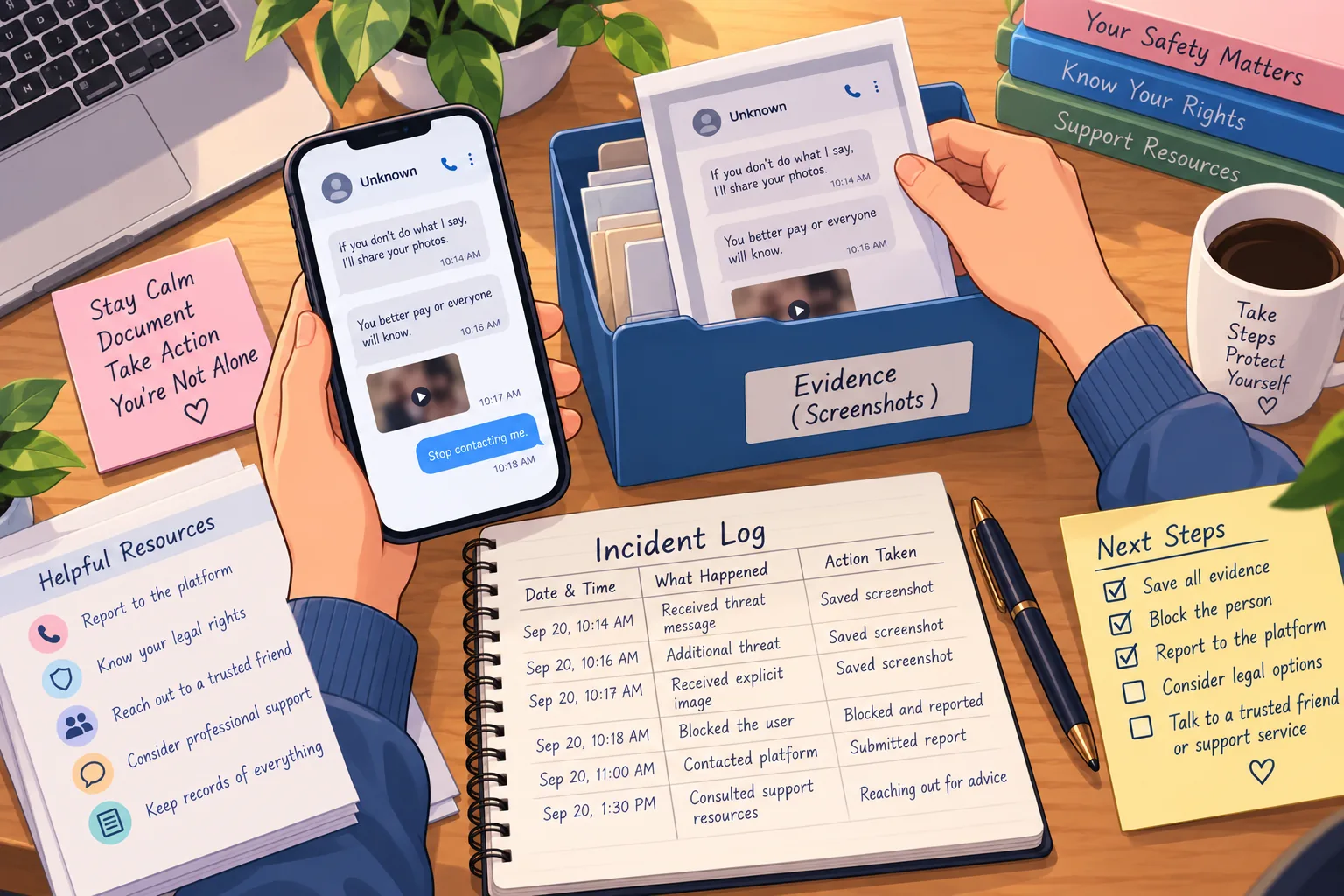
The Containment Checklist: Lock, Block, and Report
1. Preserve relevant evidence.
Save screenshots of:
- profile;
- username;
- messages;
- phone numbers;
- email addresses;
- payment requests;
- transaction details;
- links or investment sites they sent.
The FTC recommends keeping relevant information and reporting romance scams to the platform where the contact began and to the FTC.
2. Stop communicating.
Do not announce that you discovered the scam.
Do not bargain.
Do not try to "make them admit it."
Do not send one final angry message.
The less engagement you provide, the fewer opportunities there are for another manipulation cycle.
3. Report the account.
Use the dating platform's reporting system.
For example, Tinder currently allows users to report a profile either from Discovery or directly from a match conversation. Tinder asks users to provide the relevant context and states that reports are handled confidentially, subject to limited legal exceptions.
Other platforms provide their own reporting channels.
4. If money was sent, act immediately.
Contact your bank, card issuer, payment service, gift-card company, wire-transfer provider, or cryptocurrency service as soon as possible.
Tell them clearly that the payment was part of a scam.
The FTC recommends contacting the payment company or bank immediately and asking whether the transaction can be reversed or refunded.
If the incident involved substantial financial loss or other criminal conduct, consider filing a report with the relevant law-enforcement or cybercrime reporting authority in your jurisdiction.
Do Not Keep Paying to "Recover" Your Money
A common second-stage trap is someone claiming they can recover the money you already lost.
They may say:
"I work in cybercrime recovery."
"I can recover your crypto."
"Pay this fee and we'll unlock the funds."
Treat unexpected recovery offers with the same skepticism as the original scam.
Once scammers know you have already lost money, you can become a target for a second scam.
What If You Already Shared Your STI Status?
Do not panic.
Sharing your STI status with the wrong person is uncomfortable, but it does not mean the person now controls your life.
Start by assessing what else you shared.
Did they receive:
only your diagnosis?
or also:
your full name, address, workplace, social accounts, medical records, or explicit images?
If necessary, review your social-media privacy settings, remove newly exposed identifying details, change passwords if credentials were shared, and block the person.
Most importantly:
Do not send money because they threaten to reveal what you told them.
That moves into a different type of abuse and extortion scenario. This article focuses on romance scams, but the same principle remains useful: pressure should trigger a pause, not payment.
Rebuilding Trust and Protecting Your Dating Momentum
Being deceived can make you want to stop trusting everyone.
That reaction is understandable.
But one scammer does not prove that every future match is fake.
Your STI status also did not cause the scam.
The scammer chose deception.
You did not become less deserving of real relationships because someone misused your trust.
A better lesson is not:
"Never trust anyone online."
It is:
"Trust should grow in proportion to evidence."
That means:
attention → conversation → verification → consistency → real-world contact → deeper trust
rather than:
attention → instant acceptance → emotional dependence → money
You do not need to become cynical.
You need a process.
Your New Dating Rule: Warm Heart, Slow Trust
You can still enjoy being flattered.
You can still feel excited when someone accepts you.
You can still hope that a new connection becomes meaningful.
Just do not confuse emotional intensity with evidence.
A healthy match can survive a reasonable question.
A healthy match can survive a short video call.
A healthy match can survive you saying:
"I don't send money to people I've met online."
A healthy match can respect:
"I'm not ready to move this off the app yet."
And a healthy match should not need your financial sacrifice to prove that the relationship is real.
The FTC's current consumer guidance is blunt on the central financial boundary: do not send money or gifts to an online romantic interest you have not met in person, and be especially cautious about cryptocurrency, gift cards, wire transfers, and payment requests tied to emergencies or investments.
You Deserve Authentic Love and Full Respect
Having an STI does not reduce your value.
It does not mean you should be grateful whenever someone expresses interest.
And it does not mean you should lower your standards because you are afraid another person might reject you.
The most important lesson in STI dating is not:
"Trust nobody."
It is:
"Let trust earn its way forward."
A sincere match may ask questions about your health.
A sincere match may need time to think.
A sincere match may have boundaries of their own.
None of that is a problem.
The warning signs begin when someone uses extraordinary acceptance to rush intimacy, repeatedly avoids reasonable identity verification, creates urgency, and eventually asks you for money or pushes you toward an investment.
At that point, protect yourself rather than trying to save the relationship.
Remember the core rule:
Acceptance is not proof of love.
Consistency is.
The right person will not need you to ignore your instincts to keep them.
They will not ask you to purchase their affection.
They will not turn your vulnerability into a financial opportunity.
And they will not make you feel guilty for taking reasonable steps to verify who they are.
Your STI status does not lower your standards.
You are still allowed to move slowly, ask questions, verify, walk away, and wait for someone whose actions match their words.