
Holding a Secret for Eight Years
On a rainy Tuesday afternoon, an infectious disease physician sat across from me in a small clinic room and delivered the news. In that quiet moment, my mind went entirely blank. My immediate terror wasn't solely about physical illness; it was a profound crisis of identity. With sickening clarity, I understood that from that day forward, a heavy, invisible label had been permanently stamped onto my name: HIV.
I felt as though every future conversation, every career milestone, and every potential romance would forever be filtered through those three letters. It took years of quiet grief, therapy, and solitude to slowly piece my self-worth back together.
Fast forward to today: physiologically, my life looks remarkably ordinary.
Every night at the same time, I swallow a single tablet of my daily HIV medication. I visit an Infectious Disease Clinic once every six months for routine lab work and prescription renewals. Thanks to modern antiretroviral therapy (ART), my viral load has been undetectable for over seven years.
I work a corporate job, meal-prep on Sundays, hit the gym four days a week, and travel with friends. In every measurable medical sense, my life returned to its normal orbit long ago.

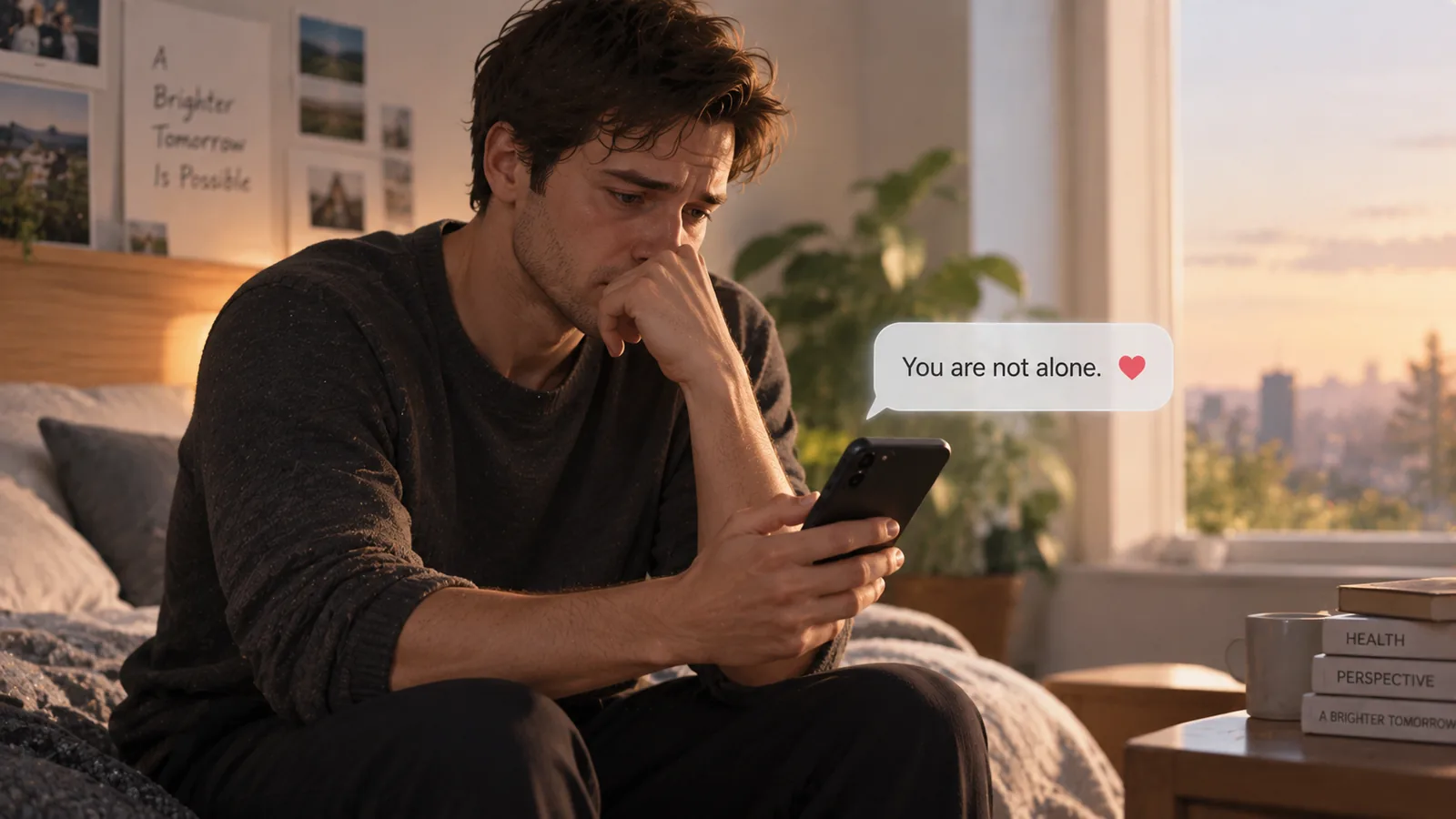
AI-generated illustration.
My physician explained the concept of U=U (Undetectable = Untransmittable) early in my treatment journey. Decades of clinical studies backed by major global health organizations (including the CDC and the NIH HIV guidelines) confirm that an individual living with HIV who maintains an undetectable viral load through consistent medication has effectively no risk of sexually transmitting the virus to a partner. Everyday physical contact—hugging, kissing, sharing meals, holding hands—carries zero risk.
My intellect grasped the science completely.
Yet, whenever a genuine romantic connection began to form, my emotional instincts screamed at me to retreat. My physical body had stepped out of that cold clinic room, but my psyche remained trapped inside it. What terrified me was never the thought of harming someone else physically; it was the suffocating fear of rejection—the moment when warmth in someone’s eyes turns into shock, hesitation, and pity.
To protect my secret, I turned my daily existence into an airtight routine.
Medication was taken at the exact same minute every evening. The prescription bottle stayed buried beneath layers of clothing in my nightstand drawer, never left out on a counter or coffee table. In social settings, I avoided discussing personal medical history entirely. Most importantly, I drew a firm line around my emotional life, ensuring no relationship ever progressed to a point where control might slip from my hands.
I didn't view this secrecy as dishonest. Over eight years, it became my primary survival strategy.
I told myself: "As long as I manage my health responsibly, stay undetectable, and keep everyone safe, there is no need to burden anyone else with my past trauma."
This emotional fortress kept me safe and solitary for a very long time.
She didn't arrive with grand, theatrical gestures. We met at a mutual friend’s dinner party in the city where I live. She was independent, perceptive, and possessed a grounding emotional stability that immediately put me at ease.
She noticed my quiet moments without demanding an explanation. She respected personal boundaries naturally, without creating cold distance. For the first time in eight years, I found myself thinking: I want to build something real with this person.

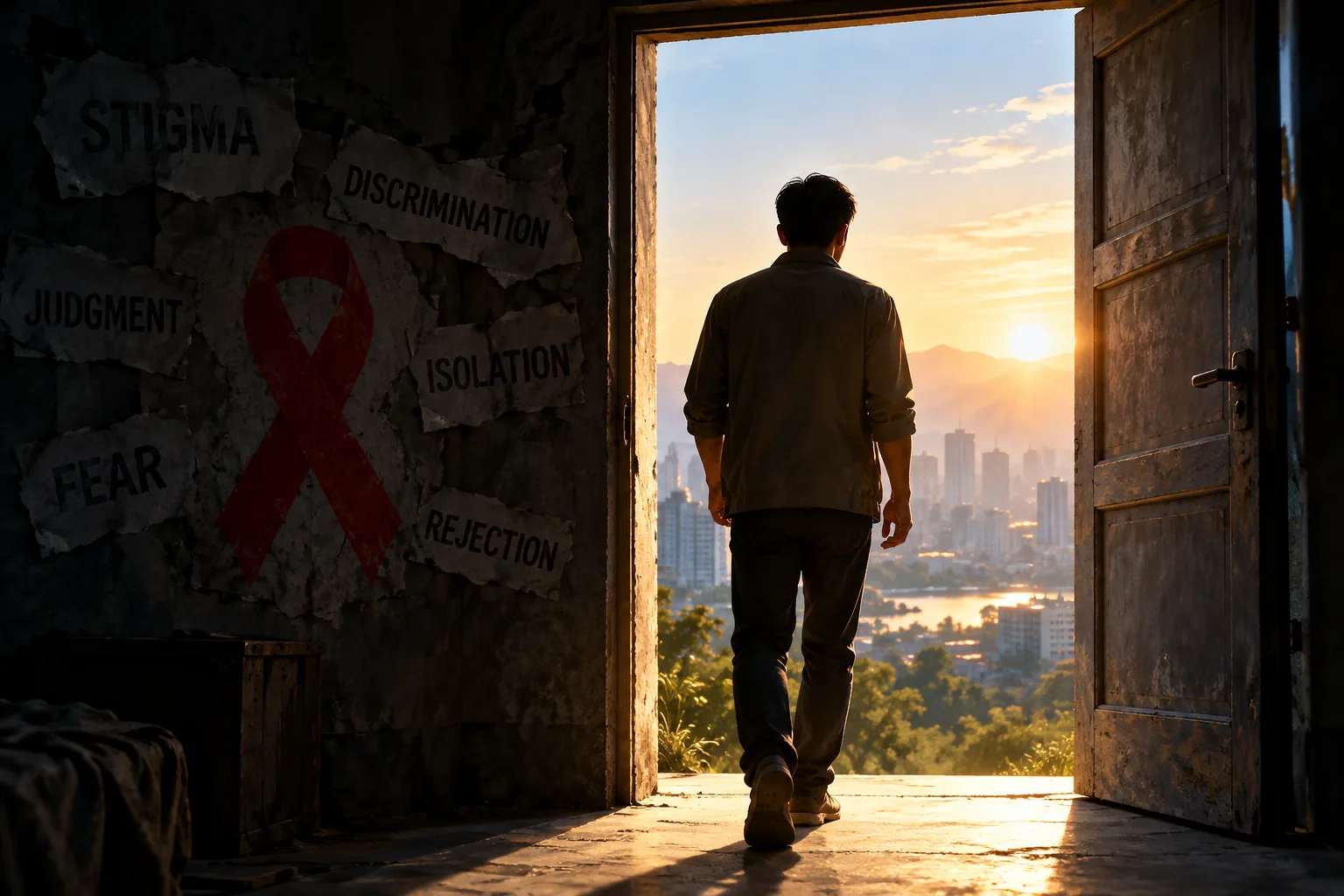
AI-generated illustration.
As our connection deepened, my old anxiety resurfaced with a vengeance.
If this were just a casual fling, I could step back at any moment without consequence. But what if I fell completely in love with her? The deeper the bond grew, the higher the stakes of disclosure became—and the more catastrophic a potential rejection would feel.
So, I made a calculated decision: I would date her, but I would strictly manage our physical and emotional distance.
To navigate dating while keeping my fortress intact, I established a strict personal protocol:
We could enjoy long dinners, walk through the city at sunset, talk about our careers, and share our deepest values. But I would not initiate deeper physical intimacy, I would avoid staying over at her apartment, I would never let her sleep over at mine, and I would keep my nightly medical routine entirely out of sight.
My core guiding principle was simple: I would never allow her to enter an intimate relationship without her full, informed consent, but I would also prevent situations where disclosure became an immediate requirement.
I knew the science behind U=U. I knew that with a suppressed viral load, my partner was medically safe. Therefore, my restraint was not an act of noble self-sacrifice to protect her from infection.
I was protecting myself—preventing a scenario where I allowed myself to be fully vulnerable, only to be turned away.
Four months into dating, after a cozy evening watching movies at her place, she softly asked if I wanted to stay the night. I checked my watch and put on my jacket with practiced ease.
"I have an early cross-coast conference call at 6:00 AM," I lied gently. "I need to get back to my apartment to review the decks."
She smiled and kissed my cheek. Walking to my car, I felt a heavy wave of guilt for relying on corporate excuses.
A month later, after celebrating a personal milestone, she asked again.
I held her close and offered a more personal reason: "I’m a notoriously terrible sleeper. When I'm in a new bed or sleeping next to someone, I toss and turn all night. I’d hate to keep you awake."
She understood and accepted my explanation. But this time, I caught a flicker of curiosity in her eyes. She was beginning to notice a pattern: every time we drew closer to real intimacy, I instinctively pulled back.
On a rainy evening a few weeks later, as we stood under the awning near her building, she reached up to zip my coat. She looked into my eyes and asked softly, without a trace of judgment:
"Do you just... not like people getting too close to you?"
The question landed like a quiet shock. I managed a polite smile and made a lighthearted comment, but inside, I panicked. She was starting to look past my carefully crafted mask.
In modern dating culture—where hookup expectations often move rapidly—my refusal to rush into bed created an unexpected misunderstanding.
She interpreted my slowness as emotional maturity. She saw my physical boundaries as deep respect for her comfort, and my cautious pace as proof that I took our relationship seriously.
The more I held back, the more she trusted me.
Watching her look at me with growing affection filled me with a quiet ache: She thinks I'm this patient, chivalrous man, when in reality, I'm just terrified of a secret I've kept hidden for eight years.
Three Small Clues
Six months in, we planned our first weekend getaway to a cabin up in the mountains.
While unpacking our bags on Friday evening, a cold spike of panic hit my chest. In my hurry to leave work on time, I had left my medication bottle sitting on my nightstand at home.
Missing a single dose of ART is not usually a medical emergency, though doses are meant to be taken as prescribed. But for someone whose psychological sense of safety had relied on an uninterrupted daily routine for nearly three thousand days, the oversight felt overwhelming.
My immediate response wasn't a breakdown, but a hyper-focused, frantic internal search: Where is the nearest 24-hour pharmacy? How do I transfer an out-of-network prescription in a rural town?
Throughout dinner, I was noticeably detached. I kept checking my phone, refreshing location maps, and shifting uncomfortably in my seat.
My level of distress was entirely disproportionate to someone who had merely "forgotten their daily vitamins."
She sat across the table, watching my restless hands in quiet observation. That evening, she realized that whatever was in that forgotten bottle was not a casual supplement, but a vital medical necessity that held enormous emotional weight for me.
A few weeks later, we were sitting in a quiet coffee shop in my neighborhood. My phone was resting face-up on the small wooden table.
A standard automated notification flashed onto the lock screen:
Patient portal: Your upcoming appointment with Infectious Disease Clinic is confirmed for Tuesday at 10:00 AM.
There were no diagnostic codes, no acronyms, and no explicit mention of HIV. It was simply a routine automated reminder from a regional health network.
She happened to glance down right as the screen illuminated.
That moment added to the picture. She still didn't have a specific diagnosis, but she now knew two concrete facts: I was under the care of a specialist clinic, and I was managing a long-term, highly private health condition.
My reaction—snatching the phone and flipping it face-down with rigid intensity—only solidified her impression.
The final clue came unexpectedly at my apartment.
She was looking for my spare house keys in the entryway console table. As she slid open a small organizer pouch, she saw my prescription bottle sitting near the back.
I hadn't left it out carelessly, but I hadn't locked it in a safe either.
Printed clearly on the pharmacy label was the name of an antiretroviral medication.
To someone unfamiliar with modern pharmacology, the word looks like any other complex pharmaceutical brand name. But to anyone who lives with the condition, works in healthcare, or has researched STI prevention, that specific brand name is unambiguous.
Seeing that label brought everything into focus.
All the pieces aligned in her mind: the reluctance to stay over, the hyper-vigilance during our trip, the clinic notifications, the emotional distance whenever conversations turned to health.
Her immediate reaction wasn't shock or fear. It was a quiet, empathetic realization: So that’s what he’s been carrying all this time.
The Threat Was in My Mind
Shortly after our trip, she invited me to a small birthday gathering for her close friend at a neighborhood restaurant.
As I walked in and was introduced to her inner circle, my heart dropped. Standing near the table was a woman I recognized immediately—she was a clinical pharmacist who worked at the specialized pharmacy where I picked up my medications every three months.
Our eyes met for a fraction of a second, and I saw a subtle flicker of recognition in her expression.
Under federal privacy laws (HIPAA) and strict medical ethics codes, healthcare professionals are strictly prohibited from disclosing a patient's protected health information to anyone, including personal friends.
She handled the situation with flawless professionalism. She didn't drop hints, make subtle remarks, or give me meaningful glances. She simply smiled, shook my hand warmly, said, "Nice to meet you," and turned back to her conversation.
Even though she acted with complete professional integrity, my internal security broke down entirely.
I spent the entire evening stuck in a frantic loop of catastrophic thoughts: Did she recognize me? Does she know I get my prescriptions at her clinic? Will she feel an obligation to warn her friend?
My rational brain understood that medical professionals risk their licenses and careers if they violate patient privacy laws.
Yet, acute fear rarely listens to logic. Every time my girlfriend glanced at her phone, I assumed she was receiving a text from her friend. Every time they whispered together near the kitchen, I assumed my diagnosis was the topic of conversation.
Nobody exposed me. No laws were broken, and no boundary was crossed.
The fortress I had spent eight years building wasn't breached from the outside; it was collapsing under the weight of my own internal anxiety.
The Conversation That Changed Everything
After days of insomnia, I accepted reality: I couldn't keep living behind a wall of hidden fear. If our relationship was going to end, I wanted it to end because I was brave enough to tell her the truth, rather than because I was caught in a web of evasions.
I rehearsed the opening lines endlessly:
"There's something about my medical history I need to share with you..."
"I’ve been living with a chronic condition for eight years..."
"Before we get any closer, you deserve to know..."
Every rehearsed script felt rigid and clinical.
My deepest fear, I understood, wasn't explaining the medical facts of HIV.
It was the terrifying vulnerability of allowing her to see the real me—imperfect, afraid, and living with a condition that carries immense social stigma. I was terrified that once she saw that part of my life, everything else we had built would disappear.
There was no dramatic thunder, no tearful argument, and no crisis.
It was an ordinary Sunday evening in my apartment. We had just finished dinner, and two mugs of tea were cooling on the coffee table.
I looked across at her, my hands cold, and knew I couldn't delay it any longer.
I took a deep breath, my voice tight:
"There’s something I’ve been keeping from you. I should have told you sooner, and if this changes how you feel about me, I understand..."
She looked at me softly, her expression calm and attentive. She reached across the table, placed her hand over mine, and said gently:
"You're trying to tell me that you're living with HIV, right?"
I froze, completely speechless.
There was no shock, no panic, and no dramatic reaction. She simply held my hand and laid out the timeline with quiet clarity:
"I first wondered about it when you forgot your medicine on our mountain trip. I saw the clinic notification on your phone a few weeks later. And I knew for sure when I saw the pharmacy label on the bottle in your drawer."
I stared at her, struggling to process her words. "You’ve known for months? Why didn't you say anything?"
She looked at me with deep empathy:
"Because I knew that if I confronted you or demanded an explanation, you'd feel cornered and exposed. You would have retreated right back into your shell."
"I didn't want you to feel like you were being interrogated or judged," she continued softly. "I wanted to wait until you felt safe enough with me to share it on your own terms."
In that quiet room, the truth settled over us.
All those months, I had been waiting for her to be ready to accept my truth, while she had been waiting for me to trust her enough to share it.
I sat there, overwhelmed by a mix of relief and confusion. "Aren't you scared? Aren't you upset that I kept this hidden for so long?"
She looked into my eyes and offered a small, knowing smile.
She didn't reach into her purse for a dramatic reveal. She simply leaned forward and said quietly:
"I'm not scared. Because... I take HIV medication, too."
The world seemed to pause. My mind raced to connect those months of memories—her effortless understanding of my need for privacy, her gentle acceptance of my physical pace, her complete lack of panic when health topics came up.
Suddenly, an old memory resurfaced with startling clarity.
Six months before we officially met through friends, I had seen a woman in the parking garage beneath the Infectious Disease Clinic. She had dropped her keys near the elevator, and I had picked them up for her. We were both wearing masks, exchanged a brief nod, and went our separate ways.
I remembered noticing a small, discreet pharmacy bag in her hand that day—the exact same bag I carried out of that clinic every three months.
At the time, I was so wrapped up in my own secrecy that I hadn't given it a second thought.
While I was hiding behind my fortress, convinced I was entirely alone in navigating this condition, she had been walking the exact same path: taking the same daily medication, attending the same clinic, and carrying the same silent worries about dating and acceptance.
Two People Who Stopped Hiding
"I was diagnosed six years ago," she told me softly. "I went through the exact same phases—the terror of telling anyone, the fear of rejection, the decision to keep people at a distance so I wouldn't have to explain myself."
She wasn't standing on a pedestal granting me forgiveness; she was standing right beside me in the exact same reality.
"Every single thing you did over the last six months—hiding your pill bottle, making excuses to go home, turning your phone face-down—I’ve done every single one of those things myself in past relationships," she said.
Her words dissolved the isolation I had carried for nearly a decade.
"I knew from the beginning that medically, U=U means there’s effectively no risk of transmission," she explained. "I was never worried about my physical health."
"What I was waiting to see," she added, "was whether you were ready to let down your guard and be honest with me—not just about a diagnosis, but about your fears, your vulnerability, and your willingness to let someone truly know you."
We didn't launch into grand declarations about the future or pretend that all our complexities had magically vanished.
Instead, we sat together for hours, talking openly for the first time about our clinical routines, our diagnosis stories, the awkwardness of navigating healthcare systems, and the profound relief of finally being completely honest with another person.
Late into the night, a long silence fell over the room.
It wasn't the tense, anxious silence of hidden secrets. It was the peaceful silence of two people who no longer had anything to hide.
She sat across from me, quietly extended her right hand, and placed it palm-up on the coffee table between us.
It was a simple, unhurried gesture of connection.
I looked at her hand. For eight years, my default instinct had been to pull back, erect walls, and protect myself from potential hurt. But this time, I didn't hesitate.
I reached out and placed my palm directly over hers.
Medical research had taught me long before that physical touch carries zero transmission risk. But sitting there that night, I learned something far more important: I finally believed that someone could know my entire truth and still choose to hold my hand.
I stood up and pulled her into a long, quiet embrace.
This wasn't two people settling for each other out of shared hardship. It was two individuals who had spent years hiding in the shadows, finally stepping out into the light together.
What I Would Tell Someone Starting Out
Disclosure is a personal process, not a rigid deadline. A common guideline is to tell a partner before sex, once some trust has started to build. Laws differ by country and state, and in some places telling a partner before sex is a legal requirement, so check the rules where you live. Our guide to HIV disclosure laws and dating legal risks explains what to look for.
When you do tell someone, say it plainly, give them time and room to ask questions, and be ready with the facts: with treatment and an undetectable viral load, there is effectively no risk of passing HIV on through sex (U=U), and people who start treatment and take it consistently can live long, healthy lives.
Looking for a step-by-step framework on when and how to tell a partner? Read our guide to disclosing your HIV status to a date, with scripts and timing.
Final Reflection: Disclosure, Privacy, and Self-Acceptance
Managing Secrecy in Relationships
In long-term relationships, keeping significant health information hidden is rarely sustainable. The challenge is seldom the risk of accidental exposure; rather, it is the cumulative emotional fatigue of maintaining hyper-vigilance around someone you care about. Real intimacy thrives when energy is spent building connection rather than maintaining defenses.
Disclosure Is a Personal Choice, Not a Moral Performance
Sharing your status should be a deliberate, thoughtful decision tailored to your comfort, personal safety, and local legal frameworks. While early, honest communication builds a stronger foundation for long-term relationships, timing should always prioritize your emotional well-being and safety.
Moving Beyond Diagnosis
U=U is an empowering medical milestone, but true healing extends beyond lab results. Living well means refusing to allow a diagnosis to define your identity, your worth, or your capacity for love.
Self-acceptance isn't about pretending a condition doesn't exist. It's about recognizing that your medical status is merely one small chapter of your story—and allowing yourself the freedom to live, love, and be known fully.
Medical & Contextual Disclaimer
This publication contains personal narrative, relationship dynamics, and general medical health information. Medical facts regarding HIV treatment, viral suppression, and transmission risks reflect current guidelines established by the U.S. Centers for Disease Control and Prevention (CDC) and the National Institutes of Health (NIH). This content is intended for educational and emotional support purposes only and should not replace individualized medical advice, diagnosis, or clinical counseling. Always consult a qualified infectious disease specialist or primary healthcare provider regarding personal health conditions.