Editor’s Note
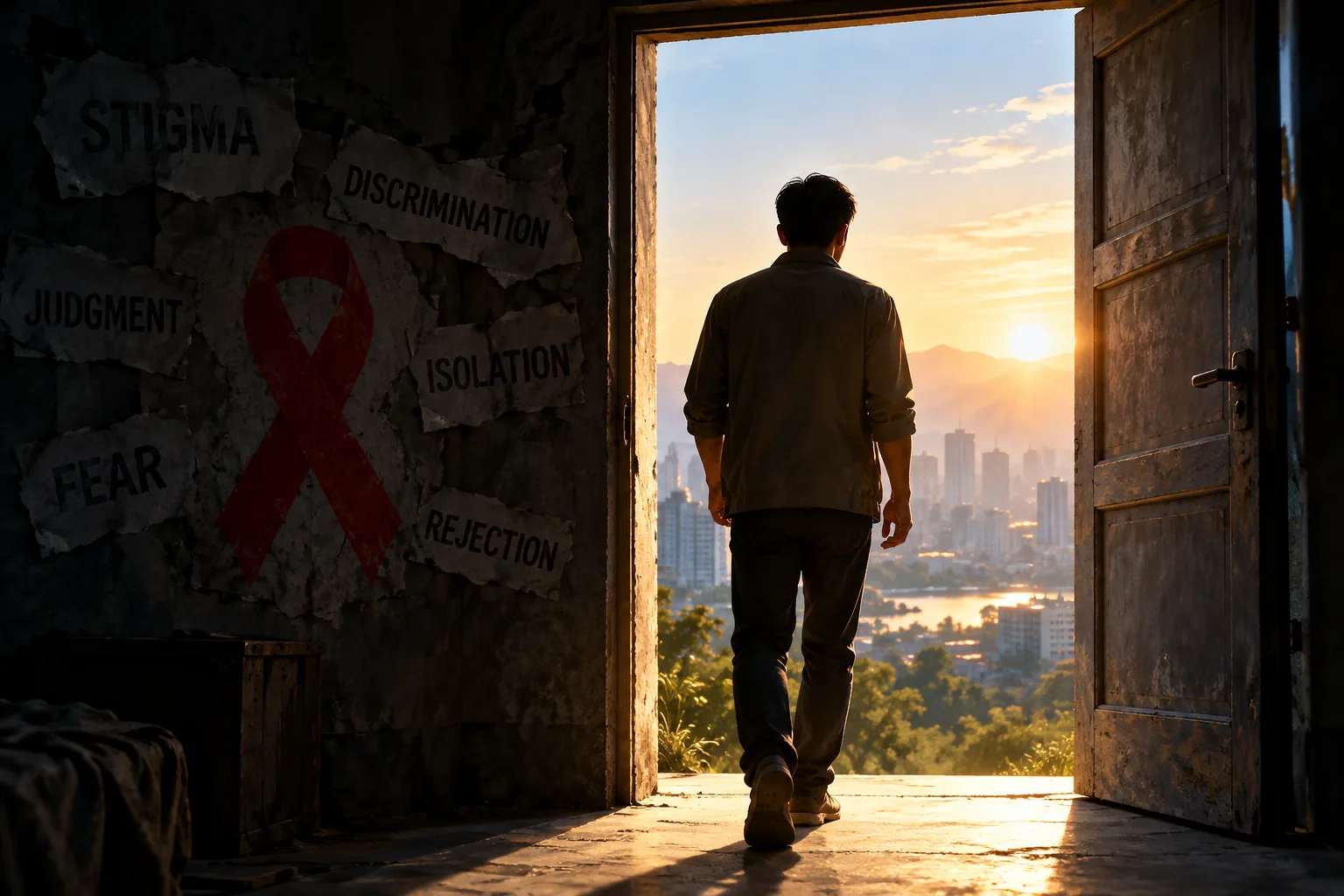
When an individual chooses to step into the public eye and reveal a deeply stigmatized health condition, society’s prejudice and coldness are often only the first layer of hardship they encounter. In the digital age, a second, far more predatory threat frequently emerges: the targeted exploitation of vulnerable individuals by online scams and bad actors.
This author’s experience is one example of how sharing a stigmatized health condition publicly can attract unwanted attention, including scams and harassment. The story below reflects his own account; we have not independently verified each incident he describes.
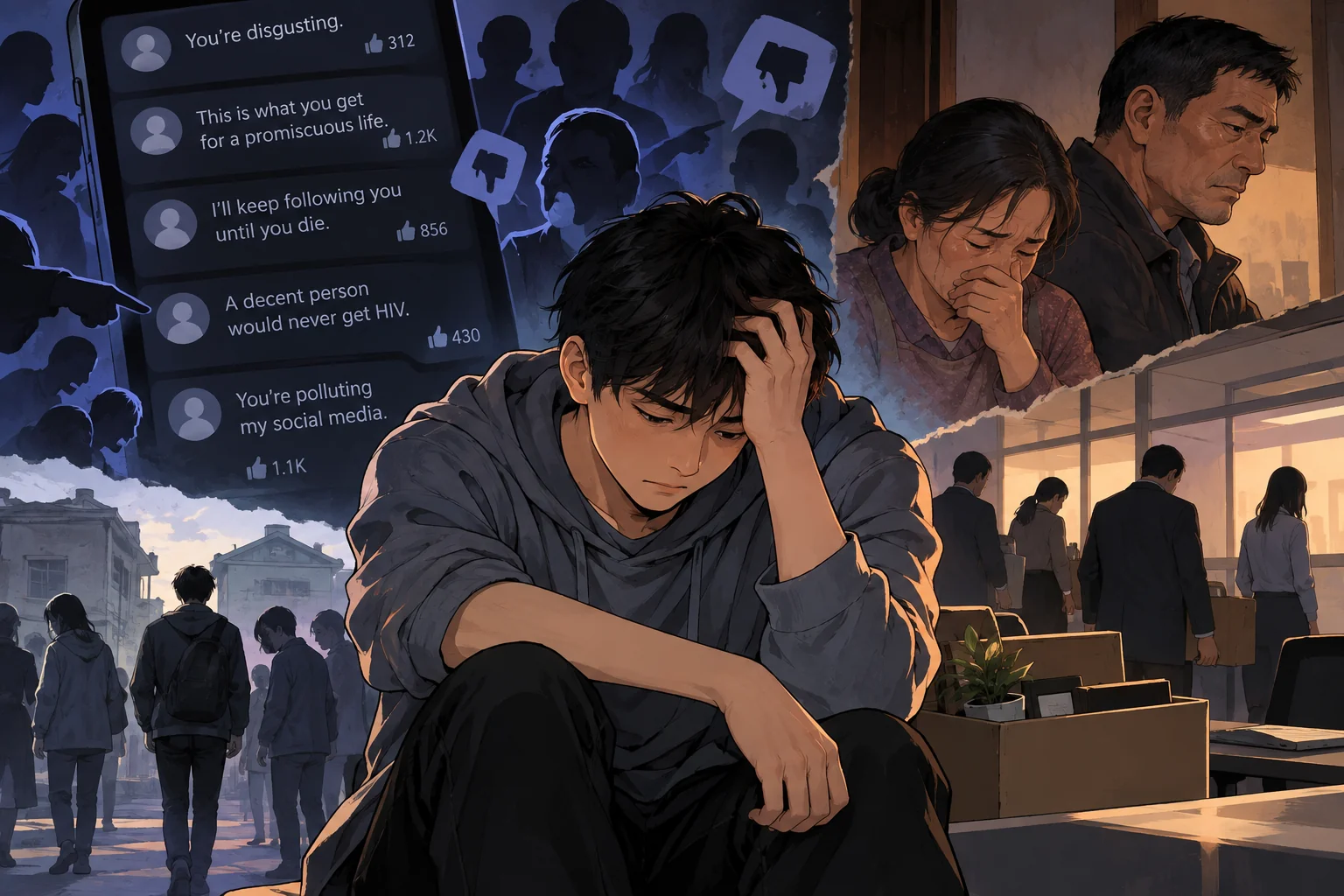
In Part 2, the author described the immediate social and economic fallout of going public with his HIV status: the gradual disappearance of relatives, the cold silence of a lifelong friend, the painful emotional distance between him and his parents, and the quiet pressure that ultimately forced him to resign from his job.
At the time, he believed he had hit rock bottom.
He thought that losing his privacy, his social circle, and his livelihood was the ultimate price he would have to pay for telling the truth.
What he did not realize was that by putting his face, his name, and his HIV status online, he had effectively posted a target on his own back. While society pushed him to the margins, predators in the shadows were already calculating how to turn his loneliness, guilt, and desire for acceptance into a weapon against him.
What followed was not merely a series of financial scams, but a systematic, multi-tiered assault on his dignity, his sanity, and his fundamental human need for connection.
The story below is told in the author’s first person. Some identifying details have been changed to protect his privacy.
This is his story.
Also in this series:
After Going Public With HIV, Part 1: An Irrevocable Choice
After Going Public With HIV, Part 2: A Price Beyond Expectation
When Privacy Disappears, Predators Move In
Before I publicly disclosed my HIV diagnosis, I was essentially a wild animal hiding in a dark corner, licking my own wounds.
No one noticed me. Outside of managing the virus inside my body, my day-to-day existence was, in a strange way, relatively safe.
The moment I pressed "Upload" and revealed my status to the world, that safety vanished forever. My privacy ceased to exist. From that day forward, my face, my real-world identity, and the label of HIV were permanently bound together, stored in the digital ether for anyone to find.
I had naively imagined that my honesty might evoke a sliver of empathy or understanding.
Instead, societal prejudice remained as unyielding as ever, while scammers and predators hidden in the dark immediately smelled blood.
They began flooding my inbox. They did not see a human being who had told the truth; they saw a marked target. I still do not fully understand what drove them—whether it was pure greed, a twisted desire to "punish" someone living with HIV, or simply the sadistic thrill of crushing someone who was already down.
Societal judgment was only the first blow. What followed—the indiscriminate hunting and psychological humiliation directed straight at my weakest points—was the second, far more brutal strike.
The First Layer: Fake Cures and the Battle Over Medical Fact
The initial wave of messages was directed at my physical health and financial resources—a straightforward cognitive attack.
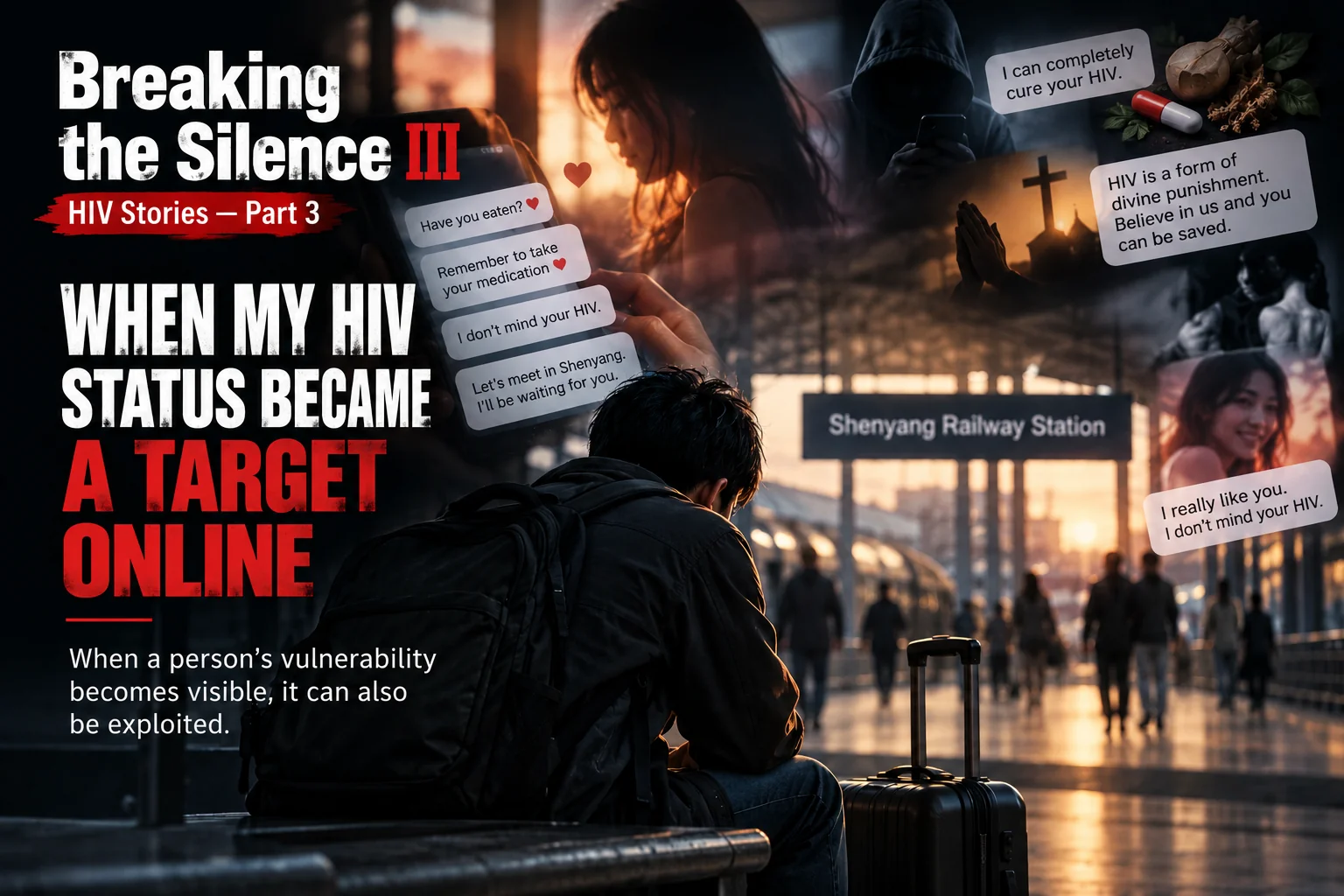
Shortly after my video gained traction, I began receiving private messages from people claiming to be traditional Chinese medicine practitioners. They insisted they had spent decades researching HIV and had developed proprietary herbal formulas capable of "completely curing" the virus.
I knew enough about medical science to see through the lie.
Under current medical standards, antiretroviral therapy (ART) can suppress the HIV viral load to an undetectable level—a state known as Undetectable = Untransmittable (U=U), which means a person on effective treatment with an undetectable viral load has effectively no risk of sexually transmitting HIV and keeps their immune system protected. However, there is currently no functional or sterilizing cure for HIV. Any entity claiming to completely eradicate the virus is engaging in fraud.
I did not fall for these high-priced "cure" schemes. But as I read through those messages, a chilling thought took hold:
What if I had been newly diagnosed? What if I knew nothing about HIV?
A person standing in the immediate shock of a positive diagnosis, overwhelmed by panic and grief, could easily view these fraudulent promises as a final lifeline—and spend their life savings on nothing more than a dangerous illusion.
Spiritual Hijacking: Guilt, Sin, and Divine Punishment
When financial traps failed to catch me, another category of messages arrived—ones aimed directly at my conscience and mental stability.
These communications came from individuals operating under the guise of religious or fringe spiritual organizations. They sent pamphlets, doctrinal texts, and photographs of their gatherings.
In their narrative, the HIV virus was not a biological pathogen. It was an instrument of divine retribution, created by their deity specifically to punish people like me for moral failings and lack of faith.
Their prescription was simple: join their organization, accept their doctrines, and engage in daily prayers for redemption. Only then, they claimed, would the virus be lifted from my body. They even attached unverified testimonials of "healed" patients to prove their point.
It was a deliberate attempt at spiritual control and soul hijacking. By weaponizing the internal shame that many people living with HIV already carry, these groups try to convince you that your illness is a moral stain—and that total submission to their authority is the only path to salvation.
Stripping My Dignity: The Rattan Whip "Remedy"
Content note: The next section describes a request to inflict physical harm. If you are struggling, you can call or text 988 in the U.S., or find help in other countries on our support resources page.
Of all the scams directed at my health, the most chilling was one that bypassed money altogether, aiming instead for the complete degradation of my physical body and dignity.
A man messaged me, presenting himself not as a seller, but as a deeply compassionate supporter. He offered comforting words, asked if I was facing financial hardship, and even offered to send me money and care packages. He repeatedly assured me that he wanted nothing in return, claiming he simply felt immense sympathy for people living with HIV.
Once he had gained my trust, he introduced what he called a "miracle home remedy."
Unlike the others, he did not claim it could completely cure HIV, which made him sound far more credible. Instead, he claimed it could dramatically suppress the virus.
The protocol was absurdly specific: I was to strip, isolate myself, and have someone beat me with a cane, hard enough to cause serious injury.
Finally, he added the crucial requirement:
I had to film the entire process and send the video directly to him.
Reading those instructions, a wave of cold nausea washed over me.
This was not a financial scam. It was a form of psychological abuse and sadistic control. The predator understood the profound self-loathing that often plagues people living with HIV. By masquerading as a benevolent helper, he was trying to manipulate me into inflicting severe physical harm on myself, stripping away my remaining human dignity, and handing him a video that could be used for lifelong blackmail.
The Ultimate Trap: How Desire Dismantled My Rationality
Yet, none of these medical or spiritual traps caused the deepest wound. The most devastating blow was a scam that targeted my most vulnerable weakness: my desperate craving for human affection and love.
For someone living with an HIV diagnosis, love often feels like an impossible luxury. After I went public with my status, almost everyone around me advised me to give up on the idea of romantic relationships altogether.
I was a 41-year-old man. In the five years since my diagnosis, my romantic life had been a complete desert. I was lonely. I felt an overwhelming sense of isolation. I craved intimacy and the simple warmth of being accepted as a normal person.
Physically, my condition was completely stable. I took my medication regularly, and my viral load had been undetectable for years. Medical science told me I was healthy and posed effectively no risk of passing HIV to a partner through sex. But in a society dominated by intense fear of HIV, finding a partner willing to accept an HIV-positive man felt almost impossible. Stories of serodiscordant couples—where one partner is positive and the other is negative—sounded to me like pure fairy tales.
I did not consider myself naive. I maintained a healthy level of skepticism toward online relationships. In the beginning, some men tried to prank me by pretending to be women in text messages. Those were easy to spot; they could never replicate a woman's voice or appearance on a phone call, and the moment I asked for a video chat, they disappeared.
Then, a real woman appeared.
She reached out with genuine warmth and unremitting care. Every morning and evening, she sent gentle messages asking if I had taken my medication on time. She spoke openly about my diagnosis, insisting that she was open-minded and completely unbothered by my HIV status.
For the first time in years, someone looked past the virus and spoke to me as a man.
We began calling each other pet names. We stayed on video calls until two in the morning, sharing details of our daily lives. This went on for several weeks.
It is hard to convey how deeply this affected me. How could my rational defense lines—built over years of caution—be so completely dismantled?
The answer is painfully simple: my intellect knew the risks, but my craving for affection was starving. When you have lived in complete emotional isolation for years, even a thread of warmth feels like a lifeline you cannot afford to let go.
Could anyone truly believe that a person would spend weeks of their life—calling every night, asking about medication, building deep emotional intimacy—just to play a cruel joke on a person living with HIV?
I didn't want to believe it. It felt impossible that such pointless malice could exist.
After weeks of constant contact, we agreed to meet in person.
She claimed she lived in Shenyang, a major city in northeastern China. At that time I was living on my own in a regional city in southwest China, away from my parents’ home.
Shenyang is in the far northeast, more than 2,000 kilometers (over 1,200 miles) away in a straight line.
To save money, I booked a hard-seat ticket on an old-fashioned, slow-moving train.
That journey took 50 hours.
For two days and two nights, I sat in a cramped, noisy train car filled with the smell of instant noodles and sweat. My body was exhausted, but inside, my heart was burning with hope. I kept checking my phone, reading her messages: "When you get off the train, I'll take you to get a warm meal."
I told myself that the 50 hours of discomfort were nothing compared to the prospect of finally being accepted.
The Red Exclamation Mark in the Cold
The train finally pulled into Shenyang Station.
Even ten minutes before the train stopped, she was still messaging me, expressing her excitement about my arrival.
I gathered my bags, stepped off the train, and followed the crowd through the exit gates. The cold northern air hit my face as I stood in the bustling plaza outside the station.
I pulled out my phone and typed a message:
“I’m outside the station now. Where are you?”
I tapped send.
A red exclamation mark appeared next to my message.
“Your message was sent, but rejected by the receiver.”
She had blocked me.
I tried calling her number. The automated voice informed me that the line was unavailable. I tried every social media platform we had used. On every single one, I had been deleted, blocked, and erased.
I stood in the middle of the Shenyang station plaza, surrounded by travelers reuniting with their families, taxi drivers calling for passengers, and couples embracing in the cold.
I sat down on a cold metal bench outside the station and remained there for the entire night.
I didn't scream. I didn't cry. I just sat there in silence as the hours passed.
I tried to make sense of what had just happened. Was I scammed? Was I pranked?
Except for the cost of the train ticket and 50 hours of my life, I had lost no money. She had never asked for a single yuan. There was no financial loss for me to report to the police, and, as far as I knew, nothing the authorities could act on.
And that was the most terrifying part of all.
If she had stolen my money, I could hate her. I could report her. I could seek justice.
But she didn't want my money. She had spent weeks of her time, energy, and effort for one singular purpose: to lift a desperate, lonely man to the highest peak of hope, and then watch him fall into the abyss.
It was an act of pure, unadulterated emotional slaughter.
Undetectable
Medical science has made extraordinary progress. Modern pharmacology can suppress the HIV virus until it is completely undetectable in the blood, allowing patients to live long, physically healthy lives.
I had achieved that milestone well before then. Physically, the virus was no longer damaging my health, and it posed effectively no risk of passing to a sexual partner.
But sitting alone on that bench outside the Shenyang train station in the dead of night, I realized a cruel truth:
Medicine can neutralize a virus inside the human body.
But against the unprovoked, calculated malice of the human world, there is no medical protocol, no prescription, and no vaccine that can ever heal the wound.
Continue the series: After Going Public With HIV, Part 4: Just Stay Breathing
Medical & Contextual Disclaimer
This account describes personal experiences with medical information and online fraud; it does not constitute medical or legal advice.
Major public health authorities, including the U.S. CDC, the World Health Organization and UNAIDS, state that people living with HIV who take effective antiretroviral therapy (ART) and maintain an undetectable viral load have effectively no risk of sexually transmitting HIV (Undetectable = Untransmittable, or U=U). Regular viral load testing and consistent adherence to prescribed medication are needed to achieve and maintain viral suppression.
Fraudulent claims offering "complete cures" or non-medical "treatments" for HIV pose severe health risks. People who want HIV testing, treatment, or counseling should consult certified medical professionals and official public health agencies.