
If your HIV-positive partner is on treatment and maintains a confirmed viral load below 200 copies/mL, U=U means there is zero risk of sexually transmitting HIV to you, so PrEP is not medically necessary solely because your partner has HIV. At the same time, CDC says PrEP can still be offered to an HIV-negative person who wants the additional reassurance it provides, including in a relationship where the HIV-positive partner is virally suppressed. (cdc.gov)
That distinction is the key to this entire question.
U=U answers the biological question: "Can my undetectable partner transmit HIV through sex?"
The answer is no when the partner maintains the required level of viral suppression.
PrEP answers a different question: "Do I want an additional HIV-prevention tool for my own peace of mind or because I may have other exposures?"
That answer is personal.
So taking PrEP does not automatically mean you distrust your partner. And choosing not to take PrEP does not mean you are being reckless.
The most useful decision is one based on current viral suppression, your relationship structure, your other potential exposures, your comfort with uncertainty, and the practical cost of PrEP.
1. The Direct Answer: Is PrEP Necessary When Your Partner Is Undetectable?
1.1 The Biological Reality: Zero Risk Under U=U
U=U is not a slogan that asks HIV-negative partners to "take a chance."
It is a conclusion supported by clinical evidence.
CDC states that a person with HIV who is taking treatment and maintains an undetectable viral load has zero risk of transmitting HIV to sexual partners. Current CDC clinical guidance uses a plasma HIV RNA threshold of less than 200 copies/mL for this U=U determination. (cdc.gov)
Large studies support this conclusion.
The PARTNER studies followed serodifferent couples who reported condomless sex while the partner with HIV maintained viral suppression and found no linked HIV transmissions. The Opposites Attract study likewise observed no linked transmissions in serodifferent male couples during the study period when the partner with HIV was virally suppressed. (nih.gov)
This is why it is medically inaccurate to describe condomless sex with a partner who maintains U=U as an HIV transmission gamble.
If your partner is genuinely and consistently undetectable, you do not need PrEP to "make up for" the fact that they have HIV.
U=U already addresses sexual HIV transmission.
1.2 The Practical Reality: Why "Zero Biological Risk" Isn't the Whole Story
A zero-risk medical conclusion does not automatically eliminate every person's anxiety.
You may understand U=U intellectually while still feeling uneasy when you are physically intimate.
That does not make you irrational.
It also does not make your partner medically unsafe.
This is precisely why CDC allows another layer of choice. Its current PrEP guidance says that people without HIV who have a partner with HIV can use PrEP, and that PrEP may be appropriate when the HIV-positive partner's viral suppression is inconsistent or unknown, when the HIV-negative partner has other partners, or when the HIV-negative partner simply wants the additional reassurance PrEP provides. CDC also says PrEP should not be withheld from someone who requests it merely because their partner is virally suppressed. (cdc.gov)
That creates an important distinction:
Medical necessity: U=U already makes sexual transmission risk zero.
Personal preference: You may still choose PrEP because it helps you feel more secure.
Those statements can both be true.
2. The Science of U=U: What "Undetectable = Untransmittable" Actually Means
2.1 Clinical Proof Behind U=U
U=U is based on a pattern of evidence across different populations and types of sexual exposure.
NIH summarizes the evidence from HPTN 052, PARTNER, PARTNER2, and Opposites Attract: when the partner with HIV is durably virally suppressed on effective antiretroviral therapy, studies found no linked sexual transmissions. (nih.gov)
The final PARTNER2 analysis included nearly 1,000 serodifferent male couples and more than 76,000 reported acts of condomless anal sex during periods when the partner with HIV had suppressed viral load; no linked transmissions were observed. The study supported the conclusion that the risk of sexual HIV transmission with viral suppression is effectively zero. (thelancet.com)
This evidence matters because U=U does not depend on:
- condom use;
- the HIV-negative partner taking PrEP;
- the sex position;
- or the couple having a short or long sexual relationship.
The critical variable for HIV transmission from the HIV-positive partner is viral suppression.
WHO likewise states that people living with HIV who take ART and maintain an undetectable viral load do not transmit HIV sexually to their partners. (who.int)
2.2 What Keeps Undetectable Status Stable?
U=U depends on maintained viral suppression, not on having received an undetectable result once.
That generally means:
Taking HIV treatment as prescribed.
Continuing regular HIV medical care.
Monitoring viral load as recommended.
The exact clinical schedule depends on the person's treatment plan and healthcare provider.
This is important for couples because "undetectable" is not a permanent label that can be assumed forever without follow-up.
CDC advises that people with HIV who are on treatment stay in care and take their medication as prescribed so they can maintain an undetectable viral load. (cdc.gov)
That creates a useful couple-level distinction:
Trusting U=U means trusting an evidence-based medical state that is being maintained—not blindly assuming that a result from years ago is still current.
If your partner's viral load is consistently suppressed and documented through routine care, U=U provides the medical answer you are looking for.
If suppression becomes uncertain, additional prevention options—including PrEP—can become reasonable again.
3. Four Real-World Scenarios Where Taking PrEP Still Makes Sense
3.1 Scenario 1: Closing the "Psychological Safety Gap" and Reducing Sex-Related Anxiety
You do not need to prove that your anxiety is medically rational before you are allowed to manage it.
CDC explicitly identifies additional reassurance as a legitimate reason for an HIV-negative partner to use PrEP, even when the partner with HIV is virally suppressed. (cdc.gov)
Suppose you understand that:
"My partner is undetectable, so HIV cannot be transmitted sexually."
But you still notice thoughts such as:
"What if something changes?"
"What if the lab result isn't current?"
"What if I become anxious every time we have sex?"
In that situation, PrEP can function as a personal comfort tool.
It is not correcting a failure in U=U.
It is reducing the mental burden you carry around HIV.
That can matter in a long-term relationship. Sexual intimacy is harder to enjoy when every encounter becomes a private risk calculation.
Using PrEP may allow you to stop mentally checking the same question over and over.
That does not make your partner less trustworthy.
It means you have decided that an additional preventive tool improves your own sense of security.
3.2 Scenario 2: Routine Disruptions, Travel, or Medication Adherence Concerns
U=U is strongest when viral suppression is known and maintained.
Real life, however, can create uncertainty.
Your partner may:
- miss doses;
- lose access to medication while traveling;
- change treatment;
- miss medical appointments;
- have an unexpected interruption in care;
- or simply be unsure of their most recent viral-load result.
These situations do not automatically mean HIV transmission has occurred.
They mean the couple no longer has the same level of certainty about the current U=U condition.
CDC specifically lists inconsistent viral suppression, an unknown viral load status, missed doses, or stopping HIV treatment as situations in which additional prevention may be considered. (cdc.gov)
PrEP can therefore serve as a backup during periods when the underlying condition supporting U=U is uncertain.
The key point is not:
"My partner missed one pill, so U=U is suddenly gone."
That is too simplistic.
Instead:
"If we no longer know whether viral suppression is being maintained, we may want to reassess our prevention plan."
That is a much more medically responsible approach.
3.3 Scenario 3: Non-Monogamous or Open Relationship Dynamics
This scenario changes the calculation significantly.
Suppose your primary partner has HIV and maintains U=U.
You may still have sex with other partners whose HIV status or viral load you do not know.
U=U protects you from your partner with HIV who is durably suppressed.
It does not protect you from HIV exposure involving another person.
CDC specifically identifies having other sexual partners, especially where their HIV statuses are unknown, as a reason PrEP may be appropriate. (cdc.gov)
That means PrEP can be useful even in a relationship where U=U is fully established.
The reason is no longer distrust of your primary partner.
It is simply that your sexual network contains a different set of exposures.
In an open relationship, PrEP can therefore function as an independent baseline prevention strategy rather than a response to one specific person's HIV status.
3.4 Scenario 4: Early in the Relationship Before Long-Term Suppression Is Established
A newly diagnosed partner who has only recently started treatment may eventually reach U=U, but an HIV-negative partner may reasonably want additional protection while viral suppression is still being established or while reliable follow-up data are not yet available.
The issue is not an arbitrary calendar number.
It is whether sustained viral suppression has actually been established and verified.
CDC's clinical guidance emphasizes the importance of knowing the partner's treatment and viral-load status. Its older detailed PrEP guideline also used documented undetectable viral load for at least the preceding six months as part of assessing a serodifferent couple. Current guidance focuses more directly on whether suppression is maintained and whether the HIV-negative partner wants additional reassurance. (cdc.gov)
So if your partner has just begun ART and you are not yet sure how consistently viral suppression will be maintained, using PrEP during that transition can be a reasonable choice.
That does not mean your partner is unsafe.
It means your prevention plan is adapting to what is known today.
4. Decision Matrix: U=U Alone vs. U=U + PrEP
The most important correction to the usual comparison table is that PrEP does not make U=U "more zero-risk" for sexual exposure from the undetectable partner.
U=U already establishes zero sexual transmission risk when the partner with HIV maintains the required viral suppression.
PrEP adds an independent layer of protection, which can be valuable for other possible exposures or for additional reassurance.
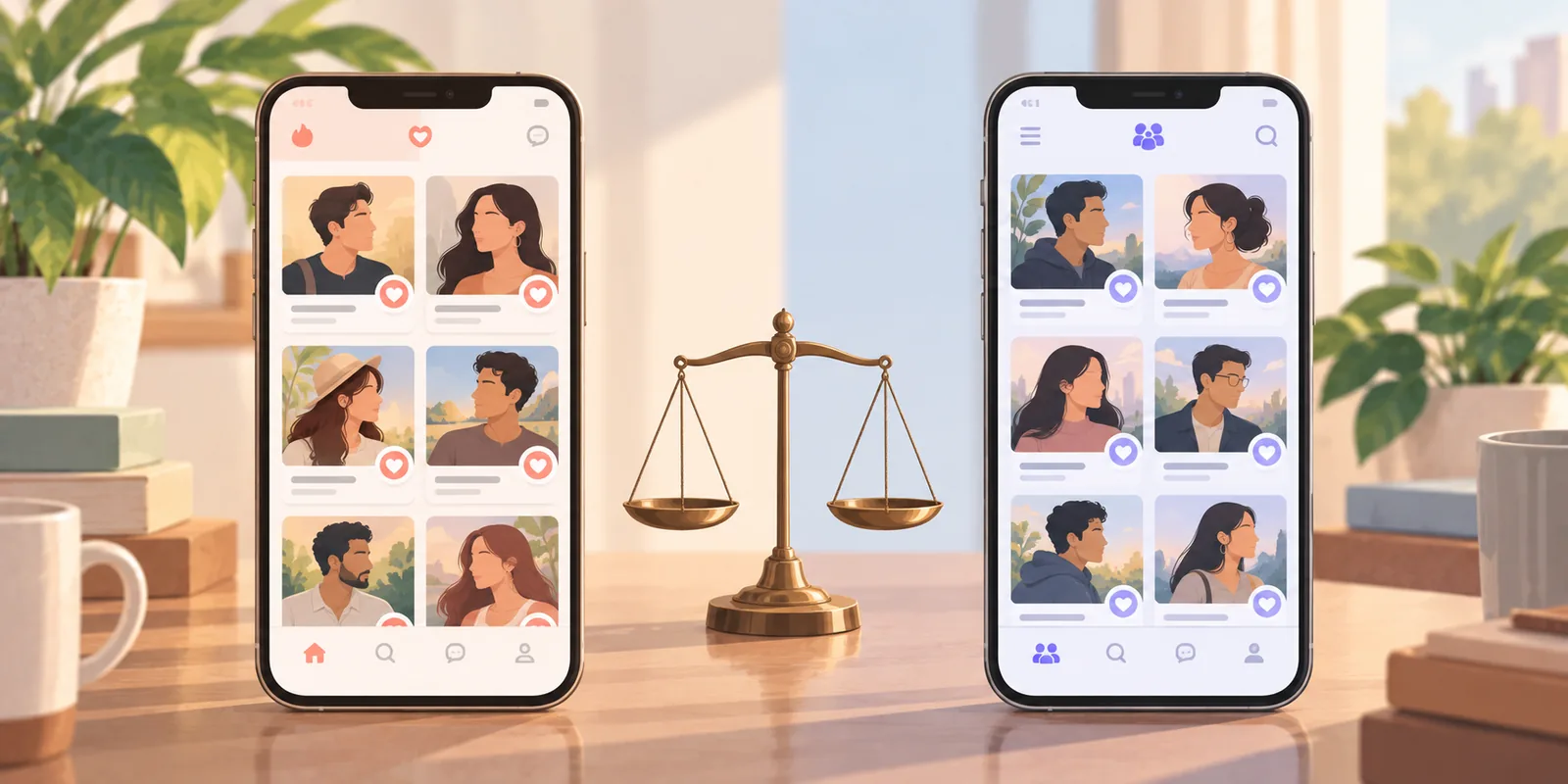
| Factor | U=U Alone | U=U + PrEP |
|---|---|---|
| HIV transmission from a partner who maintains U=U | Zero sexual transmission risk | Zero sexual transmission risk from that partner, with an additional PrEP layer |
| Protection against HIV from other partners/exposures | No | Yes, when PrEP is taken as prescribed |
| Reliance on partner maintaining suppression | Yes | Still relevant for that partner, but PrEP adds personal protection |
| Psychological reassurance | May be completely sufficient | May feel more reassuring for some people |
| Daily medication or injections | None | Required according to the selected PrEP method |
| Medical monitoring | Partner continues HIV care | HIV testing and product-specific monitoring are required |
| Other STI protection | No specific protection from U=U | No specific protection from PrEP; condoms may still help |
| Who may prefer this approach? | Stable monogamous couples confident in current U=U status | People wanting additional reassurance, with other partners, uncertain suppression, or changing circumstances |
The important takeaway is:
U=U Alone is already enough to prevent sexual HIV transmission from the undetectable partner.
U=U + PrEP is a valid choice when you want additional personal protection, but it is not medically necessary to make U=U "safe enough."
That distinction prevents an unhealthy relationship dynamic in which the HIV-positive partner feels that U=U has somehow "failed."
It has not.
5. Reframing PrEP: Body Autonomy vs. Partner Trust
5.1 The "Seatbelt Analogy": Normalizing PrEP as Self-Care
PrEP can be understood as a personal health decision rather than a referendum on your partner's honesty.
Think about other forms of preventive health.
You may wear a seat belt even when the driver has never had an accident.
You may use contraception even when you trust your partner completely.
You may choose a vaccine even when everyone around you appears healthy.
Those actions are about how you manage your own risk, not about accusing another person of being irresponsible.
PrEP can function in the same way.
You can genuinely believe:
"My partner's U=U status is medically reliable."
and also:
"I feel more comfortable taking PrEP."
There is no contradiction.
CDC's current guidance reinforces this idea by saying PrEP should be prescribed to anyone who asks for it, including people who do not report traditional HIV risk factors. (cdc.gov)
That is a strong signal that PrEP is not supposed to be treated as a moral judgment against a partner.
It is a prevention tool.
5.2 Decoupling PrEP from "Lack of Trust"
The emotional mistake is turning a medical decision into a relationship verdict.
For example:
"If you loved me, you wouldn't need PrEP."
or:
"If you trusted me, you wouldn't take PrEP."
Neither statement follows medically.
U=U is about the HIV-positive partner's viral suppression.
PrEP is about the HIV-negative partner's preventive choice.
Those are different layers.
A healthy conversation can therefore sound like:
"I completely trust your treatment and I believe in U=U. I also want to use PrEP because it gives me another layer of personal reassurance. Those two things can exist together."
That wording protects both people.
It recognizes the achievement of the partner living with HIV while preserving the HIV-negative partner's autonomy.
6. Conversation Scripts: How to Discuss PrEP Without Hurting Your Partner's Dignity
6.1 Script 1: Honoring Their U=U Achievement While Expressing Your Needs
A direct but warm version:
"I'm really proud of how you've managed your health and I fully believe in U=U. My interest in PrEP isn't about doubting you or your viral load. It's just an additional form of protection that gives me more peace of mind, so I can relax and enjoy our relationship without constantly worrying about HIV."
A shorter version:
"I trust your U=U status. Taking PrEP is something I'm choosing for my own peace of mind, not because I think you're a risk to me."
This wording is powerful because it separates trust from personal healthcare choice.
6.2 Script 2: Framing PrEP in Open or Dynamic Relationships
"Because we have an open relationship, I want my HIV prevention strategy to work independently of any one partner's status. Taking PrEP is simply part of how I manage my own sexual health. I trust your U=U status, and I also want protection for situations involving other partners."
This avoids implying:
"You are the risky one."
Instead, it says:
"I am managing my entire sexual-health environment."
That is much more appropriate when multiple partners are involved.
6.3 Script 3: De-escalating If Your Partner Takes It Personally
Sometimes the other person may still feel hurt.
They may interpret PrEP as:
"You think I'm dangerous."
In that situation, do not respond by arguing about their feelings.
Clarify the distinction:
"I understand why this might feel personal. I want you to know that my decision isn't a judgment about you or your HIV status. I believe in U=U and I respect everything you've done to maintain your health. PrEP is simply a choice I'm making about my own body and my own comfort level."
Or:
"Your undetectable status is something I respect and trust. My PrEP decision is about what makes me feel comfortable, not about questioning whether you've done your part."
The goal is not to convince your partner that they should feel nothing.
The goal is to make the meaning of your decision clear.
7. Practical Considerations Before Starting PrEP
7.1 Balancing Benefits Against Side Effects and Lab Work
PrEP is highly effective, but it is still medication.
Taking it should therefore involve more than the question:
"Will this make me less anxious?"
You should also consider:
Medical monitoring. Before starting PrEP, HIV testing is required. Depending on the product, baseline and follow-up assessments can include kidney function and screening for hepatitis B and other STIs. (cdc.gov)
Side effects. Oral PrEP is generally safe. Some people experience nausea, diarrhea, headache, fatigue, or stomach discomfort. CDC notes that these effects are usually manageable. (cdc.gov)
Kidney considerations. Tenofovir-based oral PrEP can affect kidney function, usually in small amounts, so kidney function is assessed before and during treatment. (cdc.gov)
Hepatitis B. Some oral PrEP medications also suppress hepatitis B virus. People with active hepatitis B need appropriate medical guidance before starting or stopping these drugs. (cdc.gov)
Adherence. Oral PrEP works best when taken as prescribed. Missing doses reduces its protective value. (cdc.gov)
Cost and access. CDC notes that most insurance plans and state Medicaid programs cover PrEP, although individual costs and assistance options vary. (cdc.gov)
These are real tradeoffs.
If U=U already makes your sexual HIV transmission risk zero within your relationship, the value of PrEP may be primarily personal reassurance or protection against other exposures.
That makes the benefit-to-burden calculation highly individual.
7.2 Daily PrEP vs. Event-Driven (2-1-1) PrEP vs. Injectables
There is no single PrEP schedule that fits everyone.
Daily oral PrEP is a standard option and is appropriate for many people at risk of HIV through sex. CDC states that daily oral PrEP is highly effective when taken as prescribed. (cdc.gov)
2-1-1 PrEP is a special situation. The regimen uses F/TDF around sexual activity, but CDC notes that it is not FDA-approved, is not recommended by CDC, and has only been studied in adult gay and bisexual men. It should not be generalized to heterosexual exposure or other populations without appropriate clinical guidance. (cdc.gov)
So "I only need PrEP occasionally" does not automatically mean you should use a 2-1-1 schedule.
Discuss it with a clinician who knows your sexual exposure pattern.
Long-acting injectable PrEP is another option. Cabotegravir is administered as an injection initially, again one month later, and then every two months. CDC also incorporated long-acting injectable lenacapavir into U.S. PrEP recommendations in 2025, with dosing every six months. (cdc.gov; cdc.gov)
The right choice depends on medical eligibility, exposure pattern, adherence preferences, access, and what you and your clinician decide.
What matters for this relationship question is not memorizing every PrEP regimen.
It is understanding that you have options if you want an additional layer of HIV prevention.
8. True Intimacy Thrives on Dual Protection and Mutual Respect
A serodifferent relationship does not have to revolve around fear.
The HIV-positive partner can take treatment, maintain an undetectable viral load, and know that U=U means zero risk of sexual HIV transmission. That is an extraordinary achievement in modern HIV medicine and something that deserves recognition, not suspicion. (cdc.gov)
The HIV-negative partner can also choose PrEP without implying that U=U has failed.
That is the second half of the equation.
There are situations where PrEP adds little biological value for the specific relationship: for example, a stable monogamous couple in which the partner with HIV is consistently virally suppressed and there are no other potential HIV exposures.
There are also situations where PrEP can make sense:
You want additional reassurance.
Your partner's viral suppression is new, inconsistent, or currently unknown.
You have other sexual partners whose HIV status or viral load is unknown.
Your sexual-health circumstances change.
CDC explicitly recognizes these as legitimate considerations and says PrEP should not be withheld from an HIV-negative person simply because their HIV-positive partner is virally suppressed. (cdc.gov)
The important thing is not to turn either choice into a judgment.
U=U is not a request for blind trust.
PrEP is not a declaration of distrust.
They are two different expressions of modern HIV prevention.
One is centered on the HIV-positive partner maintaining viral suppression.
The other is centered on the HIV-negative partner choosing an additional prevention tool for their own body and circumstances.
A healthy relationship can make room for both.
You can say:
"I believe your U=U status, I trust the science, and I still want PrEP for myself."
Or:
"I trust your U=U status and feel comfortable relying on that alone."
Neither statement is a verdict on the quality of the relationship.
The strongest serodifferent relationships are not built around pretending uncertainty does not exist.
They are built around understanding exactly where the risk is, where it is not, what each partner needs, and how both people can make choices without shame.
That is the real meaning of informed intimacy: science protects the relationship, while autonomy protects the people inside it.