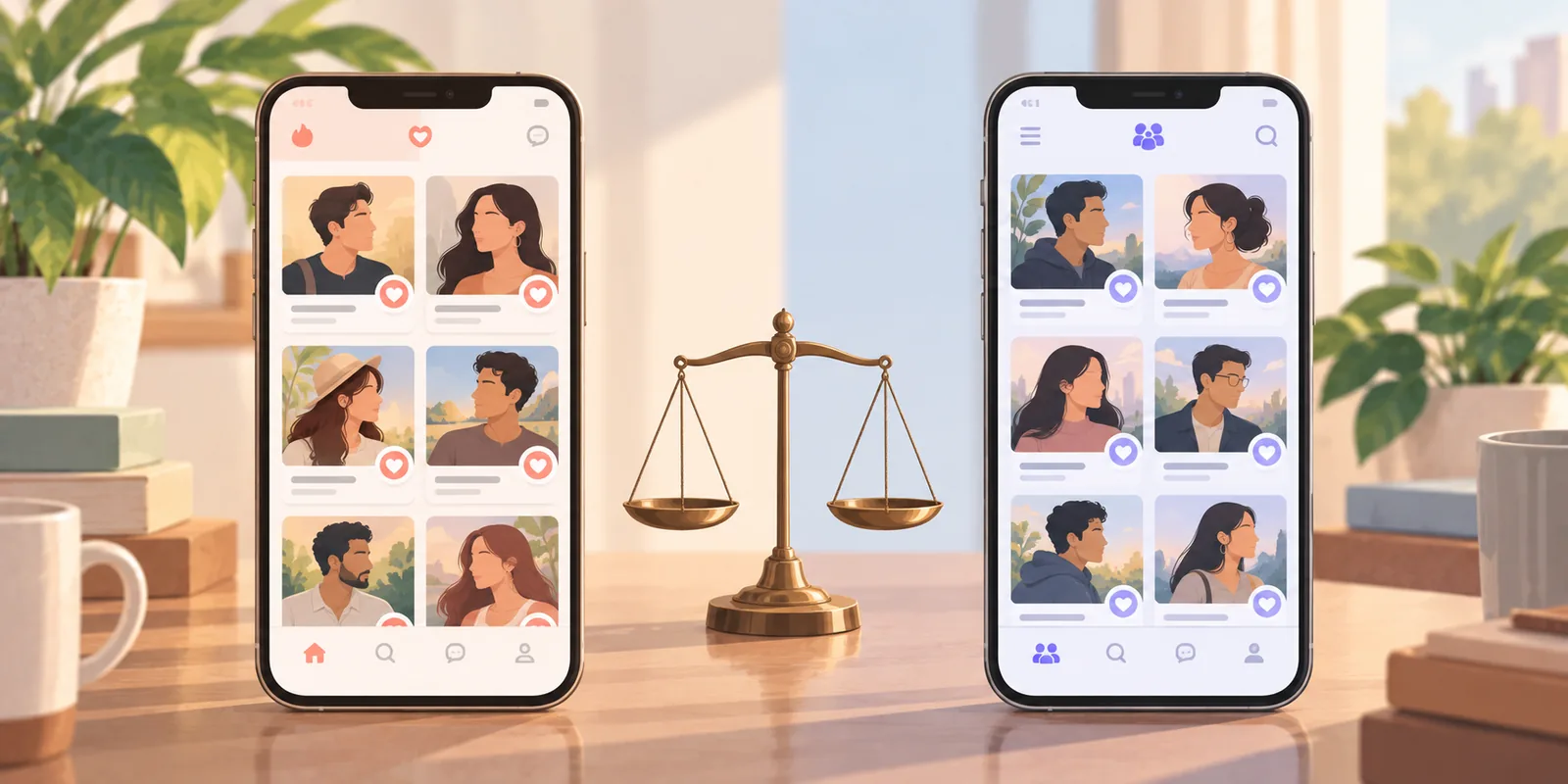

A serodifferent relationship—also called a serodiscordant or mixed-status relationship—is one in which one partner has HIV and the other does not. With effective HIV treatment and sustained viral suppression, these couples can have sex without sexually transmitting HIV, build long-term relationships, and plan families together. CDC defines viral suppression as fewer than 200 copies of HIV RNA per milliliter of blood and states that people who maintain this level do not transmit HIV through sex.
That changes the relationship equation.
The HIV-positive partner is not automatically "the risky one."
The HIV-negative partner is not automatically "the person taking the risk."
And the relationship does not need to revolve around avoiding intimacy.
Instead, both partners can make decisions using three things:
current medical evidence,
shared prevention choices,
and mutual respect for each person's autonomy.
The goal is not to pretend HIV does not exist.
It is to give HIV the right-sized place in the relationship.
Understanding Serodifferent Relationships: Normalizing Mixed-Status Dating
What Does "Serodifferent" Really Mean?
"Serodifferent" simply describes a couple in which the partners have different HIV statuses.
One partner is living with HIV.
The other partner does not have HIV.
The term is descriptive. It does not imply that one person is healthy and the other is unhealthy, or that one person is a danger to the other.
Modern HIV treatment makes this distinction especially important.
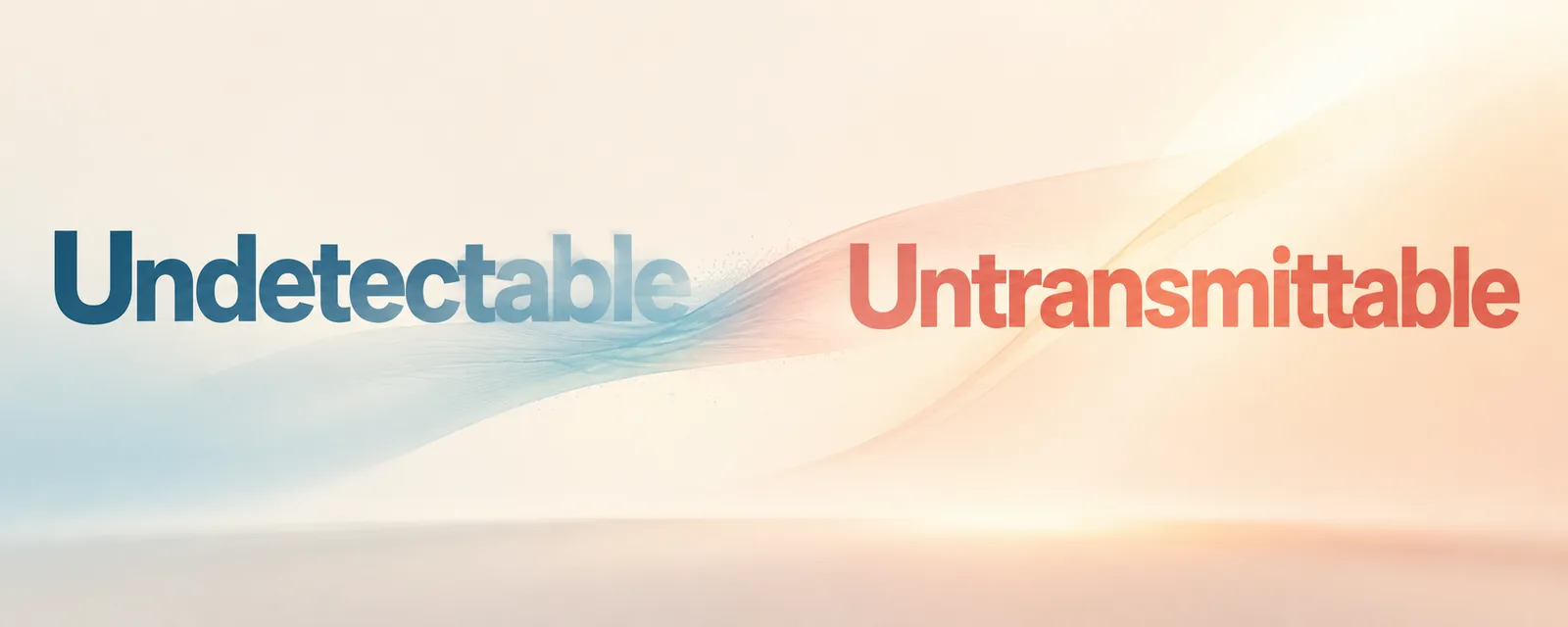
When the partner with HIV takes ART and maintains viral suppression below 200 copies/mL, CDC states that there is zero risk of sexually transmitting HIV. This is the medical basis of U=U—Undetectable = Untransmittable.
That means a serodifferent couple does not automatically need to organize its sex life around the fear of HIV transmission.
The couple may still choose condoms, PrEP, or other prevention measures. Those choices can provide additional reassurance and protection against other STIs, but they do not mean U=U has somehow failed.
The relationship can therefore be understood in much more ordinary terms:
Two people who care about each other, have different medical statuses, and manage that difference responsibly.
Breaking the "Savior vs. Liability" Dynamic
A common emotional problem in long-term serodifferent relationships is the creation of an invisible hierarchy.
The HIV-negative partner may think:
"I'm the one taking the risk."
The HIV-positive partner may think:
"I'm the one who could hurt them."
That can create a damaging dynamic in which one person becomes the "protector" and the other becomes the "protected."
U=U can fundamentally change that framework.
When viral suppression is maintained, the HIV-positive partner is actively managing their health and protecting their partner through effective treatment. The HIV-negative partner can make additional prevention choices when desired. Neither person has to occupy a permanently dependent role.
A more balanced framework is:
The partner with HIV manages treatment and viral suppression.
The partner without HIV controls their own prevention choices.
Both partners communicate about health and boundaries.
Neither partner owes the other shame, gratitude, or fear.
The relationship becomes a partnership rather than a permanent exercise in "protecting the negative partner."
The Science of Safety: U=U, PrEP, and the "Double Protection" Network
U=U as the Foundation of Zero Sexual Transmission Risk
U=U is the scientific foundation of modern serodifferent intimacy.
CDC states that a person living with HIV who is receiving treatment and maintains an undetectable viral load has zero risk of transmitting HIV sexually. NIH and other major public-health bodies use the same treatment-as-prevention principle.
Importantly, U=U does not mean that HIV medication makes the virus disappear from the body.
It means treatment suppresses the virus to a level at which sexual transmission does not occur.
For practical dating purposes, the relevant question is therefore:
Is the partner with HIV maintaining viral suppression?
CDC uses a threshold of less than 200 copies/mL for viral suppression in its HIV clinical guidance. Ongoing treatment and clinical monitoring are important because U=U depends on maintaining suppression over time.
That creates a very different emotional framework from older HIV messaging.
You do not have to think:
"Every sexual encounter is a possible transmission event."
You can think:
"We know what protects us: effective treatment and sustained viral suppression."
That is not false reassurance.
It is evidence-based HIV prevention.
Layering Protection: When and Why to Add PrEP
PrEP is an additional HIV-prevention option for the HIV-negative partner.
But it is important not to turn it into a mandatory second half of U=U.
CDC's current PrEP guidance says people without HIV whose partners have HIV can use PrEP, particularly when the partner's viral suppression is inconsistent or unknown, when the HIV-negative partner has other partners, or when the HIV-negative partner simply wants the additional reassurance PrEP provides. CDC also states that PrEP should not be withheld from someone who requests it merely because their partner is virally suppressed.
So there are two perfectly compatible statements:
"My partner is undetectable, so HIV cannot be transmitted sexually."
and
"I still choose PrEP because I want an additional layer of personal protection or reassurance."
That is not a contradiction.
It is body autonomy.
It also helps to understand what PrEP does not do.
PrEP is designed to prevent HIV acquisition. It does not prevent other STIs, and condoms may still be useful for those infections and for pregnancy prevention.
The strongest framework is therefore not "U=U plus PrEP equals extra-zero risk."
U=U already makes sexual transmission risk zero from a partner who maintains the relevant viral suppression.
PrEP adds an independent prevention option for the HIV-negative partner.
Overcoming Emotional Hurdles: Guilt, Fear, and Post-Sex Anxiety
Helping the Positive Partner Release "HIV Guilt"
Living with HIV can create a persistent internal fear:
"What if I hurt the person I love?"
That fear can remain long after the medical reality has changed.
If you maintain effective ART and an undetectable viral load, you are not asking your partner to accept an unresolved biological danger. You are actively managing your health in a way that prevents sexual transmission. CDC explicitly describes sustained viral suppression as one of the most effective biomedical tools for preventing sexual HIV transmission.
That does not mean you should stop caring about your partner's feelings.
It means you should stop confusing responsibility with permanent guilt.
Responsibility sounds like:
"I stay in care. I take my medication. I monitor my viral load. I communicate honestly."
Guilt sounds like:
"Because I have HIV, my partner is doing me a favor by staying with me."
Those are not the same thing.
Your partner is making their own relationship choice.
You are making your own health choices.
Once U=U is established and maintained, you can allow the relationship to become about the things that normally define long-term partnership: affection, trust, compatibility, shared goals, finances, family, and daily life.
Navigating Post-Sex Anxiety for the Negative Partner
An HIV-negative partner may still experience occasional fear after sex even while fully understanding U=U.
For example:
"I know they're undetectable, but what if something went wrong?"
That emotional response does not mean U=U stopped working.
Often, the best response is not to start a new cycle of panic-driven testing or accusations.
Instead, return to the agreed facts.
A couple can ask:
Is the partner with HIV still taking treatment?
Is viral suppression being monitored?
Has anything changed medically since the last confirmed viral-load result?
If the answer remains reassuring, the couple can return to the established prevention plan.
If something actually has changed—such as treatment interruption or an unknown current viral load—the couple can reassess rather than pretending nothing happened. CDC specifically identifies inconsistent suppression or an unknown viral-load status as situations where additional prevention may be appropriate.
A useful conversation can be as simple as:
"I know U=U is real. I'm feeling anxious tonight, and I don't need you to prove anything to me. Can we just talk through where things stand with your treatment and viral load so I can settle my mind?"
That turns anxiety into communication instead of blame.
The HIV-positive partner can respond:
"I understand. Let's look at what we know rather than what we're imagining."
The objective is not to eliminate every anxious thought.
It is to prevent one anxious thought from taking control of the relationship.
Building Fulfilling Intimacy: Transitioning From Protection to Connection
Step-by-Step Intimacy Progression
There is no medically required sequence in which every serodifferent couple must move from condoms to condomless sex.
The progression should be based on mutual comfort, informed choice, and current medical circumstances.
A couple might begin with condoms while they learn each other's routines.
They may later decide that, because the HIV-positive partner maintains U=U and both partners are comfortable with the arrangement, condoms are not necessary for HIV prevention.
Another couple may continue using condoms indefinitely.
Another may combine U=U with PrEP.
None of those choices is inherently more loving or more trusting than another.
A useful progression looks like this:
Stage 1 — Establish the medical baseline.
Confirm that the partner with HIV is receiving treatment and maintaining viral suppression.
Stage 2 — Discuss what each person wants.
Talk about condoms, PrEP, pregnancy prevention, STI testing, and sexual boundaries.
Stage 3 — Try the level of protection that feels appropriate.
There is no prize for removing condoms quickly.
Stage 4 — Reassess when circumstances change.
New partners, changes in treatment, missed doses, new health concerns, or pregnancy plans can all change the conversation.
The purpose of this progression is not to "graduate" from safety.
It is to move from fear-driven protection toward informed intimacy.
Redefining Intimacy Beyond Coitus
A healthy serodifferent relationship does not need to define successful intimacy as "we finally stopped using condoms."
That puts too much symbolic weight on one sexual decision.
Intimacy also includes:
touch
kissing
sleeping together
massage
mutual pleasure
emotional vulnerability
affection
talking about fantasies and boundaries
comfort after sex
These experiences can build trust independently of HIV risk.
That matters because it prevents the relationship from becoming centered on transmission anxiety.
Instead of asking:
"Are we finally safe enough to have normal sex?"
you can ask:
"What kinds of intimacy feel good and comfortable for both of us?"
That is a much healthier question.
Planning for the Future: Marriage, Family, and Having Children Safely
Conceiving Safely in a Mixed-Status Relationship
Serodifferent couples can plan biological families.
Current NIH guidance states that when the partner with HIV is taking ART and has achieved sustained viral suppression, condomless sex to achieve pregnancy does not result in sexual HIV transmission to the HIV-negative partner. The HIV-negative partner may also choose PrEP during conception as an additional prevention option.
This matters because family planning often triggers a second wave of anxiety.
A couple may think:
"We can avoid HIV during sex, but what happens when we stop using condoms to conceive?"
U=U still applies to sexual transmission from the partner with HIV when sustained viral suppression is maintained.
At the same time, sexual transmission and mother-to-child transmission are different medical questions.
If the person who is pregnant has HIV, pregnancy requires its own ART and obstetric plan. NIH's perinatal guidance recommends continued HIV treatment, viral-load monitoring, and coordinated prenatal care to minimize perinatal transmission.
So family planning can be approached as a sequence:
Before conception: confirm HIV treatment and sustained viral suppression.
During conception: choose a conception strategy that fits the couple, with PrEP available as an additional option for the HIV-negative partner.
During pregnancy: continue ART and follow pregnancy-specific HIV and obstetric monitoring.
Before delivery: use the current viral-load result to guide delivery planning.
After birth: follow the newborn's recommended HIV prophylaxis and testing plan.
This is not a story about "taking a chance on a baby."
It is a medical management pathway.
And it is one that many families navigate successfully.
Dealing With External Stigma and Family Opinions
Sometimes the hardest part of a serodifferent relationship is not medicine.
It is other people's assumptions.
A parent may say:
"Are you sure this is safe?"
A friend may say:
"I don't know how you can live with that risk."
A relative may assume the HIV-positive partner is somehow a permanent danger to the family.
The couple does not owe everyone a medical seminar.
A short boundary can be enough:
"We've made our health decisions based on current medical guidance and our doctors. We appreciate your concern, but we're comfortable with our plan."
Or:
"We're managing HIV medically and following current U=U guidance. We'd rather talk about our future as a couple than debate HIV myths."
You can also decide what not to disclose.
Being in a serodifferent relationship does not mean your family's medical history becomes public property.
Parents, siblings, friends, coworkers, and social-media followers do not automatically have a right to know your partner's HIV status.
The couple can agree together on:
who knows
what they know
how much detail is shared
what happens if someone asks intrusive questions
That creates a united boundary without turning the relationship into a defensive campaign.
Thriving Together in a Strong, Health-Conscious Partnership
Why Serodifferent Couples Can Build Strong Relationships
It would be too strong to claim that serodifferent couples are inherently stronger than other couples.
There is no medical rule that makes HIV status a predictor of relationship quality.
But navigating a serodifferent relationship can create opportunities for unusually clear communication because the couple has to talk about health, treatment, testing, boundaries, and future planning more explicitly than some couples do.
Those conversations can become strengths when handled collaboratively.
A couple can learn to discuss:
medical information without blame
fear without accusation
prevention without shame
sex without assumptions
future plans without treating HIV as a barrier
That is not unique to serodifferent couples, but it can become an important feature of a healthy one.
The goal is not to become the "perfect HIV couple."
It is to become two people who can handle difficult information without allowing that information to define the whole relationship.
Loving Without Fear, Limit, or Apology
The strongest shift happens when both partners stop thinking of the relationship as:
"one person has HIV and the other is taking the risk."
and start thinking of it as:
"we are two people managing health responsibly while building a life together."
The partner with HIV can maintain treatment and viral suppression.
The HIV-negative partner can choose PrEP if they want additional reassurance or have other potential exposures.
Both can use condoms when they want protection against other STIs or pregnancy.
Both can discuss sexual boundaries openly.
Both can plan for children.
Both can decide what to tell family members.
And neither person needs to apologize for the relationship.
CDC's current guidance supports the central medical reality: maintaining an undetectable viral load below 200 copies/mL means zero sexual HIV transmission risk, while PrEP remains an available additional option for HIV-negative partners who want it.
The point of modern HIV care is not merely to prevent transmission.
It is to make fuller lives possible.
That includes dating.
Sex.
Love.
Marriage.
Parenthood.
Growing old together.
A serodifferent relationship does not need to be built around the question:
"How do we survive HIV?"
It can be built around a much bigger question:
"How do we use the tools modern medicine gives us so that HIV takes up only the space in our relationship that it actually deserves?"
That is the heart of informed intimacy.
You can protect each other without becoming each other's patient.
You can discuss risk without turning one partner into a threat and the other into a victim.
You can make room for U=U, PrEP, medical follow-up, emotional honesty, sex, family, and ordinary everyday life—all inside the same relationship.
And that is what it means to build a serodifferent relationship that is not merely safe, but genuinely shared.